

News
&
Updates

LiveOn NY and Leading Elected Leaders on Aging in NY Raise Alarm on Takedown of US Administration for Community Living
In a stunning and deeply alarming move, the federal administration has dissolved the U.S. Administration for Community Living (ACL)—the only federal agency solely dedicated to supporting older adults and people with disabilities. The ACL oversees critical programs like Meals on Wheels, caregiver support, senior centers, elder abuse prevention, and other lifelines that millions rely on every day.

Move by Federal Administration effectively eliminates the only federal agency solely dedicated to supporting older adults and people with disabilities.
In a stunning and deeply alarming move, the federal administration has dissolved the U.S. Administration for Community Living (ACL)—the only federal agency solely dedicated to supporting older adults and people with disabilities. The ACL oversees critical programs like Meals on Wheels, caregiver support, senior centers, elder abuse prevention, and other lifelines that millions rely on every day.
Now, the Department of Health and Human Services is carving up these programs behind closed doors, offering little transparency and even fewer answers. This is not just bureaucratic reshuffling—it’s a direct attack on the safety and dignity of Americans as we age.
These moves are part of a continued assault on the 4.8 million older adults and 4.1 family caregivers in New York State — new red tape strangling Social Security, threats to emergency food assistance, ongoing efforts to undermine Medicaid, and, now, the dismantling of our nation’s aging support infrastructure altogether.
This isn’t policy. It’s abandonment. And hardworking New Yorkers and Americans who have paid into these systems for decades deserve far better than this.
“Eliminating the Administration for Community Living is not just reckless—it’s un-American. Gutting programs like Meals on Wheels and caregiver support abandons the very people who built this country and paid into these systems their entire lives. This isn’t just a policy shift; it’s a moral failure and blatantly un-American.”— Allison Nickerson, Executive Director, LiveOn NY
"Seniors are the fastest growing population in New York and in many parts of our country. The federal government should be doing one thing only—modernizing and expanding funding and programs under the Older Americans Act and the Administration for Community Living. A DOGE-style approach to our older Americans is not only unwise, irrational, and impractical, but an absolute insult to those who have long paid their dues to this nation. I suggest this plan be recalled like the 5.1 million Teslas recalled in 2024," said State Senator Cordell Cleare, Chair of the Aging Committee
State Assembly Member Rebecca A. Seawright, Chair of the Aging Committee said, “Older adults already face housing, food and healthcare insecurity. It is unconscionable that the Trump administration would move to dissolve the US Administration for Community Living (ACL). This is a desertion of 4.6 million New Yorkers and their access to vital services that keep them safe and aging with dignity. I will continue to marshal every resource to protect aging New Yorkers and the quality of life that they have earned.”
“Our nation’s older adult population is growing rapidly, but government at all levels has failed to plan for an aging population,” said New York City Council Member Crystal Hudson, Chair of the Aging Committee. “According to ACL, the number of older Americans has jumped 34 percent over the past decade compared to a 2 percent jump for those under 65. Despite this, the Trump administration is eliminating the only agency focused on supporting our nation’s nearly 58 million older adults. It’s clear this administration is focused on eliminating programs that support marginalized communities, and taking away benefits from those who have contributed so much to our country over their entire life. I will continue to stand with my colleagues in Albany and our nonprofit partners to fight any attempt to erode older adult services and collaborate to ensure every single older adult can age in place with dignity.”
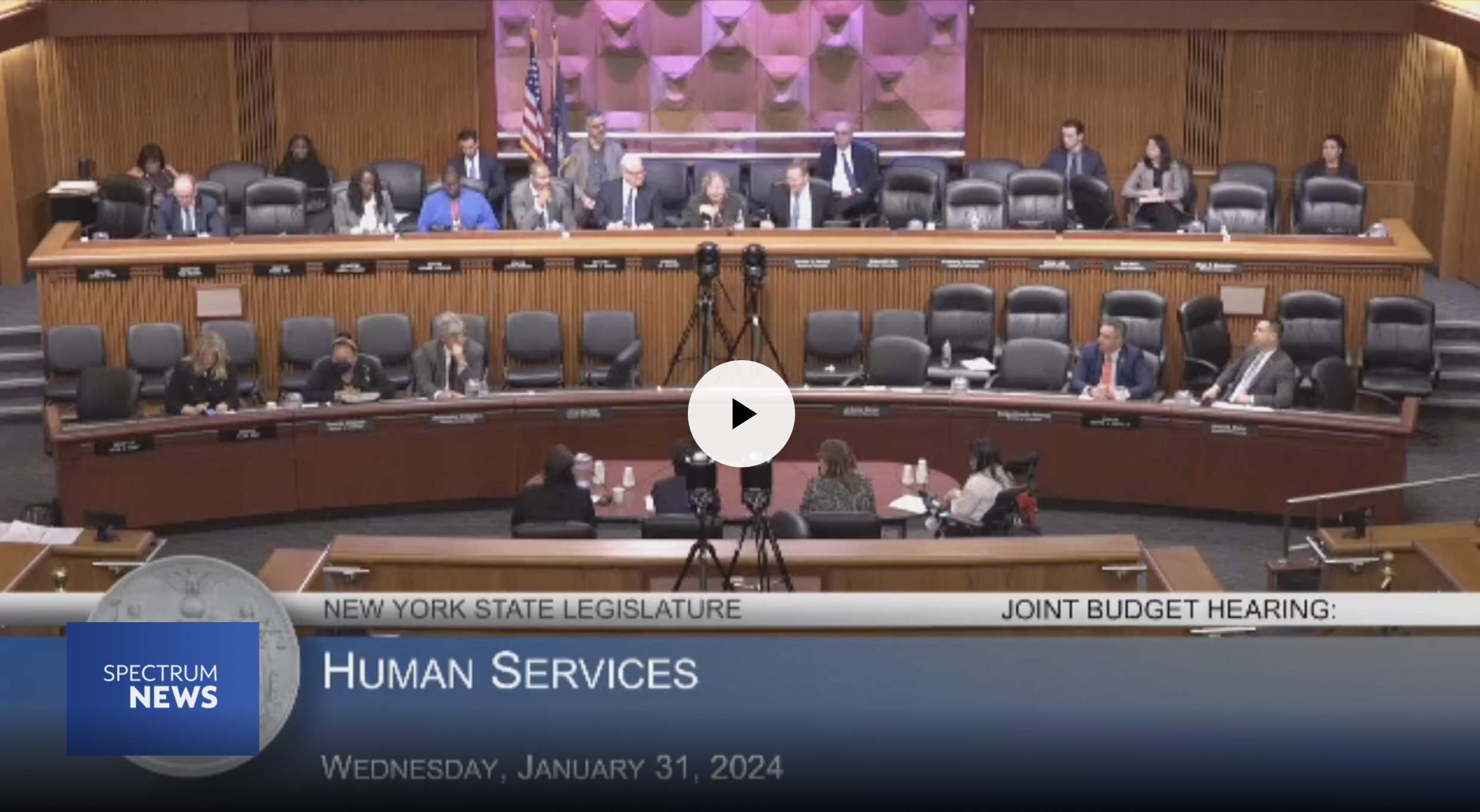


Testimony for the FY25 NYS Human Services Budget Hearing
New York State Assembly
New York State Senate
Joint Legislative Hearing
Human Services FY25 Budget
Thank you for the opportunity to submit testimony on aging services in the proposed FY 25 budget.
LiveOn NY’s members include more than 100 community-based nonprofits that provide core services which allow all New Yorkers to thrive in our communities as we age, including senior centers, home‐delivered meals, affordable senior housing, elder abuse prevention, caregiver support, NORCs, and case management. With our members, we work to make New York a better place to age.
As it stands, the FY25 Proposed Budget is an ageist document - as it does not meet the existing needs of older New Yorkers or the needs of the growing population of older adults. The services provided to non-medicaid eligible New Yorkers are not guaranteed due to a consistent pattern of underfunding continued this year. For New Yorkers not currently medicaid eligible, we see that in order to qualify for and receive needed services they must sacrifice what they have earned throughout their life course to self-institutionalize. There is a better way that can both improve quality of life for older New Yorkers and save Medicaid dollars.
We have a number of concerns that illustrate a clear lack of consideration for the millions of older adults in New York, and that fail to recognize the reality that we are aging as a state.
Key Concerns
Older New Yorkers were not mentioned in the budget outside of “cost-saving” measures for health services.
18,000 services denied to New Yorkers due to lack of adequate funding
Program cuts and unfunded mandates will cost providers millions of dollars
$9.3 million cut from home care services
$2.5 million in cut LTCOP funding that was a legislative addition last year
$0 for the mandated rate increase to local Area Agencies on Aging (AAAs), leaving a $10 million shortfall that will necessitate local cuts to services.
The newly approved Medicaid Waiver (1115) will not address older New Yorkers
The State has significant fiscal reserves and provided over $6 billion in additions to many service sectors. However, the current budget allocation for the New York State Office for the Aging is less than 0.8% of the total budget, significantly below what is required to meet the growing needs in our communities. We have the funding to create a robust service system in our state that also saves millions of dollars from our already out of control medicaid budget.
Here is what an age-inclusive budget needs to include.
Recommendations
$252.5 million to NYSOFA fully fund services promised in the existing system and end wait lists for the over 18,000 services denied to New Yorkers due to lack of adequate funding. Here is a list of many of the services that this funding would improve:
$51 million to clear the existing waiting list for services
Overall Funding Increase (minus nutrition) includes but is not limited to $35 million.
Invest in sustainable nutrition support - $43 million
Invest in Aging Services network workforce - $20 million
Expanding eligibility to younger onset Alzheimer’s and to age 50 for caregiver and respite support – $26 million
Provide annual appropriation for technology access - $5 million
Provide annual appropriation for Lifespan Respite Care Programs - $1 million
Provide annual appropriation for elder abuse education and outreach - $3 million
Provide increase funding for state SHIP Programs - $5.5 million
Provide increase in funding for state legal assistance programs - $3 million
Provide increase in funding for the long-term care ombudsman program - $10 million
Provide an annual appropriation for Aging and Disability Resource Centers - $20 million
Provide reskilling and training for older individuals who wish to return to employment - $2 million
Recognition of the value and importance of these programs - these programs both improve quality of life AND save medicaid dollars:
NYSOFA programs serve individuals that would qualify for skilled nursing or assisted living care, in homes and communities for less than $10,000 per year on average for 6.5 years.
$51 million dollars to clear existing wait lists would translate to a $237 million dollar medicaid savings according to the Association on Aging in New York
Consideration to ensure that the state is providing adequate funding to meet the needs of the growing older population in future years.
Funding must be tied to the number of older adults who would need services and grow with our state
The state must take on a larger role in funding these programs. In NYC alone, the city provides almost double the funding the state does.
On behalf of the almost 5 million older adults and 4 million caregivers – nearly half of the population – who call New York State home, we write with ongoing and urgent concern for the blatant lack of funding for safety net aging service programs, funded through the NYS Office for Aging (NYSOFA). You have the opportunity to make a difference in the lives of older adults across our state and fight for an age-inclusive budget!
_____________________________________________________________________________
Testimony provided by Kevin Kiprovski Director of Public Policy of LiveOn NY. For additional questions, please reach out to Kkiprovski@liveon-ny.org
LiveOn NY’s members provide the core, community-based services that allow older adults to thrive in their communities. With a base of more than 110 community-based organizations serving at least 300,000 older New Yorkers annually. Our members provide services ranging from senior centers, congregate and home-delivered meals, affordable senior housing with services, elder abuse prevention services, caregiver supports, case management, transportation, and NORCs. LiveOn NY advocates for increased funding for these vital services to improve both the solvency of the system and the overall capacity of community-based service providers.
LiveOn NY also administers a citywide outreach program and staffs a hotline that educates, screens and helps with benefit enrollment including SNAP, SCRIE and others, and also administers the Rights and Information for Senior Empowerment (RISE) program to bring critical information directly to seniors on important topics to help them age well in their communities.

LiveOn NY Testimony on NYCHA Developments and Senior Centers
In New York City, NYCHA represents one of the greatest providers of affordable housing for low-income seniors. Currently, 38% of New York City Housing Authority (NYCHA) households are headed by an older adult age 62 and over, and an estimated 7,700 units are designated specifically for older adults. Just as the buildings are aging, so are the tenants that occupy them, making the need for quality, safe services in NYCHA paramount to the success of the community.
We’re proud to testify to the New York City Council to ensure older adults can safely aging in NYCHA developments. Below is testimony submitted by LiveOn NY to the New York City Council Committees on Aging and Public Housing.
To learn more about upcoming New York City Council hearings: click here. To register to testify: click here. To watch live and past hearings: view here!
New York City Council
Committee on Aging
Chair, Council Member Chin
Committee on Public Housing
Chair, Council Member Ampry-Samuel
April 7, 2021
Oversight – Seniors aging in place in NYCHA during a pandemic
Thank you for the opportunity to testify on seniors aging in place in NYCHA during the pandemic.
LiveOn NY’s members include more than 100 community-based nonprofits that provide core services which allow all New Yorkers to thrive in our communities as we age, including senior centers, home-delivered meals, affordable senior housing, elder abuse prevention, caregiver supports, NORCs and case management. With our members, we work to make New York a better place to age.
In New York City, NYCHA represents one of the greatest providers of affordable housing for low-income seniors. Currently, 38% of New York City Housing Authority (NYCHA) households are headed by an older adult age 62 and over, and an estimated 7,700 units are designated specifically for older adults. Just as the buildings are aging, so are the tenants that occupy them, making the need for quality, safe services in NYCHA paramount to the success of the community. Unfortunately, however, providers of services such as Senior Centers and NORCs that operate in NYCHA community spaces face daily challenges just to keep the doors open.
While an emphasis must be placed on improving the living conditions of residents living in NYCHA developments, it’s also important to acknowledge senior service providers have not been immune to the challenges during the pandemic.
Prior to the onset of the pandemic, and potentially exacerbating the pandemics impacts, inadequate conditions in NYCHA developments including poor ventilation systems, broken elevators, leaking roofs, and recurring mold have long been one of the many challenges providers have worked to alleviate. While working to mitigate these repairs, providers are frequently faced with fines and violations, in addition to lengthy approval processes by NYCHA that exacerbate the timeline for repairs.
The impacts of these fines and conditions are not only monetary: instead of spending critical time providing critical services for NYCHA residents and the surrounding community, providers are forced to become experts in the nuances of repair systems wholly outside of their job description in order to simply stay afloat. This impact cannot be understated as these non-profit providers work tirelessly to provide high quality services to those who need it most and, through these suboptimal systems, are being consistently hamstrung from meeting their city-mandated and personally motivated aims. Now, in the midst of a pandemic, it’s critical that these repairs and conditions are addressed as they pose an even greater risk for residents and staff as we look ahead to resume in-person services and programming.
In response to these difficulties LiveOn NY recommends:
The City must work to continue to increase capital funding for public housing to support ventilation upgrades and other critical infrastructure improvements that will improve both residential and community space within NYCHA;
Redirect fines to ensure nonprofits are not penalized for violations that are out of their control. Nonprofit human service providers, who lack site control and rely on NYCHA to make repairs, should not be subject to citations and fines from DOHMH or FDNY due to NYCHA’s failure to make those repairs. When violations are found during inspections, and if these violations have already been reported to NYCHA by the provider, the provider should not be penalized. At this time, the fine should be automatically negated, and NYCHA should be notified by the fining agency of a need to cure the violation in question;
Restore and baseline all one-time funds for NYCHA Social Clubs. All funding for senior programming in NYCHA community spaces should not rely on one-shot funding from the Administration, but should be sustainably baselined and incorporated into the full scope of DFTA services;
Fully fund the Indirect Cost Rate (ICR) Initiative, which is critical to ensuring nonprofits operating in NYCHA remain viable into the future. Recent cuts to the ICR Initiative have threatened the viability of New York City’s nonprofit human service providers, leaving current NYCHA Senior Center, NORC, and other providers scrambling to pay staff and get by. To truly support nonprofits the City must reverse course and fully implement the ICR Initiative;
Include funding promises made to Senior Centers in the FY22 Executive Budget. Fully allocate the $10 million in Senior Center Model Budget funding and $5 million in Senior Center Kitchen funding to ensure that this workforce -- made up of predominantly women and people of color -- are paid competitively for their work. This funding will support not only Senior Centers located in NYCHA, but the broader Senior Center portfolio.
Additionally, LiveOn NY strongly supports the following bills that would potentially improve operations for providers and transparency in NYCHA developments:
Intro 1827, introduced by Council Member Ampry-Samuel, is an act to provide a dedicated NYCHA liaison within DFTA. To ensure there is a clear and consistent line of coordination, there should be an individual within the Department for the Aging (DFTA) whose sole focus is to coordinate with NYCHA on matters impacting older adult public housing residents. This individual could support and streamline processes for DFTA funded services that may include establishing a system to receive comments and complaints, delineating roles and responsibilities regarding repairs at Centers located within NYCHA developments and make recommendations to improve programs and facilities that serve older adults public housing residents.
Intro 415, introduced by Council Member Chin, is an act to require NYCHA to report annually on Senior Centers within NYCHA buildings. As we look to create better solutions for older adults who rely on Senior Centers for critical services, receiving an annual report from NYCHA would provide service providers and community-based organizations with the necessary information and data — such as the number of people served by each center, or the programming provided at each center — to create evidence-based solutions that better support older adults and advocate for investments and legislation on the City and State level. The City Council should work with the Department for the Aging, prior to passage, to confirm if the information that would be mandated reporting under this bill is already being collected, or can be easily collected by providers, so as to not create additional data collection requirements where those don’t already exist. Further, it should be considered if this information is already available through Local Law 140.
As we look ahead to the warmer season when Senior Centers located in NYCHA will act as Cooling Centers for those in need, NYCHA developments and DFTA fiscal must work to accelerate the approval for repairs or replacements of poor HVAC systems. Further, as DFTA moves towards reopening of in-person senior services, funding and flexibility for budget amendments must be prioritized to ensure Senior Centers in NYCHA can proactively address leaks and other issues that are critical to the safety and health of staff and older adults.
Thank you for the opportunity to testify at today’s hearing.