

News
&
Updates

LiveOn NY in the News!
At LiveOn NY, we work hard to make sure that the public hears about the issues affecting older New Yorkers, as well as the incredible momentum that exists as we grow old. To this aim, we are proud of each and every time we are able to share this narrative with the press and our local communities.

At LiveOn NY, we work hard to make sure that the public hears about the issues affecting older New Yorkers, as well as the incredible momentum that exists as we grow old. To this aim, we are proud of each and every time we are able to share this narrative with the press and our local communities. Here are a few recent articles mentioning our work:
July 2, 2018 "Medicare Is Removing Social Security Numbers From New Cards" article by Juliette Fairley in the Financial Advisor
June 26, 2018 "Senior services nonprofits demand accountability from New York City" article by David Gentile in NY Nonprofit Media
June 25, 2018 "Human services nonprofits show how city drives them into the red" article by Zach Williams in NY Nonprofit Media
April 16, 2018 "Health Fraud Workshop" video interview by Bob Lee at BronxNet
March 28, 2018 "Three updates on how the 2019 New York City budget could affect nonprofits" article by Zach Williams in NY Nonprofit Media
March 9, 2018 "Rezonings Carry Opportunities and Risks for Low-Income Seniors" article by Abigail Savitch-Lew in City Limits
March 7, 2018 "Announce First Phase of Senior Affordable Housing Proposal" article in the Queens Gazette
We look forward to continuing to weigh in on aging issues throughout New York City, for upcoming press inquiries, please reach out to Katelyn Hosey at khosey@liveon-ny.org or 212-398-6565 x. 244

Testimony: NYC Council Finance Committee Public Hearing
The city’s budget reflects its priorities. For New York City to truly be the fairest big city, fairness must extend across the lifespan. The Department for the Aging (DFTA) budget accounts for less than ½ of 1% of the total city budget despite the fact that older adults are the fastest growing demographic…
New York City Council
Committee on Finance, Chair, Council Member Dromm
May 24, 2018
Executive Budget Hearing – Public Hearing

LiveOn NY is a nonprofit membership organization representing 100 community-based organizations that serve over 300,000 older New Yorkers annually through senior centers, congregate and home‐delivered meals, affordable senior housing, elder abuse prevention services, caregiver supports, transportation, NORCs and case management. Thank you Chair Dromm and members of the Committee for the opportunity to testify, and to Chair of the Aging Committee Margaret Chin for her leadership.
The city’s budget reflects its priorities. For New York City to truly be the fairest big city, fairness must extend across the lifespan. The Department for the Aging (DFTA) budget accounts for less than ½ of 1% of the total city budget despite the fact that older adults are the fastest growing demographic. The proposed budget does not reflect fairness for New York’s older adults.
Our full list of priorities can be found here, and key areas are highlighted below.
Expedite “Model Senior Center Budget” Funding as Soon as Possible and Fully Fund Senior Center Contracts
$10 million was baselined in FY18 for “model senior center” budgets. As of today, that funding is not yet registered into all contracts. We do acknowledge that DFTA fiscal staff has been working very hard to process this funding. There a June 11 Aging Committee hearing on model budgets and we will discuss “model senior center budgets” in more detail at that time, but want to highlight a few key areas.
It is our understanding that:
249 senior centers were included the “model senior center budget” analysis.
26 of those 249 received no funding because they were deemed at or above the “model” amount.
38 additional programs were not evaluated in the “model senior center” budget process, and thus received no funding. Among those 34 were centers are former discretionary funded sites (11 centers), former NYCHA (4 centers), social clubs (17) and other social service programs (6).

Aside from the fact that some center received no funding, the small amount that was distributed among 223 centers can be used only in two areas: direct staffing and consultants. “Direct staffing” does not include food or meal staff, which has caused more salary disparity among programs. This also means that the entire DFTA portfolio of senior centers received no funding for meals/meal preparation, meal staff, rent, transportation, OTPS, technology, facility costs or other costs that are required to run a senior center.
In addition to the FY18 baselined $10 million, the city promised an additional $10 million “by 2021.” That money should be allocated immediately in FY19. Senior centers have been grossly underfunded for decades and the city must fully fund nonprofits to cover the costs of the contracted services to meet current demand. Allocating these funds is extremely important with the projected next RFP for senior centers to be released in calendar year 2020. Further, while this initial funding is an important first step, the city must make a serious commitment going forward to add funds reflecting the full scope of what it takes to run a robust senior center today and in the future.
Add $12.1 Million in Baselined New Funding for Congregate and Home Delivered Meals
Thank you to the Council for including a funding request to address senior hunger in the Council Response to the Executive Budget. Meals also offer socialization and improve lives, as isolation has been found to be a greater predictor of morbidity than obesity and provide critical nutrition services for seniors of all backgrounds, language capacities, religions, and socioeconomic status. Lunch at a center or a home delivered meal is truly more than a meal.
This $12.1 million in new funding request is incredibly important because as noted, the city failed to include funding for meals, meal preparation or meal staff in the “model senior center budgets” nor in its FY19 Executive Budget, despite the fact that meals are a core component of senior centers.

If the city wants to address senior hunger, the logical, not to mention incredible, resource is the network of senior service agencies that already exists through senior centers and home delivered meals providers. Senior centers provided 7.6 million senior center meals last year and more than half of seniors report that meals eaten at the center equate to 50% or more of their daily food intake and nutrients for the day from these meals. This year, providers will distribute 4.5 million home delivered meals. The majority of seniors utilizing the program tend to be women, living alone, receiving meals that on average account for ½ or more of their total food for the day.
However, the city must fully fund the nonprofits it contracts with who are providing these crucial services. Nonprofits should not be routinely operating at a loss to provide for the current need. New York City spends 20% below the national average on senior meals – that means they are only paying for 4 out of every 5 needed meals.
Further, almost 50% of older New Yorkers are foreign born, reflecting a significant need for meals that are culturally appropriate to an array of background, according to a recent Center for an Urban Future study. Providers are required, not to mention eager, to offer menus that culturally appropriate and nutritious. This requirement brings a fiscal implication: for example, in 2015, DFTA stated that, “in DFTA’s HDML network, each catered Kosher [meal] is on average $1.38 more than non-Kosher catered meals.” Similar to Kosher meals, Halaal, gluten free, vegetarian, vegan, or other cultural or nutritional needs have an associated cost-increase.
We urge the Administration address this vital shortfall and to help address senior hunger adding $12.1 million in new funding be baselined to increase the reimbursement rate for congregate and home-delivered meals.
Council Restorations and Investments in Senior Services Through Schedule C
City Council has long been a staunch supporter of systemic city and district wide senior services programs through allocations in Schedule C. In fact, the Council added $31.6 million to DFTA’s budget in FY18, which is more than 9% of DFTA’s total budget for the current fiscal year. We thank you for your investments and advocate for full restoration for all Senior Service Programs funded in Schedule C. These include NORCs, Support our Seniors, SuCasa, Senior Centers for Immigrant Populations, Health Aging Initiative, Social Adult Day, and others. Council funding is critical to sustain the existence of these programs.

For example, in FY18, Sunnyside Community Services' Senior Center was partnered with Dance Entropy through the SU-CASA program. Through this partnership, they provided a dance movement class to 20 seniors for 15 weeks where seniors learned about modern dance and dance history as well as had the opportunity to attend performances at Green Space that would not have otherwise been possible. These older adults have enjoyed each other's company and are looking forward to the grand finale performance in June. Overall, this experience enhances physical and social well-being. Elimination of this funding would be detrimental to this program, as well as the over 200 SuCasa programs like this throughout the city and just one of the many Council supports through systemic Schedule C funding.
Continued Investments in Human Services Sector
Finally, LiveOn NY strongly supports the agency-wide investments in FY19 in the human services sector. Last year saw an important investment in human services provider organizations that hold City contracts. With your help, we secured $300m of our $500m ask to help nonprofit provider organizations cover the cost of delivering essential services to New Yorkers.
In the upcoming year, there are several areas of human service nonprofit operations that need special attention:
Include trend factor/cost escalation formulas in all new procurements for the duration of the contract;
Provide $200 million in additional baseline funding to:
Address implementation of the following allowable rates on all HHS contracts and all new procurements
15% for indirect costs
37% for fringe benefits
Fund key operating expense increases in all HHS contracts and new procurements by the following rates:
10% increase to occupancy costs
10% increase to casualty and liability insurance
LiveOn NY looks forward to working with City Council, the Department for the Aging, all city agencies and the Administration to make New York a better place to age through a strong network of community based services.

More Than 300 Seniors Came to City Hall for LiveOn NY's 23rd Annual Aging Advocacy Day
On the 23rd anniversary of LiveOn NY’s Aging Advocacy Day, 300 older adults from over 100 senior centers, NORCs and other programs converged on City Hall and met with 43 Councilmembers to talk about how senior services fuel their communities. Older New Yorkers are the fastest growing population in the City. From 2000 to 2030 their numbers will double to 1.84 million, about one in five New Yorkers. Current resources do not allow senior services staff to connect with the broad array of needs of ever changing immigrant groups, diverse populations and caregivers…
23rd Annual LiveOn NY Aging Advocacy Day – MAY 9, 2018
300 older adults from over 100 Senior Centers, programs, and NORCs show the momentum older adults bring to their communities and come to City Hall to advocate for funding for community-based services
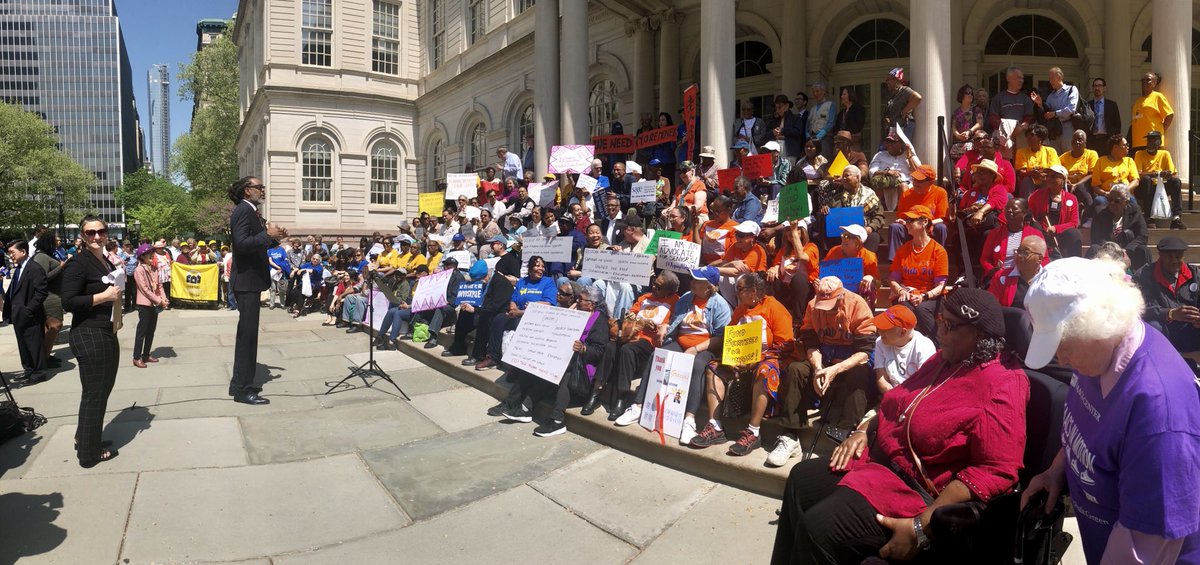
On the 23rd anniversary of LiveOn NY’s Aging Advocacy Day, 300 older adults from over 100 senior centers, NORCs and other programs converged on City Hall and met with 43 Council Members to talk about how senior services fuel their communities. Older New Yorkers are the fastest growing population in the City. From 2000 to 2030 their numbers will double to 1.84 million, about one in five New Yorkers. Current resources do not allow senior services staff to connect with the broad array of needs of ever changing immigrant groups, diverse populations and caregivers. The budget priorities for FY 19 reflect community supports for all older New Yorkers, both through $22.1 million in new funding, as well as full restoration for aging programs through City Council Schedule C senior allocations.
Allison Nickerson, Executive Director, LiveOn NY, states, “Our City’s aging services are the building blocks that allow hundreds of thousands of older New Yorkers to tap into the momentum of later life so that they can power up the economy, volunteer in their communities, be caregivers and live their best life. An investment in the New York City Department for the Aging and community based senior services is therefore a commitment to social justice across the lifespan – ensuring that we can access needed meals, life sustaining services and opportunities for engagement as we grow old. When the city makes this commitment to fund senior services, the return on that investment is seen community by community, borough by borough, and is key to making New York City a better place to age. It is essential that we continue to work together to advocate for funding to support the infrastructure of services that allow us to age with confidence, grace and vitality.”

“While we have made significant inroads to fund and expand senior services last year, the work to ensure that every older New Yorker has the opportunity to age with dignity in their community has only just begun,” said Council Member Margaret S. Chin, Chair of the Committee on Aging. “Senior funding still comprises less than one half of one percent of the City’s $88 billion budget. I am proud to stand with aging advocates once again to rally for deeper investments to cut case management waiting lists, increase capacity for our neighborhood senior centers, address senior hunger and provide universal free lunch for seniors at senior centers and enhance NORC funding. Together, we can disrupt the false idea that seniors are a burden to society, and create a new narrative that celebrates the countless contributions they make every single day. Thank you to LiveOn NY for making today’s Aging Advocacy rally a reality.”

“I am proud to once again stand with LiveOn NY and our advocates as we work to ensure that New York City is a great place for seniors to live,” said Council Member Paul Vallone, Chair of the Committee on Economic Development. “Our city’s senior centers are second homes to over 6,000 seniors. They gather with friends, enjoy meals and access vital services. We have continually worked to improve the quality of life for our seniors and today we stand together to once again make clear that our city budget needs to reflect the needs of our rapidly growing senior population.”
HIGHLIGHTS OF BUDGET PRIORITIES:
LiveOn NY calls upon the city to:
Address elder hunger with a $12.1 million investment to support senior center/congregate meals and home delivered meals.
Support neighborhood senior centers by immediately allocating an additional $10 million in funding to support critical staffing and program needs.
Address critical capital and facility needs in the nearly 100 senior centers and programs in NYCHA buildings with $5 million.
Support critical citywide aging services such as the SuCasa program, Support our Seniors, NORCs, Healthy Aging and others with a full restoration of Schedule C programs.
A commitment to supporting and spreading awareness of aging programs and services to reach older adults, caregivers and communities so that seniors can access these vital services.
Thank you to all of our Advocacy Day participants and to all of the Council Members who joined us during this wonderful event!


LiveOn NY advocates for investments in senior services at March City Council budget hearings
March Preliminary Budget Hearings were an opportunity for the needs of older New Yorkers to be heard
March Preliminary Budget Hearings were an opportunity for the needs of older New Yorkers to be heard
LiveOn NY testified on the importance of funding senior services to the following committees:
Committee on Aging
Chaired by Council Member Chin
Committee on Finance
Chaired by Council Member Dromm
Committee on Immigration
Chaired by Council Member Menchaca
Committee on Veterans
Chaired by Council Member Deutsch
Committee on Contracts
Chaired by Council Member Brannan
Committee on General Welfare (testimony submitted in writing)
Chaired by Council Member Levin
Committee on Health
Chaired by Council Member Levine
Committee on Housing (testimony submitted in writing)
Chaired by Council Member Cornegy
Click here to read the testimony we submitted to the Aging Committee. At this particular hearing we were joined by a packed house of seniors looking to advocate for #FullFundingforDFTA in this year's budget.
Check out our FY19 Budget Priorities found here.
Thank you to all of City Council for the opportunity to share the needs of older New Yorker's and how the city can make New York a better place to age!


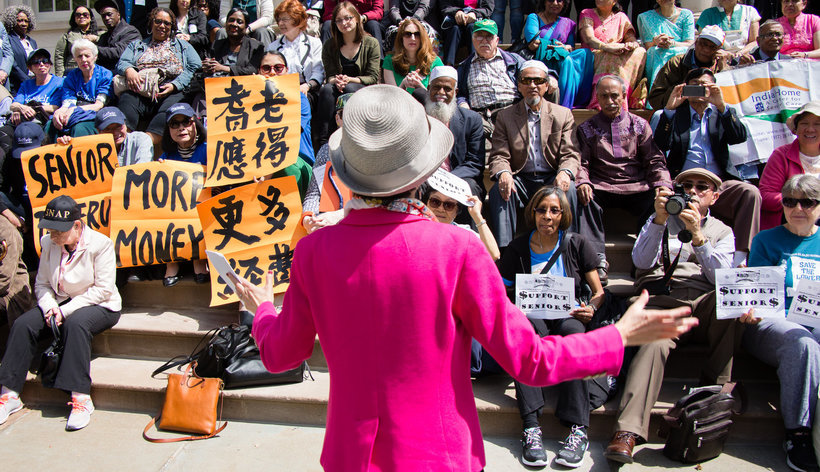
LiveOn NY Featured in Huffpost Among Big Nonprofit Wins of 2017
Advocates were successful this year in getting the biggest budgetary win for senior services in 15 years: $22.8 million additional dollars in the FY18 budget. This funding will support senior centers, homecare services, case management, weekend meals, and caregiver services throughout the five boroughs. Trust grantee LiveOn NY and its members played a key role in securing this victory.
"17 Wins in 2017: Nonprofits Driving Policy Change"
We are honored to have our work, which was a collaborative effort alongside seniors, providers, and other advocates, featured in HuffPost as one of "17 Wins in 2017: Nonprofits Driving Policy Change". Be sure to check out the article and the tireless work of the other nonprofits featured, each seeking to better our respective fields and the lives of the people we touch.
We look forward to continuing this work and building upon our successes in the New Year!

Featured: Council Member Chin and participants of our member organizations at our 2017 Senior Advocacy Day