

News
&
Updates
LiveOn NY Opposes Proposed Public Charge Rule
In New York City, 50% of the older adult population are immigrants, and we oppose any Rule that would deny or deter access to public benefits based on immigration status to those in need of these supports. Further, 89% of adults over age 50 say they wish to age in place as long as possible, and the availability of these benefits, coupled with community based services are critical to supporting older New Yorkers to remain healthy and independent in their communities.
The following comments were submitted on the record to the Department of Homeland Security in opposition to the proposed public charge rule:
LiveOn NY Opposition to Proposed Rule in
DHS Docket No. USCIS-2010-0012
December 5, 2018
LiveOn NY is a nonprofit membership organization representing 100 community-based organizations serving 300,000 older New Yorkers annually through senior centers, congregate and home-delivered meals, NORCs, affordable senior housing and other services.
LiveOn NY strongly opposes the proposed Public Charge Rule.
Public Benefits are Critical to Supporting Health and Independence

Public benefits are for everyone, particularly older adults. In New York City, 50% of the older adult population are immigrants, and we oppose any Rule that would deny or deter access to public benefits based on immigration status to those in need of these supports.
Further, 89% of adults over age 50 say they wish to age in place as long as possible, and the availability of these benefits, coupled with community based services are critical to supporting older New Yorkers to remain healthy and independent in their communities.
That said, we also know that public benefit programs are already disproportionately underutilized by older New Yorkers, in part because of the stigma surrounding them. For example an alarming 56% of eligible older adults in NYC do not receive food stamps. For SCRIE, also known as the Rent Freeze program, according a NYC Department of Finance report, the underutilization rate is even more drastic: only 43 percent of those eligible for SCRIE (approximately 52,000 households out of 121,729) actually are actually enrolled in the program.
The Proposed Public Charge Rule will Have a Drastic Effect on Older Adults
First, the Proposed Rule includes examining usage of critical benefits for older adults such as Medicare Part D, Medicaid home and community based services, the Supplemental Nutrition Program (SNAP) and others. It cannot be understated that these programs keep older New Yorkers in their homes and communities, and further decrease the need for more costly levels of care. According to the National Council on Aging (NCOA):

4.5 million households with at least one person over the age of 60 receives SNAP.
About 12 million older adults are enrolled in both Medicare and Medicaid. This population utilizes Medicaid for long-term care, which includes home and community-based services, as well as other services not covered by Medicare.
Second, being over 61 will be considered a “negative” factor, as well as a person’s health status if it is deemed to interfere with their ability to work. All of the considerations noted above will only exacerbate the aforementioned reality that benefit programs are already disproportionately underutilized by older New Yorkers. Our Benefits Outreach team has already received questions about how an individual could go about canceling their benefits in fear that remaining enrolled in the program would negatively impact the individual or family’s immigration status.
LiveOn NY’s mission is to make New York a better place to age and strongly believes that we all should have the dignity, support and ability to age well in our communities. Therefore, LiveOn NY strongly oppose these Proposed Public Charge Rule, as it will have negative implications for those who rely on these critical supports.
LiveOn NY Joins Call for Rent Regulation Reforms
LiveOn NY is proud to join a diverse Coalition of advocates to call for reforms to strengthen New York’s rent regulation laws, set to expire this June.
LiveOn NY is proud to join a diverse Coalition of advocates to call for reforms to strengthen New York’s rent regulation laws, set to expire this June.
Organizations in the Coalition include: Enterprise Community Partners, New York State Association for Affordable Housing (NYSAFAH), The Legal Aid Society, New York Housing Conference, Community Service Society of New York, Housing Rights Initiative, Coalition for the Homeless, LISC NYC, Supportive Housing Network of New York, and LiveOn NY
The Coalition is calling on state leaders to enact the following reforms to New York’s rent laws during the 2019 legislative session:

End High-Rent Vacancy Decontrol
This pathway toward deregulation, which has only been a feature of rent regulation since 1994, has encouraged the use of both lawful and unlawful means to increase rents past the deregulation threshold of $2,733 per month. These means frequently entail harassment and fraud and have resulted in displacement of long-term tenants from their homes. This year, the rent laws must be restored to their original promise by ending deregulation.
Restore Preferential Rent Protection
The State should return the rent laws to their pre-2003 form and no longer permit landlords to revoke a preferential rent upon lease renewal. Tenants with preferential rents must no longer fear the loss of their homes due to rent increases beyond those allowed under Rent Guidelines Board (RGB) rules.
Reform the Vacancy Allowance, Major Capital Improvements (MCI), and Individual Apartment Improvements (IAI)
The State should reform the provisions governing the Vacancy Allowance and Major Capital Improvement and Individual Apartment Improvement increases in a way that reduces excessive rent hikes but ensures that owners can provide safe and decent housing. Taken together, these provisions produce an exponential impact on regulated rents, creating significant financial incentives for tenant turnover, resulting in displacement.

NYCHA 2017 Physical Needs Assessment
In New York City, NYCHA and the HUD Section 202 program represent two of the greatest suppliers of affordable housing for low-income seniors. Currently, 38% of NYCHA households are headed by an individual age 62 and over, and an estimated 7,700 units are designated specifically for older adults. Like the rest of the city’s affordable housing options, public housing has seemingly endless demand to fill, with over 200,000 families on waiting lists for a NYCHA apartment.
New York City Council
Joint Hearing
Committee on Public Housing and the Subcommittee on Capital Budget
Oversight: NYCHA’s 2017 Physical Needs Assessment
November 15, 2018
LiveOn NY would like to first and foremost thank Chairs Ampry-Samuel and Gibson for holding today’s hearing on NYCHA’s 2017 Physical Needs Assessment.

In New York City, NYCHA and the HUD Section 202 program represent two of the greatest suppliers of affordable housing for low-income seniors. Currently, 38% of NYCHA households are headed by an individual age 62 and over, and an estimated 7,700 units are designated specifically for older adults. Like the rest of the city’s affordable housing options, public housing has seemingly endless demand to fill, with over 200,000 families on waiting lists for a NYCHA apartment. This incredible need for housing, juxtaposed to dwindling supply of available land and a glaring lack of federal resources makes NYCHA one of New York City’s most precious of resources. Unfortunately, however, the current state of NYCHA’s housing is widely known to be dilapidated, unsafe, and lacking the dignity that should be afforded to any New Yorker. Through the physical needs assessment these conditions have been enumerated by the finding of an astounding $32-billion-dollar capital backlog.
Much emphasis has been accurately placed on the need to improve the living conditions in units within NYCHA developments, an emphasis that LiveOn NY wholly supports. In addition to this, it is important to note that the community facilities located within NYCHA have not been immune to the incredible capital backlog that exists. A recent Wall Street Journal article shed light to the fact that an estimated $500 million in capital funding is needed for these community spaces, which include Senior Centers, child care centers, and other critical programs that support the wellbeing of NYCHAs residents and its surrounding community members.
These programs are on the front lines of supporting tenants and should be seen as a resource in relaying critical information around NYCHA repairs, as well as updates related to NYCHA NextGen to communities. Clear and consistent communication from NYCHA to providers is critical to enabling nonprofits to best fulfill this role.
LiveOn NY is here today with our colleagues from the Day Care Council of New York (DCCNY) and United Neighborhood Houses (UNH) to recommend reforms—including re-directing fines, improved inter-agency cooperation and a streamlined process for repair approval— that would provide relief to the community-based organizations operating these centers without adding stress to NYCHA’s financial situation.

Collectively, LiveOn NY, UNH, and DCCNY represent a majority of the nonprofit human service providers operating the NYCHA community spaces requiring vital repairs. LiveOn NY specifically represents more than 90 senior service organizations, many of which run the almost 100 senior centers operating in a NYCHA facility. While located in NYCHA, these programs contract with the City’s human service agencies, including the Department for the Aging (DFTA), the Administration for Children’s Services (ACS), Department of Education (DOE), and Department of Youth and Community Development (DYCD). Unfortunately, given the capital backlog, many of these spaces have fallen into disrepair, forcing providers to spend exorbitant energy on finding ways to remain open and safe despite the walls quite literally crumbling around them – this is energy that could otherwise be spent providing life-sustaining services to the community. Adding salt to the wound, the providers are often subject to an onslaught of fines and violations from the City’s well-intentioned regulatory agencies, including the Department of Health and Mental Hygiene (DOHMH) and the Fire Department of New York (FDNY).
Given the funding constraints faced by non-profit service providers and their leasing agent, NYCHA, providers are put in an incredibly difficult position as a result of these fines. Beyond these funding concerns, NYCHA’s approval processes leaves providers waiting weeks, months or even years before being able to move forward with critical repairs for which capital funds have been made available – whether through City Council or other sources.
Acknowledging the difficult financial position of NYCHA, we at respectfully submit the following process-oriented recommendations, each having the potential to improve the day-to-day business and viability of providers operating within NYCHA – without adding additional stress to NYCHA’s current financial situation:
Re-direct Fines – Nonprofit human service providers, who lack site control and rely on NYCHA to make repairs, should not be subject to citations and fines from DOHMH or FDNY due to NYCHA’s failure to make those repairs. When violations are found during inspections, and if these violations have already been reported to NYCHA by the provider, the provider should not be penalized;
Mandate Inter-Agency Cooperation – NYCHA and the agencies that leverage their space, including ACS, DFTA, DYCD, and DOE, need a clear division of responsibilities for the maintenance and upkeep of NYCHA sites. In order to provide stability to providers, this division of responsibility, once established and agreed upon, should be standardized as appropriate across all agencies that fund providers operating out of NYCHA properties; and
Design an Approval Process for Repairs – NYCHA must work internally and with providers to accelerate approval for repairs and renovations and must expedite processes with the residential repair division when floods, leaks, or other issues originate in apartments and require a two-pronged repair to fully address.
We appreciate your consideration of the above recommendations.
Finally, LiveOn NY seeks to remain a resource to the city as it works through how best to house, serve, and support its older NYCHA tenants. To this aim, we look forward to continuing to work with City Council and the administration to make New York, and NYCHA, a better place to age.

Annual Plan Hearings
In order for New York to be a fair city for all ages, the DFTA service system must be financially supported at levels reflective of the needs it serves. At a time of historical demographic increases for the aging population, the DFTA budget is well under 1% of the city budget…
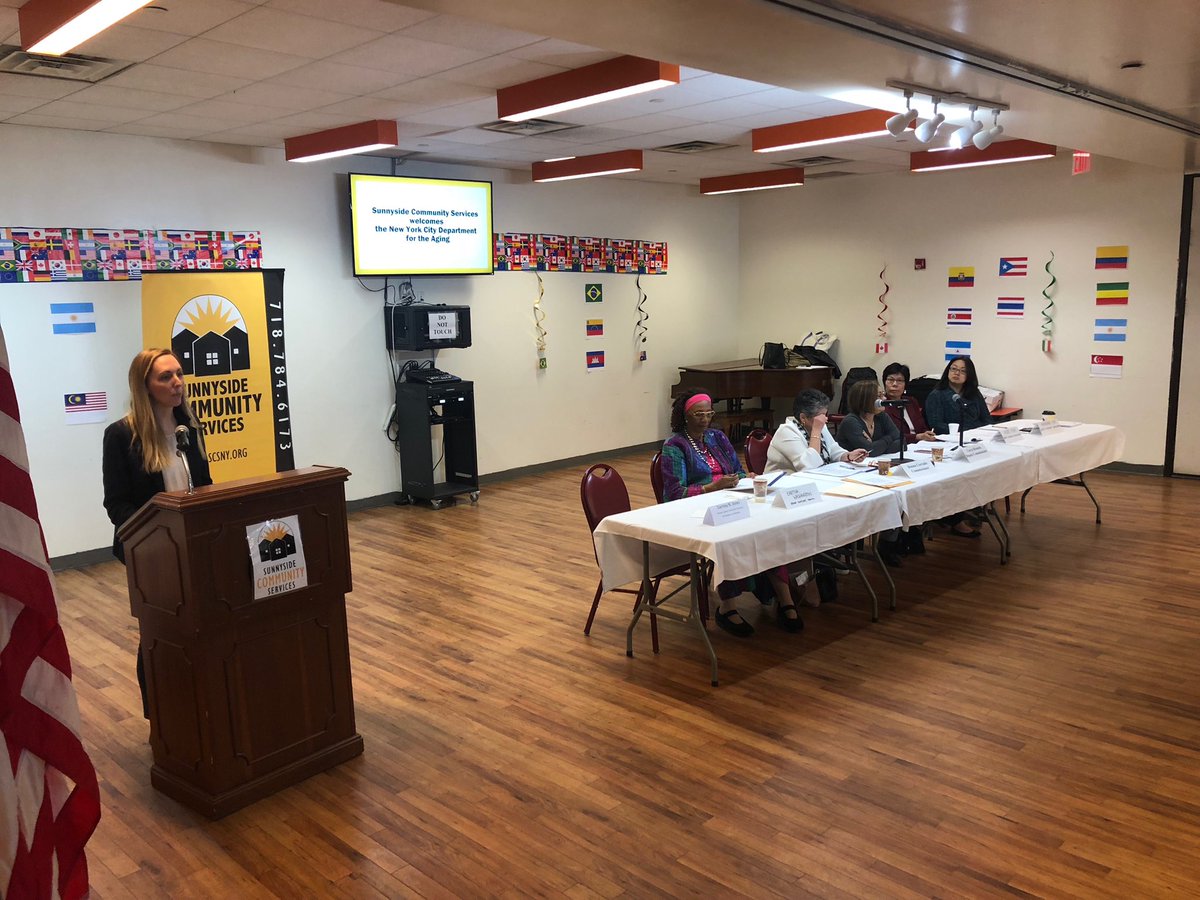
The following testimony was provided by LiveOn NY staff at the Department for the Aging (DFTA) Annual Plan Hearing in each borough. Thank you to the following organizations for hosting hearings on the Annual Plan:
BronxWorks Innovative Senior Center
Fort Greene Albany Senior Center
Carter Burden Leonard Covello Senior Center
JCC of Staten Island
Sunnyside Community Neighborhood Senior Center
To read the Annual Plan, click here!

New York City Department for the Aging (DFTA)
2018-2019 Annual Plan Summary
Public Hearings
With a base of more than 100 organizations serving 300,000 older New Yorkers annually, LiveOn NY’s members provide core community services to older adults. Thank you to Commissioner Corrado for your leadership.

LiveOn NY also administers a citywide outreach program and staffs a hotline that educates, screens and helps with benefit enrollment including SNAP, SCRIE and others, and also administers the Rights and Information for Senior Empowerment (RISE) program to bring critical information directly to seniors on important topics to help them age well in their communities.
Driving community resilience are senior service organizations serving over 55,000 seniors daily, including thousands of immigrants, who provide safe, culturally sensitive and user friendly programming, whether in the home or the community. These services are creating opportunities and positively affecting health outcomes for older New Yorkers.
“Senior centers will provide nearly 9 million meals this year, with over half of seniors saying that these meals are over 50% of their daily food intake.”
In order for New York to be a fair city for all ages, the DFTA service system must be financially supported at levels reflective of the needs it serves. At a time of historical demographic increases for the aging population, the DFTA budget is well under 1% of the city budget. While we are pleased to see DFTA has issued its Plan 2025, those ideas must be supported with, specific financial investments that demonstrates New York’s commitment to make the city a fairer and better place to age.
With a collaborative spirit and mindset, we strongly urge the city to think critically with us about continued innovation and investments for quality senior services. While LiveOn will be putting forth specific priorities in the upcoming months, some areas we will focus on include:

Addressing Senior Hunger. Senior centers will provide nearly 9 million meals this year, with over half of seniors saying that these meals are over 50% of their daily food intake. Further, providers will distribute 4.6 million home delivered meals. The majority of seniors utilizing the program are women, living alone, receiving meals that on average account for ½ or more of their total food for the day. That said, New York City spends 20% below the national average on senior meals – that means they are only paying for 4 out of every 5 needed meals and providers are forced to pick up the extra cost. Further, senior centers were not allowed to use “model budget” money last year on meals or kitchen staff, who we all know are so valuable to the center. The city must make meaningful investments to address senior hunger and fully pay providers for this work.
Support services in senior housing. We applaud the de Blasio Administration for making strong investments in the production of affordable senior housing through its housing plan and Seniors First Initiative. LiveOn NY has long advocated for a funding for service coordinators in senior housing buildings to support seniors in the building and community and will continue to work with city leaders on this issue.
Increased funding for all senior centers, including NYHCA programs. Last year, the city made an initial investment of $10 million for staffing and programming at some senior centers, and promised an additional $10 million by 2021. We will advocate for increased investments for all centers for staff, programming and also for infrastructure and other center costs, particularly for programs located in NYCHA facilities, as well as for senior centers who are already beyond capacity and who are seeing a sharp increase in the demand for services in communities with growing populations.
Support the Aging Workforce and Human Services Sector. While we applaud increases in salaries to case managers and some senior center staff in recent years, in order to attract and retain highly qualified staff, DFTA must address salaries across its entire portfolio of services. This will strengthen our system as a whole and we look forward to working on this issue collaboratively. We also strongly support the call for structural investments in the entire human service sector.
By investing in all DFTA senior services, we are certain that the aging services system will be strengthened to serve older adults and harness the momentum aging can bring, and will make NYC truly a fair city across the lifespan. LiveOn NY looks forward to working with DFTA, City Council and the Administration to make New York a better place to age.


Changes in the delivery of health care services
While services such as senior centers, home-delivered meals or affordable senior housing with services are non-medical by definition, their impact has a uniquely positive effect on the overall health of a senior and a reduction in costs that would otherwise be imposed to our healthcare system. For example, data has shown that the majority of the seniors that go to a senior center receive more than half of their daily nutritional intake from meals they eat at the center.
The work of community based service providers also has significant health impacts from lowering rates of depression, to preventing isolation, to even reducing hospitalization rates for older adults, and more. For example, given that studies now show that loneliness surpasses obesity as an early predictor of morbidity, the ability for senior centers to provide socialization opportunities is key to combating this risk-factor.
New York City Council
Committee on Hospitals
Chair, Council Member Rivera
Oversight - Changes in the Delivery of Health Care Services
Moving towards a Community-Based Outpatient Model
LiveOn NY thanks Committee on Hospitals Chair Rivera and the committee for the opportunity to testify today. With a membership of more than 100 community-based organizations that serve over 300,000 older New Yorkers annually, LiveOn NY’s members provide core services that allow older adults to thrive in their communities, including senior centers, congregate and home‐delivered meals, affordable senior housing, elder abuse prevention services, caregiver supports, transportation, NORCs and case management. Through our work, and the work of our members, LiveOn NY strives to make New York a better place to age.
“The work of community based service providers also has significant health impacts from lowering rates of depression, to preventing isolation, to even reducing hospitalization rates for older adults”
LiveOn NY also administers a citywide outreach program that targets older adults in the communities where benefits are most underutilized. This program educates thousands of older adults, including those who are homebound, about food assistance options, and screen and enroll those who are eligible for SNAP, SCRIE and other benefits. LiveOn NY also staffs a call hotline (212) 398-5045, staffed by a professional client services team that assists older adults and caregivers with benefits screenings and applications, serving approximately 1,000 clients per quarter.
The topic of this hearing is important to us because we know a strong vibrant New York City is built upon a foundation of strong, resilient communities. Central to these communities are older adults, who are often the bedrock of their families and their neighborhoods, whether it be caregiving for their grandchildren or being a key source of information and communication within their family networks.
We also know that the community based organizations, many of those funded by the Department for the Aging (DFTA), provide critical senior services, and represent a network of cost-effective programs in every community that work to holistically improve a senior’s quality of life and their overall health.

With the aforementioned in mind, when looking at the healthcare system in New York, it is important to ensure that one’s view takes on the full landscape of health-impacting services and providers. For older adults, while services such as senior centers, home-delivered meals or affordable senior housing with services are non-medical by definition, their impact has a uniquely positive effect on the overall health of a senior and a reduction in costs that would otherwise be imposed to our healthcare system. For example, data has shown that the majority of the seniors that go to a senior center receive more than half of their daily nutritional intake from meals they eat at the center.
The work of community based service providers also has significant health impacts from lowering rates of depression, to preventing isolation, to even reducing hospitalization rates for older adults, and more. For example, given that studies now show that loneliness surpasses obesity as an early predictor of morbidity, the ability for senior centers to provide socialization opportunities is key to combating this risk-factor.
We come here today not with one “solution,” but to be part of this ongoing important conversation about the linkages between healthcare and community and how we all play a role. We would like to highlight a few key examples, through the lens of our members, that show the breadth of the challenges and potential solutions related to delivery of health care, particularly to older adults, and how the city must support community based service organizations who are a key player in those solutions. One common linkage through these examples is that community based nonprofits serve as a critical part of an innovative solution.

First, a great example of the value of community based services is the housing with services model, as can be found in the recently released study by LiveOn NY’s member Selfhelp Community Services of the residents in their independent senior affordable housing with services program. The study compared Medicaid data for residents in SelfHelp housing in two zip codes and compared it to other seniors living in the same zip codes over two years. The crucial research found that the seniors access to a service coordinator led to:
68% lower odds of being hospitalized
$1,778 average Medicaid payment per person, per hospitalization for Selfhelp residents, versus $5,715 for the comparison group
53% lower odds of visiting an emergency room compared to a non-Selfhelp resident
This research, and future research linking community based research to health outcomes is critical to showing the return on investment by city, state and federal funding in community based services collocated in senior housing. Selhelp will also be releasing additional research imminently to this study.
Second, an example of another recent challenge relating to information dissemination is the announcement by the State Department of Health of the closure of certain Managed Long Term Care (MLTC) plans. The state will send letters to patients with information about choosing a new plan, but we know that navigating the complex system of health plans is not simple and many require assistance. It should be recognized that several community based organizations such as NYLAG has provided streamlined critical information and updates on these complicated changes. Also, the senior service network, particularly the DFTA funded case management agencies which served over 33,000 clients last year, are a re instrumental assisting their clients navigate these changes.

Third, in addition to building a system of aging services through ongoing increased city funding, given their intrinsic health benefits, the community-based service sector must be also seen as a viable partner and compliment to the overall healthcare system in New York. It is imperative that community-based organizations are able to expand their data collection and analytics capacity in order to fully and appropriately integrate with the healthcare system. While the community-based service providers have decades of experience in improving outcomes for their senior participants, articulating this fact has been near impossible due to funding and data limitations. It is LiveOn NY’s desire to work in collaboration with DFTA, the state, the medical community and all interested parties to improve data coordination and collection capabilities for nonprofits so that they can continue to improve the quality of life of seniors throughout the city, and to demonstrate through data these crucial improvements in a senior’s overall well-being. We urge the city to look to these nonprofits as key stakeholders and support them to expand this work.
LiveOn NY looks forward to working with City Council, the Department for the Aging, all city agencies and the Administration to make New York a better place to age through a strong network of community based services.