

News
&
Updates

More Than 300 Seniors Came to City Hall for LiveOn NY's 23rd Annual Aging Advocacy Day
On the 23rd anniversary of LiveOn NY’s Aging Advocacy Day, 300 older adults from over 100 senior centers, NORCs and other programs converged on City Hall and met with 43 Councilmembers to talk about how senior services fuel their communities. Older New Yorkers are the fastest growing population in the City. From 2000 to 2030 their numbers will double to 1.84 million, about one in five New Yorkers. Current resources do not allow senior services staff to connect with the broad array of needs of ever changing immigrant groups, diverse populations and caregivers…
23rd Annual LiveOn NY Aging Advocacy Day – MAY 9, 2018
300 older adults from over 100 Senior Centers, programs, and NORCs show the momentum older adults bring to their communities and come to City Hall to advocate for funding for community-based services
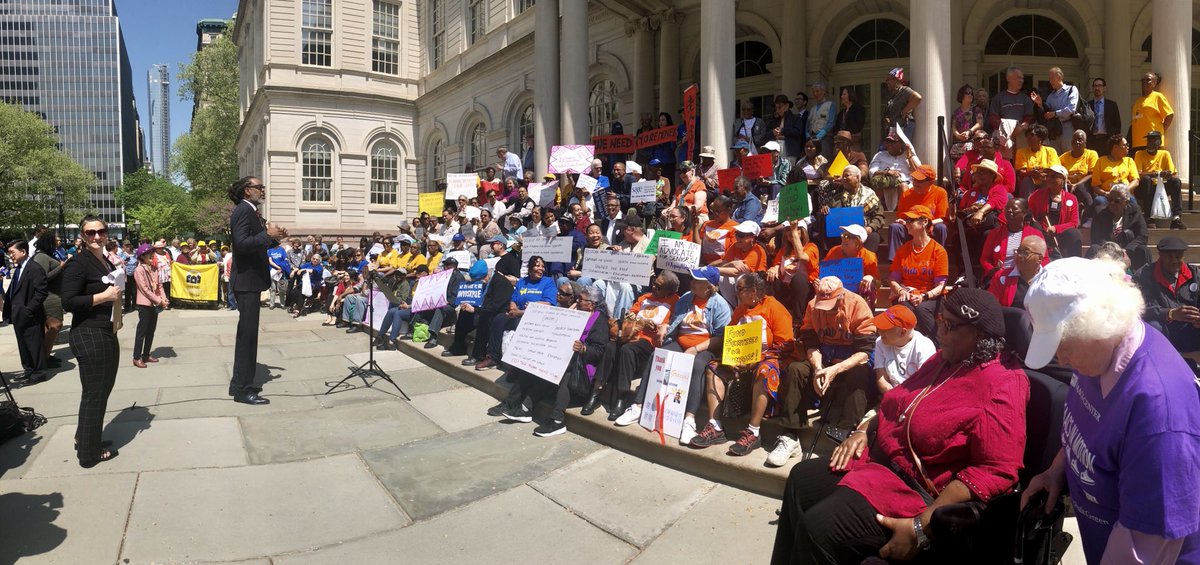
On the 23rd anniversary of LiveOn NY’s Aging Advocacy Day, 300 older adults from over 100 senior centers, NORCs and other programs converged on City Hall and met with 43 Council Members to talk about how senior services fuel their communities. Older New Yorkers are the fastest growing population in the City. From 2000 to 2030 their numbers will double to 1.84 million, about one in five New Yorkers. Current resources do not allow senior services staff to connect with the broad array of needs of ever changing immigrant groups, diverse populations and caregivers. The budget priorities for FY 19 reflect community supports for all older New Yorkers, both through $22.1 million in new funding, as well as full restoration for aging programs through City Council Schedule C senior allocations.
Allison Nickerson, Executive Director, LiveOn NY, states, “Our City’s aging services are the building blocks that allow hundreds of thousands of older New Yorkers to tap into the momentum of later life so that they can power up the economy, volunteer in their communities, be caregivers and live their best life. An investment in the New York City Department for the Aging and community based senior services is therefore a commitment to social justice across the lifespan – ensuring that we can access needed meals, life sustaining services and opportunities for engagement as we grow old. When the city makes this commitment to fund senior services, the return on that investment is seen community by community, borough by borough, and is key to making New York City a better place to age. It is essential that we continue to work together to advocate for funding to support the infrastructure of services that allow us to age with confidence, grace and vitality.”

“While we have made significant inroads to fund and expand senior services last year, the work to ensure that every older New Yorker has the opportunity to age with dignity in their community has only just begun,” said Council Member Margaret S. Chin, Chair of the Committee on Aging. “Senior funding still comprises less than one half of one percent of the City’s $88 billion budget. I am proud to stand with aging advocates once again to rally for deeper investments to cut case management waiting lists, increase capacity for our neighborhood senior centers, address senior hunger and provide universal free lunch for seniors at senior centers and enhance NORC funding. Together, we can disrupt the false idea that seniors are a burden to society, and create a new narrative that celebrates the countless contributions they make every single day. Thank you to LiveOn NY for making today’s Aging Advocacy rally a reality.”

“I am proud to once again stand with LiveOn NY and our advocates as we work to ensure that New York City is a great place for seniors to live,” said Council Member Paul Vallone, Chair of the Committee on Economic Development. “Our city’s senior centers are second homes to over 6,000 seniors. They gather with friends, enjoy meals and access vital services. We have continually worked to improve the quality of life for our seniors and today we stand together to once again make clear that our city budget needs to reflect the needs of our rapidly growing senior population.”
HIGHLIGHTS OF BUDGET PRIORITIES:
LiveOn NY calls upon the city to:
Address elder hunger with a $12.1 million investment to support senior center/congregate meals and home delivered meals.
Support neighborhood senior centers by immediately allocating an additional $10 million in funding to support critical staffing and program needs.
Address critical capital and facility needs in the nearly 100 senior centers and programs in NYCHA buildings with $5 million.
Support critical citywide aging services such as the SuCasa program, Support our Seniors, NORCs, Healthy Aging and others with a full restoration of Schedule C programs.
A commitment to supporting and spreading awareness of aging programs and services to reach older adults, caregivers and communities so that seniors can access these vital services.
Thank you to all of our Advocacy Day participants and to all of the Council Members who joined us during this wonderful event!


LiveOn NY advocates for investments in senior services at March City Council budget hearings
March Preliminary Budget Hearings were an opportunity for the needs of older New Yorkers to be heard
March Preliminary Budget Hearings were an opportunity for the needs of older New Yorkers to be heard
LiveOn NY testified on the importance of funding senior services to the following committees:
Committee on Aging
Chaired by Council Member Chin
Committee on Finance
Chaired by Council Member Dromm
Committee on Immigration
Chaired by Council Member Menchaca
Committee on Veterans
Chaired by Council Member Deutsch
Committee on Contracts
Chaired by Council Member Brannan
Committee on General Welfare (testimony submitted in writing)
Chaired by Council Member Levin
Committee on Health
Chaired by Council Member Levine
Committee on Housing (testimony submitted in writing)
Chaired by Council Member Cornegy
Click here to read the testimony we submitted to the Aging Committee. At this particular hearing we were joined by a packed house of seniors looking to advocate for #FullFundingforDFTA in this year's budget.
Check out our FY19 Budget Priorities found here.
Thank you to all of City Council for the opportunity to share the needs of older New Yorker's and how the city can make New York a better place to age!


LiveOn NY Featured in Huffpost Among Big Nonprofit Wins of 2017
Advocates were successful this year in getting the biggest budgetary win for senior services in 15 years: $22.8 million additional dollars in the FY18 budget. This funding will support senior centers, homecare services, case management, weekend meals, and caregiver services throughout the five boroughs. Trust grantee LiveOn NY and its members played a key role in securing this victory.
"17 Wins in 2017: Nonprofits Driving Policy Change"
We are honored to have our work, which was a collaborative effort alongside seniors, providers, and other advocates, featured in HuffPost as one of "17 Wins in 2017: Nonprofits Driving Policy Change". Be sure to check out the article and the tireless work of the other nonprofits featured, each seeking to better our respective fields and the lives of the people we touch.
We look forward to continuing this work and building upon our successes in the New Year!

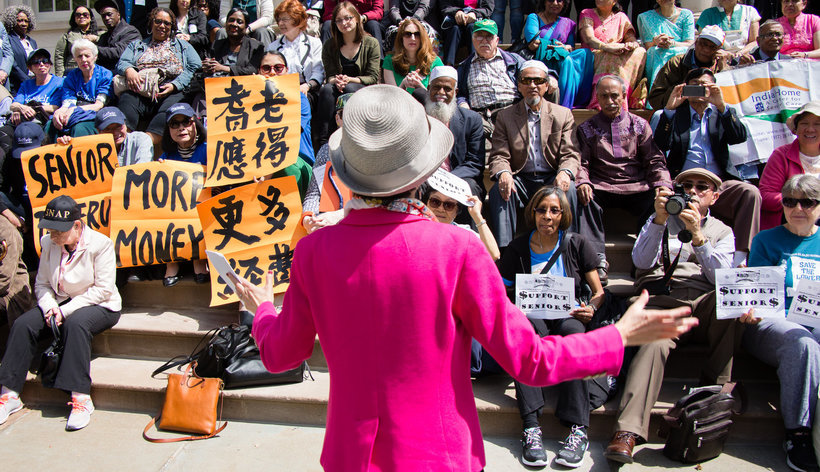
Featured: Council Member Chin and participants of our member organizations at our 2017 Senior Advocacy Day

Testimony: NYS Assembly Committee on Housing Hearing on Affordable Housing
In 2016, LiveOn NY conducted a survey, entitled “Through the Roof” which found that an estimated 200,000 seniors are on wait lists for housing through the HUD202 program in New York City. The lack of affordable housing can have adverse effects on a senior’s health as it forces one to make the difficult choice between skipping meals, going without medications, or avoiding needed healthcare in order to afford rent.
New York State Assembly
Assembly Standing Committee on Housing
December 14, 2017
Oversight of the State Fiscal Year 2017-2018 State Budget for New York State Homes & Community Renewal
Thank you to Chairperson Assemblyman Cymbrowitz and to the Assembly Committee on Housing for the opportunity to testify today.

LiveOn NY would like to first and foremost thank Governor Cuomo and the entire legislature for the investment made last fiscal year of new affordable housing capital funding. More specifically, we thank the state for the creation of the first capital funding stream for affordable senior housing, allocating $125 million over the next 5 years.
This investment in new affordable senior housing is critical due to the dire need throughout the state. In 2016, LiveOn NY conducted a survey, entitled “Through the Roof” which found that an estimated 200,000 seniors are on wait lists for housing through the HUD202 program in New York City. The lack of affordable housing can have adverse effects on a senior’s health as it forces one to make the difficult choice between skipping meals, going without medications, or avoiding needed healthcare in order to afford rent.
LiveOn NY is hopeful that the critical investments made last fiscal year will help to combat the current housing crisis for seniors and New Yorkers of all ages. Beyond these capital investments, LiveOn NY urges investments to be made in the upcoming fiscal year to fully support seniors by providing service coordinators in both newly constructed and existing senior residences.
Service coordinators in senior housing residences are proven to reduce health care costs. In fact, LiveOn NY’s member Selfhelp Community Services just released a study of the residents in Selfhelp’s senior affordable housing program. They study compared Medicaid data for residents in their housing in two zip codes and compared it to other seniors living in the same zip codes over two years.
The crucial research found that the seniors living in Selfhelp’s affordable housing had much more positive outcomes including:
68% lower odds of being hospitalized
$1,778 average Medicaid payment per person, per hospitalization for Selfhelp residents, versus $5,715 for the comparison group
53% lower odds of visiting an emergency room compared to a non-Selfhelp resident

In addition, a 2016 study of residents in affordable housing in Oregon showed that Medicaid costs declined by 16% just one year after seniors moved into affordable housing communities. Results also showed that primary care visits increased by 20%, while emergency room visits decreased by 18% and that properties with on-site health services produced the largest decrease in emergency room visits. A 2014 evaluation of the SASH program in Vermont revealed that growth in the annual total Medicare expenditures of program participants was lower by an estimated $1,756-$2,197 per person when compared to the growth of total Medicare expenditures in comparison groups.
In order to truly make New York the first Age Friendly state in the nation, investments in these proven cost-effective service coordinators must be made. LiveOn NY urges a new dedicated funding stream for services in existing and new affordable senior housing buildings. These services can help residents in remaining healthy and independent, supporting the overwhelming desire for seniors to age in place in their homes. This new program would be a strong pillar of the Governor Cuomo’s Health Across All Policies Initiative.
LiveOn NY thanks Assemblyman Cymbrowitz and the Standing Committee on Housing for holding today’s hearing and we look forward to working together in the upcoming fiscal year.
LiveOn NY’s members provide community-based services that allow older adults to thrive in their communities. With a base of more than 100 organizations serving at least 300,000 older New Yorkers annually, our members provide services ranging from senior centers, congregate and home‐delivered meals, affordable senior housing with services, elder abuse prevention services, caregiver supports, transportation, NORCs and NY Connects. LiveOn NY members also develop, operate, and provide services for affordable senior housing building throughout New York City. LiveOn NY advocates for increased funding for these vital services to improve both the solvency of the system and the overall capacity of community-based service providers.
LiveOn NY also administers a citywide outreach program that targets seniors in communities where benefits are most underutilized. This program helps to educate thousands of older adults, including those who are homebound, about food assistance options, as well as to screen and enroll those who are eligible for SNAP and SCRIE/DRIE.
LiveOn NY is also proud to administer the Senior Medicare Patrol (SMP) program for the entire state. A grant project funded by the U.S. Administration for Community Living (ACL), this program is aimed at preventing Medicare fraud. SMP is modeled around recruiting and actively engaging senior volunteers to promote peer counseling, education, and assistance. This provides seniors opportunities to not only educate themselves on Medicare issues, but also to get involved and give back to their community. SMPs educate Medicare beneficiaries on how to protect, detect, and report Medicare fraud, through this, SMPs are able to empower beneficiaries to reduce healthcare costs caused by errors, abuse, and fraud.

Testimony: NYC Aging Hearing on Congregate & Home Delivered Meals
At inception, senior centers, borne out of the Older American’s Act, were aimed at providing nutritional services so often lacking for seniors throughout the United States. Today, this model has expanded to include services that support a senior’s overall health and wellbeing, such as fitness classes, cultural outings and art programs. What has not changed, however, is the value associated with congregate meals for the lives of thousands of older New Yorkers each year.
New York City Council Joint Hearing
Committee on Aging, Chair, Council Member Chin
Subcommittee on Senior Centers, Chair, Council Member Vallone
December 14, 2017
Oversight: Seniors’ Access to Nutritional and Culturally Competent Congregate and Home Delivered Meals
LiveOn NY thanks Chair of the Committee on Aging, Council Member Margaret Chin, and Chair of the Subcommittee on Senior Centers, Council Member Paul Vallone, as well as the rest of the committee for holding this important hearing.

LiveOn NY also thanks Mayor de Blasio, Speaker Mark-Viverito, Finance Chair Ferreras-Copeland, Aging Chair Chin and Department for the Aging Commissioner Corrado for the critical investment of an additional $1.2 million in baselined funding for congregate, home-delivered and weekend meals during last year’s funding increases associated with the “Year of the Senior” campaign.
At inception, senior centers, borne out of the Older American’s Act, were aimed at providing nutritional services so often lacking for seniors throughout the United States. Today, this model has expanded to include services that support a senior’s overall health and wellbeing, such as fitness classes, cultural outings and art programs. What has not changed, however, is the value associated with congregate meals for the lives of thousands of older New Yorkers each year.
For many New Yorkers, food insecurity remains a harsh reality of daily life. With 250 million meals needed to reach food security for all, and seniors making up an estimated 19% of the city’s population, the demand for nutrition services among seniors remains significant.[1] This is highlighted by the fact that 1 in 6 seniors struggles with hunger in the U.S. For older adults, inadequate nutrition can exacerbate existing conditions such as diabetes, cardiovascular disease or osteoporosis.[2] Further, it has been found that the risk of hunger is not equal among all populations, as seniors with disabilities, African Americans, and other minorities are more at risk of hunger.
Both home-delivered meals and congregate meals combat more than just the strains of food insecurity among seniors. For example, congregate meals offered by senior centers offers not only a nutritious meal but an opportunity for socialization with peers. This socialization improves lives, as isolation has been found to be a greater predictor of morbidity than obesity. Further, attended by nearly 30,000 seniors daily, senior centers provide critical nutrition services for seniors of all backgrounds, language capacities, religions, and socioeconomic status.
The benefits of home-delivered meals have been well documented after years of programmatic success. Meals on Wheels of America found that 92% of seniors say home-delivered meals enables them to remain in their homes.[3] Given the cost of nursing home use, the ability for home-delivered meals to facilitate the aging in place model should be seen as a cost-savings mechanism for the city. Further, 81% of seniors stated that home-delivered meals improve their overall health and 90% agree that the program makes them feel more safe and secure. The majority of seniors utilizing the program tend to be women, living alone, receiving meals that on average account for ½ or more of their total food for the day.
Given these statistics, we must continue to ensure the programmatic success of both home-delivered and congregate meals by both modernizing and contextualizing the programs.

Contextually, the makeup of older adults in New York City has changed in recent years and will continue to evolve in the years to come. As of 2015, almost 50% of older New Yorkers were foreign born, reflecting a significant need for meals that are culturally appropriate to an array of backgrounds.[4] Further, diversity of religious and health requirements also impacts the variety and associated cost of the meals providers must serve. According to DFTA’s senior center standards, providers must offer menus that “are appropriate to participants’ cultural backgrounds”. This requirement brings a fiscal implication: for example, in 2015, DFTA stated that, “in DFTA’s HDML network, each catered Kosher [meal] is on average $1.38 more than non-Kosher catered meals.” Similar to Kosher meals, Halaal, gluten free, vegetarian, vegan, or other consumer demands have an associated cost-increase.
LiveOn NY advocates that the city fully reimburse providers for all types of meals and support provider’s efforts to serve culturally appropriate meal variations as needed.
Further, LiveOn NY believes that the city must modernize the structure of cost per meal reimbursements to one that consistently reflects rising food costs such as ingredients and labor. From 2008-2013 alone, the cost of food increased by 11% according to the Consumer Price Index. As inflation continues to rise, a system must be put in place to automatically reimburse providers for the full cost of each meal, rather than reimbursing at a consistently insufficient rate. Currently, this lack of adequate reimbursement forces providers to subsidize all meal contracts, a practice that is exacerbating the system’s ability to make ends meet. Additionally, senior center and home delivered meal contracts should be fully funded in terms of the cost of administrative and overhead costs associated with a contract. This change would enable providers to deliver high quality services to older adults as a result of full funding.
These recommendations are supported by the findings from LiveOn NY’s recently held membership convening entitled Senior Centers: Visions and Priorities for the Future. Here, 80 individuals from LiveOn NY member organizations engaged in thoughtful and productive conversation discussing priorities and their vision for how to serve older adults today and in the future. What we found was that members overwhelmingly identified "enhanced nutrition capabilities" as one of the top five collective priorities when looking at their vision for the future. Discussions around this issue included increasing their ability to offer high quality and more variety nutrition options to best serve their communities. LiveOn NY is continuing to compile the incredible ideas and information discussed at the event which will be shared more broadly with Council and the Administration in the future.
LiveOn NY looks forward to working with NYC City Council and the administration to implement policy and secure funding to bolster this critically important program for seniors in every community.
[1] Food Bank for York City, 2014
[2] Department for the Aging, Annual Plan Summary, 2019
[3] Meals on Wheels of America, 2017
[4] Center for an Urban Future, 2017