

News
&
Updates

LiveOn NY In the News
At LiveOn NY, we work hard to make sure that the public hears about the issues affecting older New Yorkers, as well as the incredible momentum that exists as we grow old. To this aim, we are proud of each and every time we are able to share this narrative with our local communities or to comment on a topic effecting older New Yorkers.

At LiveOn NY, we work hard to make sure that the public hears about the issues affecting older New Yorkers, as well as the incredible momentum that exists as we grow old. To this aim, we are proud of each and every time we are able to share this narrative with our local communities or to comment on a topic effecting older New Yorkers.

Below are a few articles & press releases related to our work:
June 20, 2019 “NYC’s Seniors Get Solid Wins in City’s Budget” article by Roshan Abraham in City Limits
June 12, 2019 “Finding Affordable Housing In NYC Is Hard, It’s Almost Impossible If You’re A Senior” article and video segments in CBS New York
“You shouldn’t ever have to choose between your job and caring for your loved ones”
June 6, 2019 "New Yorkers Are Living Longer Than Ever" article by Melanie Grayce West in the Wall Street Journal
May 9, 2019 “Seniors Rally at City Hall” article and video coverage by Jarrett Murphy in City Limits
April 24, 2019 “The Distressing Math of NYC’s Future Senior-Housing Need” article by Toni Kamins in City Limits
March 26, 2019 “Opinion: It’s Time to Make NY a #FairCity4AllAges” Op-Ed by Katelyn Andrews, Director of Public Policy at LiveOn NY, and Council Member Margaret Chin, Chair of the New York City Council Committee on Aging, in City Limits
February 13, 2019 “NY Program is Uneven in Supporting Those Caring for Aging Parents” article by Roshan Abraham in City Limits
We look forward to continuing to weigh in on aging issues throughout New York City, for upcoming press inquiries, please reach out to Katelyn Andrews at kandrews@liveon-ny.org or 212-398-6565 x. 244

LiveOn NY Testifies at Final Public Hearing on FY20 City Budget!
On May 23rd, Director of Public Policy, Katelyn Andrews testified to the City Council Committee on Finance and Subcomittee on Capital on the need for additional senior service funding in the FY20 City Budget.

On May 23rd, Director of Public Policy, Katelyn Andrews testified to the City Council Committee on Finance and Subcomittee on Capital on the need for additional senior service funding in the FY20 City Budget.
Watch the hearing here and listen to the inspired testimony of dozens of fellow New Yorkers
LiveOn NY testifies at the 4:22:00 minute mark in this 7+ hour hearing
Read our full, written testimony, below:
New York City Council
Committee on Finance, Chair, Council Member Dromm
Subcommittee on Capital, Chair, Council Member Gibson
May 23, 2019
Executive Budget Hearing
Thank you Chair Dromm, Subcommittee Chair Gibson, and the full committees for the opportunity to testify on how we can work together to make New York a fair city for all ages.
On behalf of LiveOn NY, at this pivotal time in our city’s budget negotiations, I would like to clearly articulate the urgent and significant need for increased funding that exists for New York’s senior service providers. I also would like to fully appreciate and thank the Council for your steadfast support of senior programs, and particularly for your inclusion of the necessary increase to meals funding in your preliminary budget response. LiveOn NY is hopeful that this recommendation will rightly make its way into the final budget.
Just this afternoon, lunch was served at senior centers in communities across the five boroughs, thousands of meals were served to seniors, the majority of whom report that this singular meal makes for more than half of their daily intake of food. However, in spite of the clear value of these meals, they have for years been funded far below their worth, with the last across-the-board increase to providers being a mere 25 cents in 2014. Today, providers of both home-delivered and congregate meals in our high-cost city are funded at a rate that is 20% lower than the national average.
The effect? Mission-driven, community-based providers are losing money on every meal they serve or, to put it another way, they are supplementing the City for its true cost of doing business. This is unsustainable and unfair. It’s time to become a fair city for all ages by investing $20 million in DFTA’s congregate meal program and $15 million in home-delivered meals, for a total new investment of $35 million in meals for seniors.
The picture I just painted of the historic and chronic underfunding of meals for seniors is not an anomaly. Across the human services sector, contracts are funded at a rate far below the cost of service provision. In many cases, the culprits behind this pervasive underfunding are inadequate indirect rates and contract reimbursement rates. For this reason, LiveOn NY, is proud to stand alongside the Human Service Council, and providers serving New Yorkers across the lifespan, to call on the city to provide $106 million in funding to begin to rectify this wrong. We are again appreciative of Council’s inclusion of this item in your budget response and are resolute in our efforts to ensure this funding is included in the final budget.
Given that the Department for the Aging (DFTA) budget remains less than ½ of 1% of the overall budget, LiveOn NY remains cognizant of the fact that there are many programs in need of funding increases, including:
1.3 million in new funding for NORCs;
$5 million for services in senior housing; and
$10 million for improved infrastructure across senior centers, an ask that we are appreciative that the Mayor took steps to fulfill in the Executive Budget, earmarking $6 million in new funds for infrastructure expenses, such as air conditioners in senior centers.
A more comprehensive listing of needs is attached to this testimony for your consideration.
As we all grow old, and as the population of older New Yorkers rapidly increases, LiveOn NY remains committed to working with our city partners to make New York a better place to age. We hope that the FY20 budget marks a firm step towards this goal.
Thank you for the opportunity to testify.


LiveOn NY Calls for Investments to Make NY a #FairCity4AllAges
the DFTA budget still accounts for less than 1% of the total city budget, a point that is only exacerbated by the fact aging New Yorkers are the now fastest growing demographic. Further, New York City spends 20% below the national average on senior meals – that means they are only paying for 4 out of every 5 needed meals. This does not reflect fairness for older New Yorkers, senior service staff and nonprofits that serve older New Yorkers. In order for New York to truly be the fairest big city, it must be a #FairCity4AllAges. Fairness does not have an age cutoff.
LiveOn NY testimony provided for the record:
New York City Council
Committee on Finance, Chair, Council Member Daniel Dromm
March 6, 2019
Preliminary Budget and Oversight Hearing

Thank you Chair Dromm and the Finance Committee for the opportunity to testify on how we can work together to make New York a fair city for all ages. LiveOn NY also thanks Mayor de Blasio, Speaker Johnson, DFTA Acting Commissioner Caryn Resnick, Aging Committee Chair Margaret Chin and the entire City Council for their consideration of needs of older adults in the FY20 budget.
With a base of more than 100 community-based organizations, LiveOn NY’s members provide core services that allow older adults to thrive in their communities, including senior centers, congregate and home‐delivered meals, affordable senior housing, elder abuse prevention services, caregiver supports, transportation, NORCs and case management. DFTA’s network provides services to over 50,000 older adults daily. Let’s be clear, these services aren’t just nice to have: studies have shown that services such as senior centers, home delivered meals and others are key to positively affecting health impacts and preventing isolation.
LiveOn NY recognizes and is encouraged by initial investments in senior services by the de Blasio Administration and ongoing investments by City Council. That said, the DFTA budget still accounts for less than 1% of the total city budget, a point that is only exacerbated by the fact aging New Yorkers are the now fastest growing demographic. Further, New York City spends 20% below the national average on senior meals – that means they are only paying for 4 out of every 5 needed meals. This does not reflect fairness for older New Yorkers, senior service staff and nonprofits that serve older New Yorkers. In order for New York to truly be the fairest big city, it must be a #FairCity4AllAges. Fairness does not have an age cutoff.
LiveOn NY’s priorities are attached to our testimony, and are briefly highlighted them below.
Invest $20 million in Senior Center Meals and Kitchen Staff
WHY:
Senior centers provided 7.6 million senior center meals in FY17
30,000 seniors visit seniors centers daily
56% of seniors report that meals eaten at the center makeup ½ or more of their daily food intake
NYC currently funds senior meals on the average at 20% below the national average funding 4 out of every 5 meals, with nonprofits picking up the rest of the costs.
In 2008-2013 alone, the cost of food increased by 11% according to the Consumer Price Index while nonprofits struggle to keep pace.
Food costs, raises for kitchen staff and kitchen equipment and maintenance costs were specifically excluded from the model senior center budget funding last year, leaving a void in budgets despite the fact that kitchens are core to a senior center.
Over 50% of older New Yorkers are foreign born according to a recent Center for an Urban Future study, reflecting a significant need for meals that are culturally appropriate to an array of backgrounds, which brings an underfunded fiscal impact. In 2015, DFTA stated that, “in DFTA’s HDML network, each catered Kosher [meal] is on average $1.38 more than non-Kosher catered meals.” Similar to Kosher meals, Halaal, gluten free, vegetarian, vegan, or other cultural or nutritional needs have an associated cost-increase.
A citywide RFP for senior centers is expected in the near future.

$20 MILLION WILL FUND:
Increase for raw food costs, including funding for culturally competent meals
Increase in costs for disposables to serve food
Increase in funds to support fair salaries for kitchen staff and to fully staff kitchens to address numerous responsibilities including food preparation, cooking, serving meals, menu planning and submissions, inventory, ordering, accounting, managing volunteers and numerous other responsibilities required to operate a kitchen.
Repairs and maintenance for critical kitchen equipment including ovens, refrigerators and HVAC systems. These costs and needs are heightened in NYCHA senior centers and programs, which have critical additional infrastructure and repair needs.
Funding for critical inspections and services that are required annually or several times a year, including extermination, grease trap cleaning and grease removal, hood cleaning, fire suppression systems, maintenance of HVAC systems and refrigerators and freezers as well as treating sewage back up problems and security alarm service and maintenance.
All DFTA senior centers, including the 38 additional programs were not evaluated in the “model senior center” budget process last year, should receive funding for meals.
Expedite the Additional $10 million “Promised” for Senior Center Staff and Programs
DFTA allocated the first $10 million in model senior center budget funding late in FY19 and the second $10 million is “promised by FY21.” As noted, this funding specifically excluded meals and meal staff. We see no reason for the city to hold this funding. It should be expedited as soon as possible.
Invest $15 Million in Home Delivered Meals
WHY:

This year, providers will distribute over 4.6 million home delivered meals
The majority of seniors utilizing the program are women, living alone, receiving meals that on average account for ½ or more of their total food for the day
Nationally, 59% of meal recipients live alone – and the person delivering the meal is often the only person they will see that day
Seniors are underenrolled in SNAP - among those living with hunger, the under-enrollment rate of SNAP benefits is around 40%
NYC reimbursed providers 20% below the national average for home delivered meals
A citywide RFP is expected for home delivered meals in the near future
$15 MILLION WILL FUND:
Increase for raw food costs, including culturally competent meals
Increase in costs for disposables to serve food
Critical increase in funds to support fair salaries for home delivered meals staff, who are critical to the human interaction for home delivery
Funds for equipment, kitchen needs and food preparation
Invest $10 Million for Repairs, including funding for NYCHA Senior Programs
Senior Centers have infrastructure and repair needs, often that arise in an emergency, however there is not set funding or process to request these funds and centers are often confused and unaware of how to address such needs. These issues are exacerbated in the nearly 100 DFTA programs that operate in NYCHA community spaces which offer critical programs for older adults. The city should invest $10 million to provide funding for DFTA senior center and program infrastructure needs, and for accessible funding for emergency repairs and conditions, particularly in the 100 DFTA NYCHA Senior Centers and Clubs.
Invest $5 Million for Service Coordinators in Senior Housing
87% of senior of seniors would prefer to age in their homes. Research has shown a service coordinator located in a senior building is a proven cost-effective way to support seniors in their community, reducing hospital & nursing home costs. Seniors at Selfhelp Community Services were found to have significant healthcare savings: Selfhelp residents were 68% less likely to be hospitalized compared to seniors in the same zip codes, representing an average savings of $3,937 per person, per hospitalization.
Investing $5 million in a citywide Service Coordinators Program would would provide one full time and one part time service coordinator at nearly 40 new or existing affordable senior housing buildings to provide culturally competent information and support. Promotion of overall health and wellness the interconnection of services through the co-location of services can mean the difference between successfully aging in place verses experiencing costly hospitalizations or a move to a nursing home. Service coordinators provide culturally and linguistically competent opportunities for seniors in affordable housing buildings. Qualified social workers in these buildings can help older adults to access benefits, provide referrals to other services as needed, including home care, and combats isolation by connecting residents to socialization opportunities and other local resources, all of which promote healthy aging in the community.
Invest $1 Million for Case Management
There are over 1,000 seniors on case management waitlists citywide. LiveOn NY greatly appreciates the investments in FY18 which are beginning to address waitlists, as well as funding added by Council in FY19, but the need continues to grow. We must continually build this system to serve today’s need and the needs of the future. Additional funding is needed to reduce caseloads, which already very high at an average of 65. Funding is also needed to serve frail, homebound seniors on waiting lists so that a social worker is available to visit them at home, assess their needs and provide ongoing services. MSW compensation, as well as multilingual staff needs to be funded to ensure there is a professionally trained social worker who can work with immigrant and diverse populations and complex situations. Funding growing need and agency infrastructure are cornerstones to strengthening the case management system citywide. Case Management is a key program that services seniors that are not Medicaid eligible but still need these services, and it is vital to sustain this program.

No PEGs for DFTA
Across the board reductions through the recently announced Program to Eliminate the Gap (PEG) disproportionately and unfairly affect small agencies, such as DFTA, which receives such a small portion of the city budget to begin with. To avoid cutting direct services to older New Yorkers and the staff that serve them, DFTA should not be subject to PEGs.
Council Restorations and Investments in Senior Services Through Schedule C
City Council has long been a staunch supporter of city and district wide senior services programs through allocations in Schedule C. We thank you for your investments and advocate for full restoration for all Senior Service Programs funded in Schedule C. These include NORCs, Support our Seniors, SuCasa, Senior Centers for Immigrant Populations, Health Aging Initiative, Social Adult Day, and others.
Age Friendly Commission
LiveOn NY sits on the Age Friendly Commission and knows the importance of the Commission and its work groups. It is critical to convene thought leaders from across disciplines working on these critical issues. LiveOn NY supports continued funding for $100,000 for the Age-Friendly Commission to support its critical work, as well as an additional $250,000 to support the ongoing and new work groups for the commission for a total of $350,000.
Continued Investments in Human Services Sector
LiveOn NY is a member of the Human Services Advancement Strategy Group (HSASG).
The human services sector of our City is in crisis. Providers have long been sounding the alarm about the impact of the chronic underfunding of government contracts, and now we have reached a breaking point. Without a crucial investment on our current contracts, my organization will have to reevaluate how we can engage with the City to provide crucial services to our communities. As things currently stand, we can no longer carry the deficit of our City contracts.

The gap between what the City funds on human services contracts and what providers can supplement with private and philanthropic dollars has grown too wide. It is vital that no cuts are made to human service programs as part of the mandated budget reductions and the chronic underfunding of the sector is rectified.
The sector is united in asking the City Council to include in their budget response a request for the Mayor to invest $250 million dollars to fill the gap between provider’s indirect costs and the contract reimbursement rates from the City. The new Health and Human Services Cost Policies and Procedures Manual, which was developed alongside Deputy Mayor Palacio, lays out standardized indirect costs for our sector. However, without increased funding to address the gaps this manual displays in our contracts, the fiscal crisis we are facing remains unaddressed. Based on numbers provided by the Office of Management and Budget, $250 million should cover the costs to fully implement this manual.
While we understand the driving narrative around this budget is mandated budget cuts, there is money to go around. The City has made massive investments in areas including city staff and infrastructure while the needs of the human services sector have gone largely ignored. It is time to take the state of emergency facing this sector seriously and prioritize the needs of organizations that provide an estimated 2.5 million New Yorkers annually with critical services including after-school programs, supportive housing, homeless services, job training, and mental health services.
LiveOn NY looks forward to working with Mayor de Blasio, City Council, DFTA, all city agencies to make New York City a fair city for all ages and better place to age through a strong network of community based services.

Senior Center Meals Model Budget Hearing
As it stands the overall DFTA budget accounts for less than 1% of the total city budget, a point that is only exacerbated by the fact aging New Yorkers are the now fastest growing demographic. Further, New York City spends 20% below the national average on senior meals – that means they are only paying for 4 out of every 5 needed meals.
LiveOn NY testimony provided for the record:
New York City Council
Committee on Aging
Chair, Council Member Margaret Chin
February 27, 2019
Senior Center Meals Model Budget Hearing
LiveOn NY is a nonprofit membership organization representing 100 community-based organizations that serve over 300,000 older New Yorkers annually through senior centers, congregate and home-delivered meals, NORCs, affordable senior housing, elder abuse prevention services, caregiver supports, transportation and case management. Thank you Chair Chin and the Aging Committee for the opportunity to testify.
LiveOn NY is encouraged are encouraged the recent initial investments in senior centers, which are the core of strong communities. We also recognize and are encouraged by the joint work between the Office of Management and Budget (OMB) and DFTA examining the senior center meals system.

That said, as it stands the overall DFTA budget accounts for less than 1% of the total city budget, a point that is only exacerbated by the fact aging New Yorkers are the now fastest growing demographic. Further, New York City spends 20% below the national average on senior meals – that means they are only paying for 4 out of every 5 needed meals. This does not reflect fairness for older New Yorkers, senior center kitchen staff or the nonprofits that serve older New Yorkers. In order for New York to truly be the fairest big city, it must be a #FairCity4AllAges.
FY19 “Model Senior Center” Budgets
In FY19 DFTA undertook a model senior center analysis and distributed $10 million for “model senior center” budgets late in the fiscal year. Providers were not able to allocate this funding for meals or meal staff. Of note:
249 senior centers were included the “model senior center budget” analysis.
26 out of the 249 received no funding because they were deemed at or above the “model” amount.
For the 223 centers that did get funding, it was to be directed in two areas: direct staffing and consultants. “Direct Staffing” does not include kitchen or meal staff, which has caused salary disparity among programs. The funding could not be used for meal costs either, or other expenses to run a kitchen.
38 additional programs were not evaluated in the “model senior center” budget process, and thus received no funding. In that group are former discretionary funded sites that are now under DFTA (11 centers), former NYCHA (4 centers), “social clubs” (17) and other social service programs (6). Many, if not all, of the sties not evaluated in the “model senior center” budget process are held to the same standards as the sites that were evaluated, yet were not given funding as the others were. The appropriateness of this decision must be evaluated and reconciled moving forward.
In addition to this baselined $10 million distributed late in FY19, the city has promised an additional $10 million “by 2021” through this “Model Senior Center Budget” process.
The Importance of NYC Senior Center Meals
Senior centers provided 7.6 million senior center meals in FY17.[i]
56% of seniors report that meals eaten at the center make up ½ or more of their daily food intake and nutrients for the day from these meals.[ii]
13.6% of New Yorkers over the age of 60 lived in food insecure households and that number is rising.
Seniors are underenrolled in SNAP - among those living with hunger, the under-enrollment rate of SNAP benefits is around 40%.
Meals also offer socialization and improve lives, as isolation has been found to be a greater predictor of morbidity than obesity and provide critical nutrition services for seniors of all backgrounds, language capacities, religions, and socioeconomic status.
The importance of NYC Home Delivered Meals
This year, providers will distribute over 4.6 million home delivered meals.
The majority of seniors utilizing the program tend to be women, living alone, receiving meals that on average account for ½ or more of their total food for the day.
Nationally, 59% of meal recipients live alone – and the person delivering the meal is often the only person they will see that day.[iii]
Home delivered meals are critical for supporting older adults to age independently.

Challenges for the System
Inadequate funding for Staffing: Despite congregate meals being core to the spirit of the Older Americans Act, senior center kitchens citywide are far understaffed across the board and often must rely on volunteers to perform core functions to sustain the program. Further, salaries and funding are not commensurate with the numerous responsibilities required to run a kitchen including food preparation, cooking, serving meals, menu planning and submissions, inventory, ordering, accounting, managing volunteers and numerous other responsibilities required to operate a kitchen. Kitchen staff are critical to the senior center and were excluded in the model budget funding last year.
Underfunding of Raw Food Costs: Based on data from FY17, NYC paid nonprofits for senior and home delivered meals at a rate 20% below the national average. Specifically, for congregate meals, DFTA reimbursed providers on the average at $9.06 compared to the 2015 national average rate of $10.69. For home delivered meals, DFTA reimbursed providers on the average $8.24 compared to the national average rate of about $11.06. This means the city is paying for only 4 out of every 5 meals. From 2008-2013 alone, the cost of food increased by 11% according to the Consumer Price Index, however the nonprofits struggle to keep pace with food and service costs and what NYC is below the national average in what it pays to feed hungry seniors.
Inadequate Funding for Culturally Competent Meals: Further, almost 50% of older New Yorkers are foreign born according to a recent Center for an Urban Future study, reflecting a significant need for meals that are culturally appropriate to an array of backgrounds. Providers are required, not to mention eager, to offer menus that are culturally appropriate and nutritious, but do not have adequate funding to do so as this requirement brings a fiscal implication: in 2015, DFTA stated that, “in DFTA’s HDML network, each catered Kosher [meal] is on average $1.38 more than non-Kosher catered meals.” Similar to Kosher meals, Halaal, gluten free, vegetarian, vegan, or other cultural or nutritional needs have an associated cost-increase.
There is no set funding for upgrades for equipment and other repairs for critical kitchen equipment including overs, refrigerators and HVAC systems. Because of the lack of process, certainty, and funding about whether requests for repairs or upgrades will even be responded to or entertained, centers typically purchase or upgrade equipment only when something breaks. This is disruptive to service delivery, particularly in the kitchen and is inefficient and preventable. These costs and needs are heightened in NYCHA senior centers and programs, which have critical additional infrastructure and repair needs.
There is no baselined funding in contracts to meet minimal health and safety standards for senior centers. Many inspections and services are required annually or several times a year, including extermination, grease trap cleaning and grease removal, hood cleaning, fire suppression systems, maintenance of HVAC systems and refrigerators and freezers. Providers have also reported that annual deep power cleanings of kitchens are necessary to prevent against rodent infestations. Other expenses include sewage back up problems and security alarm service and maintenance. While there may be some very small amounts in budgets under “Other Occupancy” costs, these routine annual expenses are estimated at well over $10,000 a year, and providers do not have anywhere close to this in their budgets, even though they are required and routine.

Recommendations
Add at least $20 million in baselined funding to DFTA for congregate meals. This funding will increase meal costs closer to the national average, increase funding for providers to appropriately pay and staff their kitchens and add funding for the costs for equipment and services required to safely operate a kitchen. This funding is needed immediately since kitchern staff were specifically excluded from the model budget funding for senior centers last year.
Add at least $15 million in baselined funding to DFTA for home delivered meals. This funding will increase meal costs closer to the national average, increase funding for providers to appropriately pay and staff and service needs, as well as address increased need as the population increases. We recognize that DFTA, thanks to the Council’s support, added $2.84 million in FY 2019 for home delivered meals, however this funding was not baselined and was one time funding.
No PEGs for DFTA. Across the board reductions through the recently announced Program to Eliminate the Gap (PEG) disproportionally and unfairly affect small agencies, such as DFTA, which receives such a small portion of the city budget to begin with. To avoid cutting direct services to older New Yorkers and the staff that serve them, DFTA should not be subject to PEGs.
Expedite the additional $10 million promised for senior centers immediately. Allocating these funds quickly is integral to meeting current need and to ensuring that all programs can compete in the coming RFP, projected to be released in calendar year 2020. Given the decades of underfunding, the need for this increased funding among non-profit providers is both urgent and immediate. We see no reason for the city to hold this funding. It should be expedited as soon as possible.
Evaluate and fund senior center programs that were excluded from the Model Senior Center budget process. If the purpose was to rightsize contracts and provide a more equal playing field for centers in anticipation of the next RFP, all applicable senior center programs should be included in this process and given the opportunity to secure funds needed to run a quality Senior Center. DFTA, OMB and the Council should discuss next steps to address the 38 programs not included in the initial process. Further, all DFTA programs, including these 38 programs, should be included in any meal funding analysis.
Engage Providers in the city’s efforts to address senior hunger. Both DFTA and OMB have referenced that the city is in the process of conducting a meals study which will advise them on next steps and new funding specifications for senior meal programs. We recognize DFTA’s initial steps on provider engagement have begun, which are appreciated. However, there is no clear indication of timing, focus, or provider engagement specifically around home delivered meals. This has understandably caused great angst in the senior service network. We strongly urge the city to engage providers in this process as soon as possible to construct a meaningful and transparent process for both congregate and home delivered meals, as both RFPs are to be released in the near future.
Fully fund city contracts. The $10 million allocated to senior centers late last year was greatly appreciated as an important first step. That said, the city needs to fully fund contracts that are representative of the costs to run a center, including meals/meal preparation, meal staff, rent, transportation, OTPS, technology, facility costs or other costs that are required to run a senior center, and allow for innovation to create new programs.
Pay Nonprofits on time. The recent Comptroller Report titled Running Late: An Analysis of NYC Agency Contracts clearly relays what our members have been telling us for years: chronic late payments consistently puts strain on nonprofit human service providers throughout the City. Of note, DFTA submitted 98.9% of its contracts retroactively, meaning all but 3 DFTA contracts arrived at the Comptroller’s Office, the final step in the process, for registration after the contract start date. Nonprofits are hamstrung by these problems, often mirroring their clients by living payroll to payroll, uncertain when payment for services will finally arrive. Innovation and strategy is nearly impossible when organizations are essentially loaning the City funds to cover the cost of serving the most vulnerable. Further, because professionals are spending countless hours navigating the contractual bureaucracy, they are unable to use their key skills, strengths and creativity to move this City forward. The city must work with the human service sector to address these issues.
Support agency-wide investments in the human services sector. LiveOn NY is a member of the Human Services Advancement Strategy Group (HSASG). The Council and Administration have made important investments in the sector over the past two years, as well as expanded program investments, while also tackling systems issues through the Nonprofit Resiliency Committee. More work needs to be done including increasing indirect expenses, fringe benefits, insurance, and occupancy costs which are all areas that are critical to the fiscal, administrative, and operational integrity of the sector. We are also calling for trend factor/cost escalation formulas in all new procurements for the duration of the contract.
We look forward to working with City Council, DFTA, all city agencies and the Administration to make New York a better, and fairer, place to age through a strong network of community based services.
[i] New York State Office of the State Comptroller congregate Meal Services for the Elderly study, 2018
[ii] ACL Research Brief Number 8, September 2015 “Older Americans Benefit from Older Americans Nutrition Programs”
[iii] Meals on Wheels of America, Delivering So Much More than Just a Meal Fact Sheet, United States, 2018

LiveOn NY 29th Annual Conference Attracts More than 400 Attendees
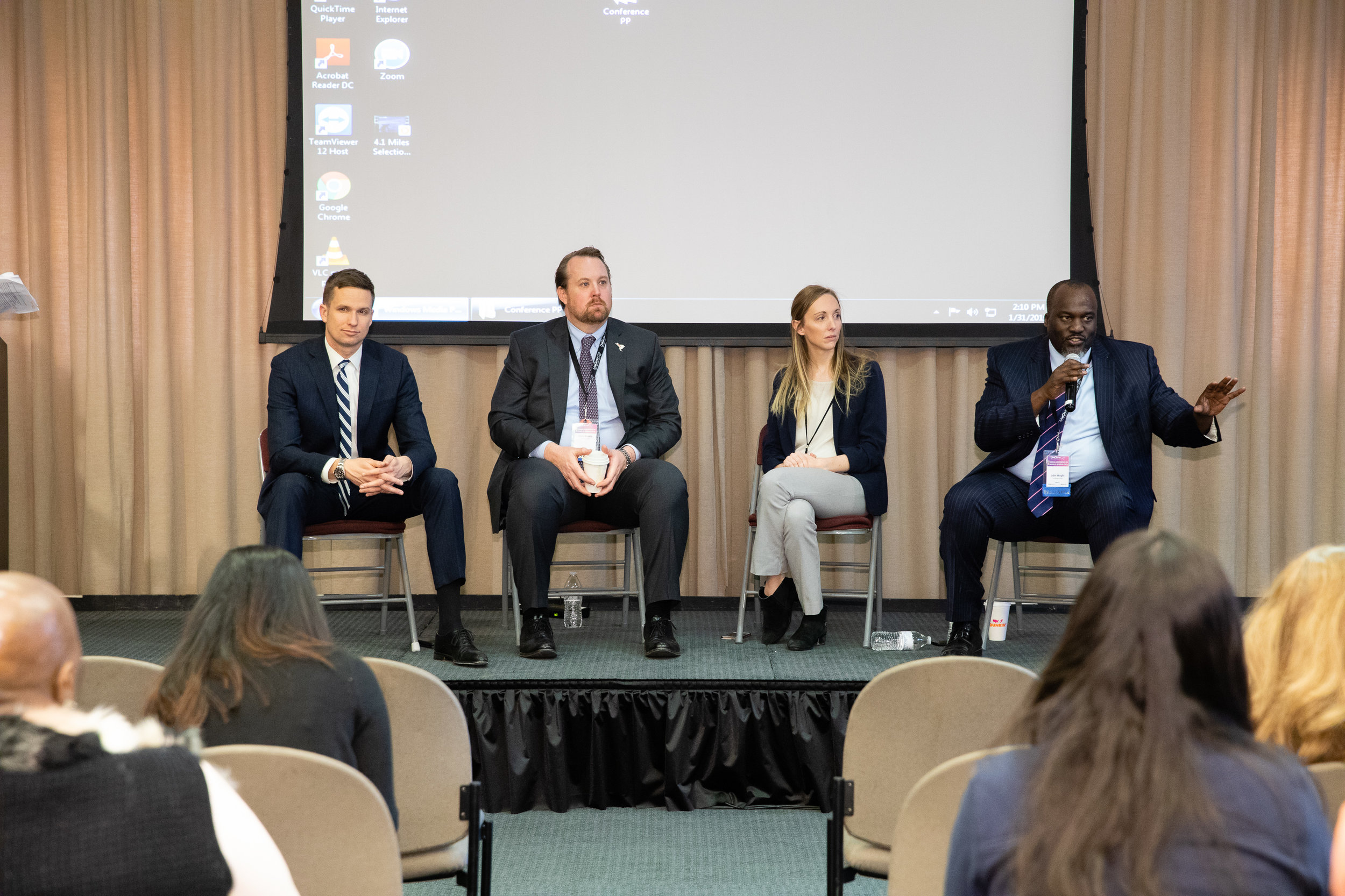
From stress-reducing yoga, to better understanding the path of the wanderer, to the Carter Burden dancers, to cake and goodies from Bartlett Dairy and our other vendors, we were thrilled to share our 29th Annual Conference with an estimated 400 professionals in the field!
From stress-reducing yoga, to better understanding the path of the wanderer, to the Carter Burden dancers, to cake and goodies from Bartlett Dairy and our other vendors, we were thrilled to share our 29th Annual Conference with an estimated 400 professionals in the field!
Thank you to every single person who braved the cold to attend our Annual Conference, we hope you left feeling empowered and reenergized to continue our work to make New York a better place to age. A special thank you to our sponsors and vendors, both new and old, for your steadfast support of New York’s aging community.
Below are a few pictures highlighting the day!




For those who attended workshops and signed up to receive Continuing Education Credits (CEUs) please be on the look out for an email with your confirmation certificate in the coming weeks!