

News
&
Updates

Adopted FY 2023 City Budget Recap
This week, the Adams Administration and the New York City Council, under the leadership of Speaker Adrienne Adams and Finance Chair Justin Brannan passed the Adopted City Budget for Fiscal Year 2023, totaling in $101 billion in spending. This budget moves the aging services sector in the right direction, from a significant human services workforce investment to additional funding for home-delivered meals to keep older adults fed.
LiveOn NY's Advocacy Secures Critical Funding for
Older New Yorkers and Community-Based Organizations
This week, the Adams Administration and the New York City Council, under the leadership of Speaker Adrienne Adams and Finance Chair Justin Brannan passed the Adopted City Budget for Fiscal Year 2023, totaling in $101 billion in spending. This budget moves the aging services sector in the right direction, from a significant human services workforce investment to additional funding for home-delivered meals to keep older adults fed.
LiveOn NY gives our thanks to all who advocated for the needs of older New Yorkers during this year's budget negotiations, including to Chair of the City Council Aging Committee, Council Member Crystal Hudson. We also give our deepest thanks to our members and our partners in advocacy. Whether you participated in LiveOn's Advocacy Day, joined our social media actions, reached out to your Council Member, or called for #EquityforAging and #JustPay, you made each and every gain possible.
Nonetheless, we know that there is still work to be done and we are committed to continuing to fight to make New York a better place to age in the coming years.

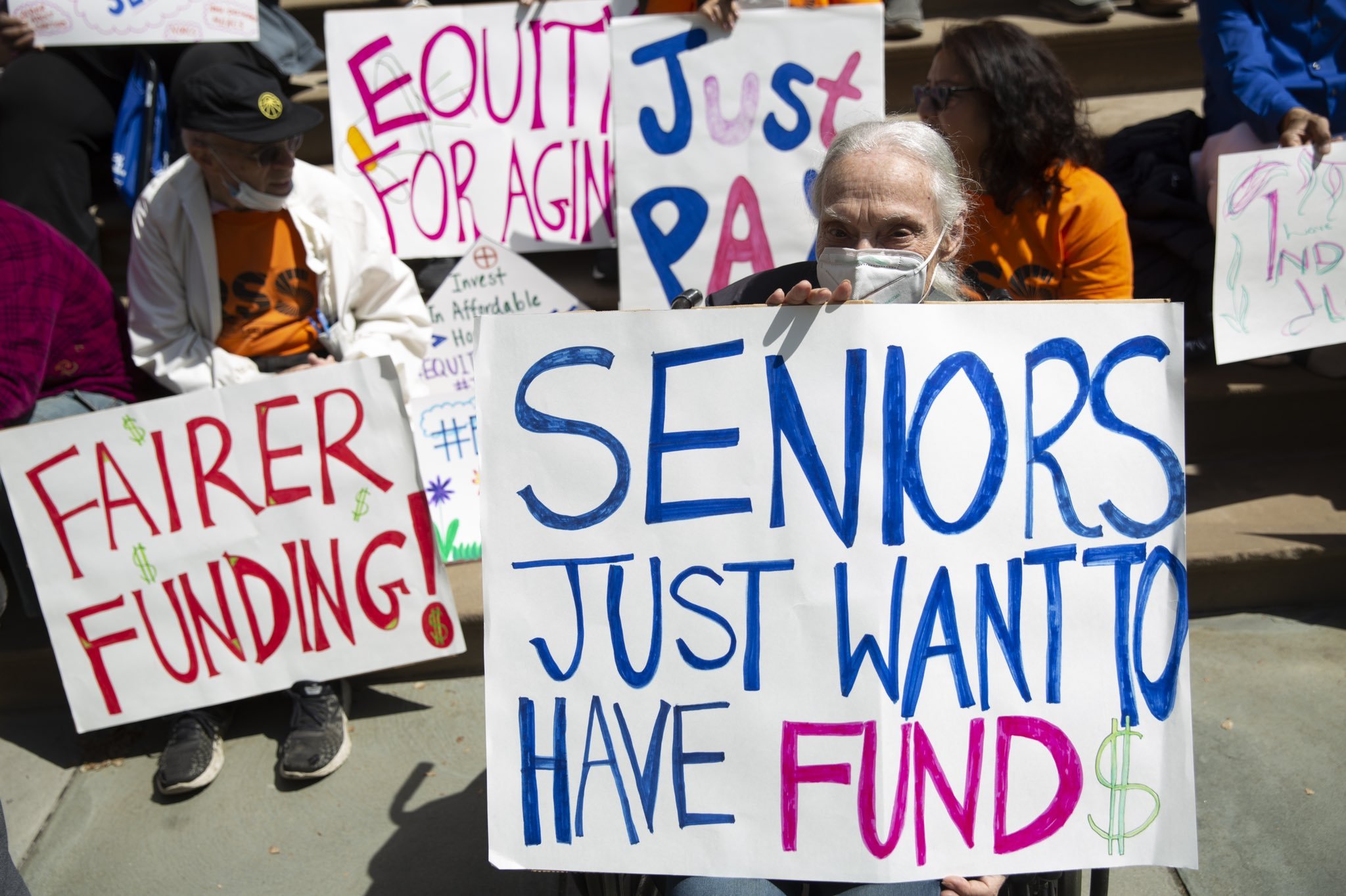
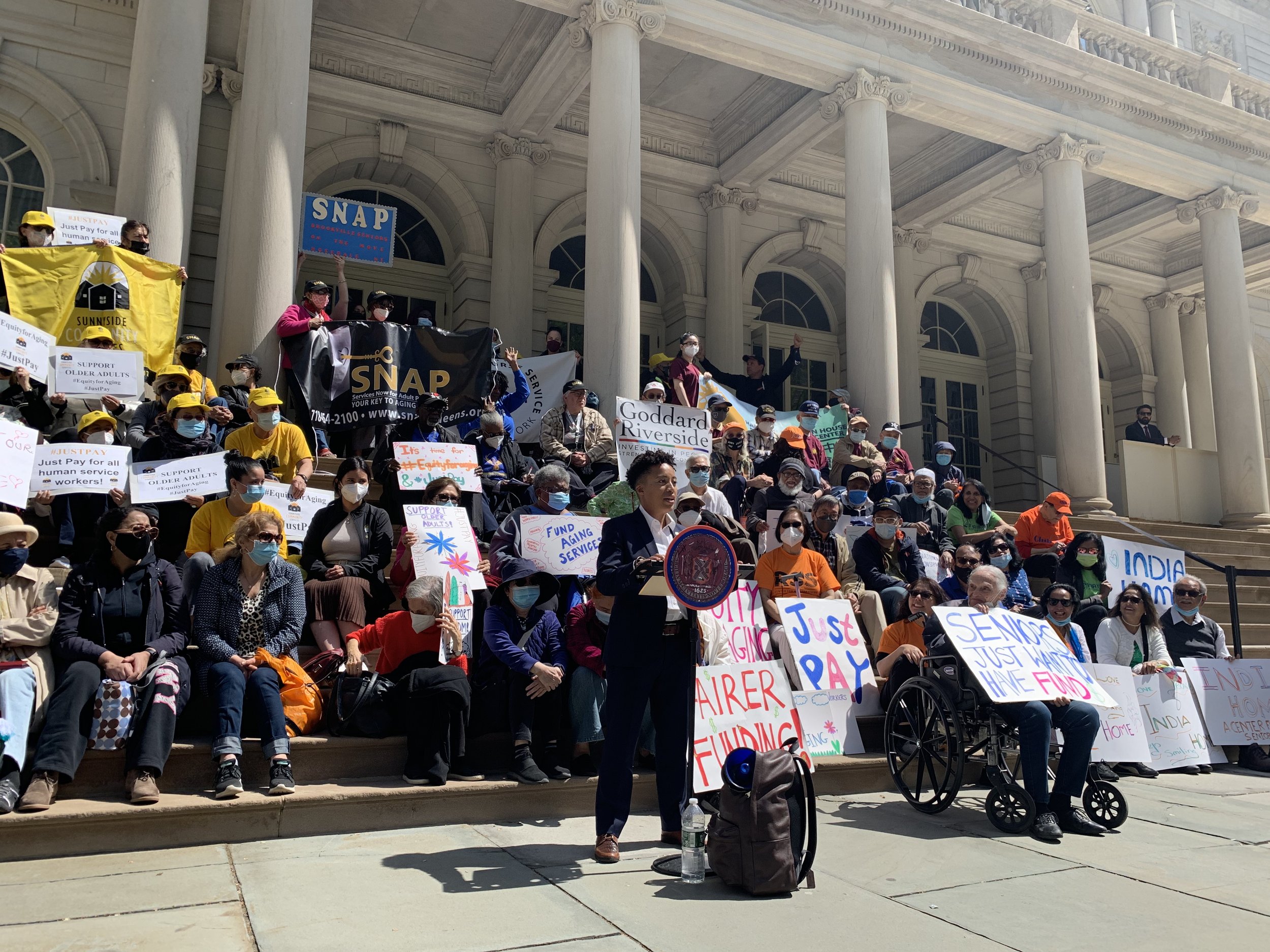
Below, see a recap of funding related to LiveOn NY advocacy priorities and of note to our sector.
Please note that the below is based off of the information currently available, we will continue to update this for accuracy as new details are released.
Funding wins resulting from the Mayor’s Preliminary Budget, City Council’s Preliminary Budget Response, and the Mayor’s Executive Budget, include:
Continued commitment to the previously announced home-delivered meal reimbursement rate increase totaling $2.3 million in new funding in FY22, and $9.4 million in FY23.
$14.9 Million, baselined, for Recovery Meal Transition, encompassing $8.8 million for home-delivered meals, and $6 million for case management.
$3.2 million, baselined, for Geriatric Mental Health expansion.
Funding wins resulting from the Adopted Budget include:
$60 million in baselined funding for human services workers.
This is in response to the 5.4% Cost of Living Adjustment (COLA) or $86 million that LiveOn NY and partners, led by Human Services Council, had advocated in the Just Pay campaign. Note this represents total funding available, but does not discern the details of how funds will be allocated across programs, positions, and organizations, all of which are critical details. We will share as we learn more about how this funding will be implemented.
$3 million in one-time funds for IT education for older adults.
$3 million in one-time funds for case management.
$6.2 million in one-time funds for Recovery Meals Transition.
$5 Billion in "Support for the New York City Housing Authority and the New York City Department of Housing Preservation and Development affordable housing programs"
$19.2 Million for "Additional staff and services at Department of Housing Preservation and Development (HPD)."
$8.6 Million for Language Access Expansion.
$14 Million to "Increase access to benefits by expanding capacity for community-based organizations."
City Council Discretionary funding wins and updates include:
In addition, LiveOn NY is pleased to see restored funding for all aging discretionary initiatives, with a slight reduction for NORCs of $309,299 taken in FY22 and carried into FY23.
This funding is critical and includes initiatives such as: Support Our Seniors, NORCs, Social Adult Day Care, LGBTQ Senior Services in Every Borough, Senior Centers for Immigrant Populations, and others. LiveOn NY will work with our partners to understand the impacts of the NORC discretionary funding reductions and will share as we know more.
Click here for the full Discretionary Funding "Schedule C" Document
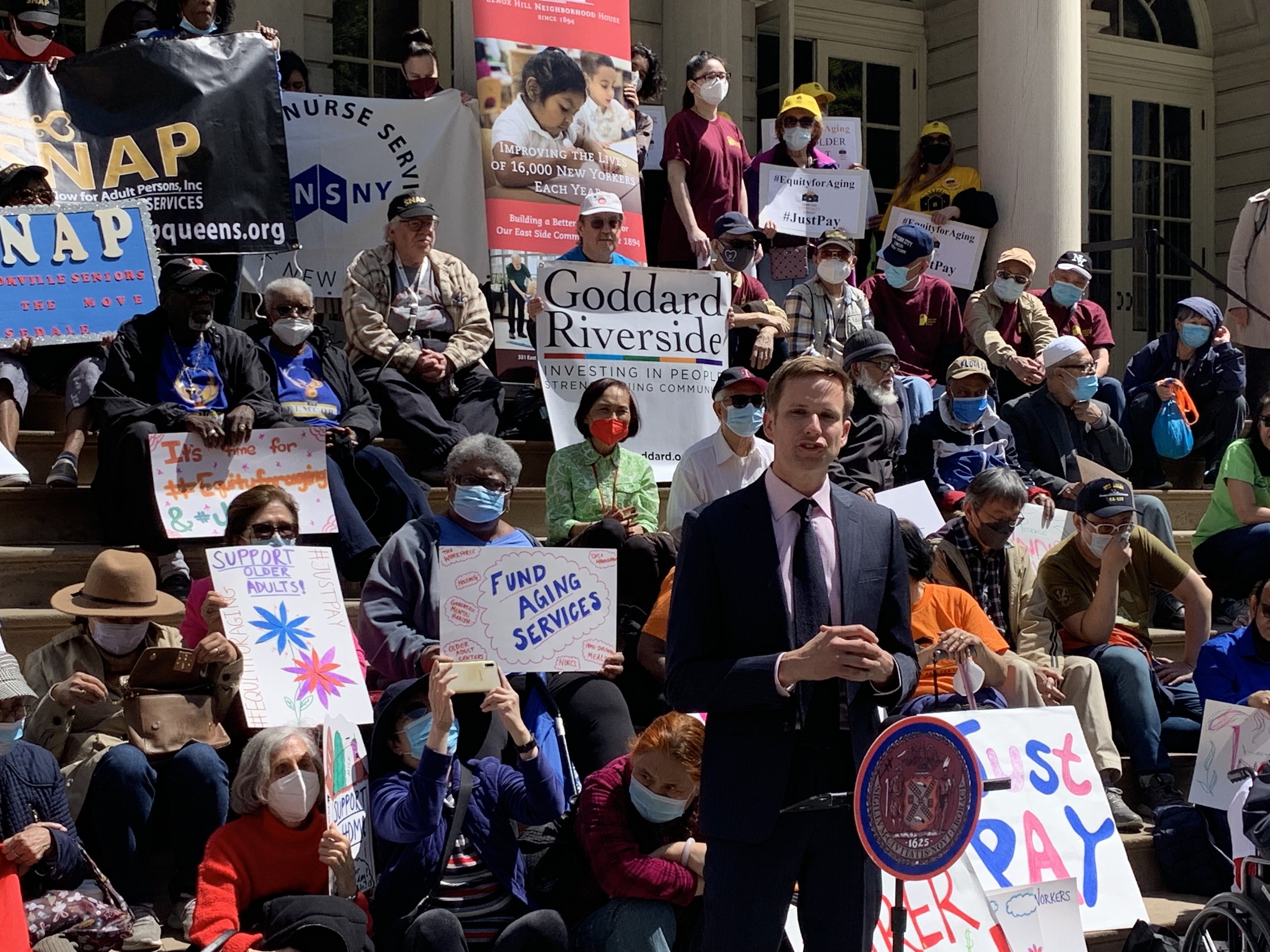
LiveOn NY is proud of the progress made, and even more proud to advocate for this incredible sector. We look forward to continuing to work together to make New York a better, more equitable place to age.
LiveOn NY continues to analyze the budget for additional details of interest to our sector, the above represents our analysis based off of the information currently available. We will update this for accuracy as new details emerge.
Questions?
Katelyn Andrews, Director of Public Policy and External Affairs, at kandrews@liveon-ny.org
or
Brianna Paden-Williams, Communications and Policy Associate, at bpaden-williams@liveon-ny.org
Our City Budget Advocacy Continues: #JustPay Rally and Testimony to City Council
On Tuesday, May 25, 2022, LiveOn NY joined our partners and members in advocating for a budget that supports all New Yorkers as we age. First, LiveOn NY joined the Human Services Council led #JustPay rally at City Hall Park, calling on Mayor Adams to fund a 5.4% cost-of-living-adjustment for all City contracted human services workers. The rally brought hundreds of supporters to City Hall with the goal of uplifting this essential workforce, and demanding our fair share of the budget….
On Tuesday, May 25, 2022, LiveOn NY joined our partners and members in advocating for a budget that supports all New Yorkers as we age.
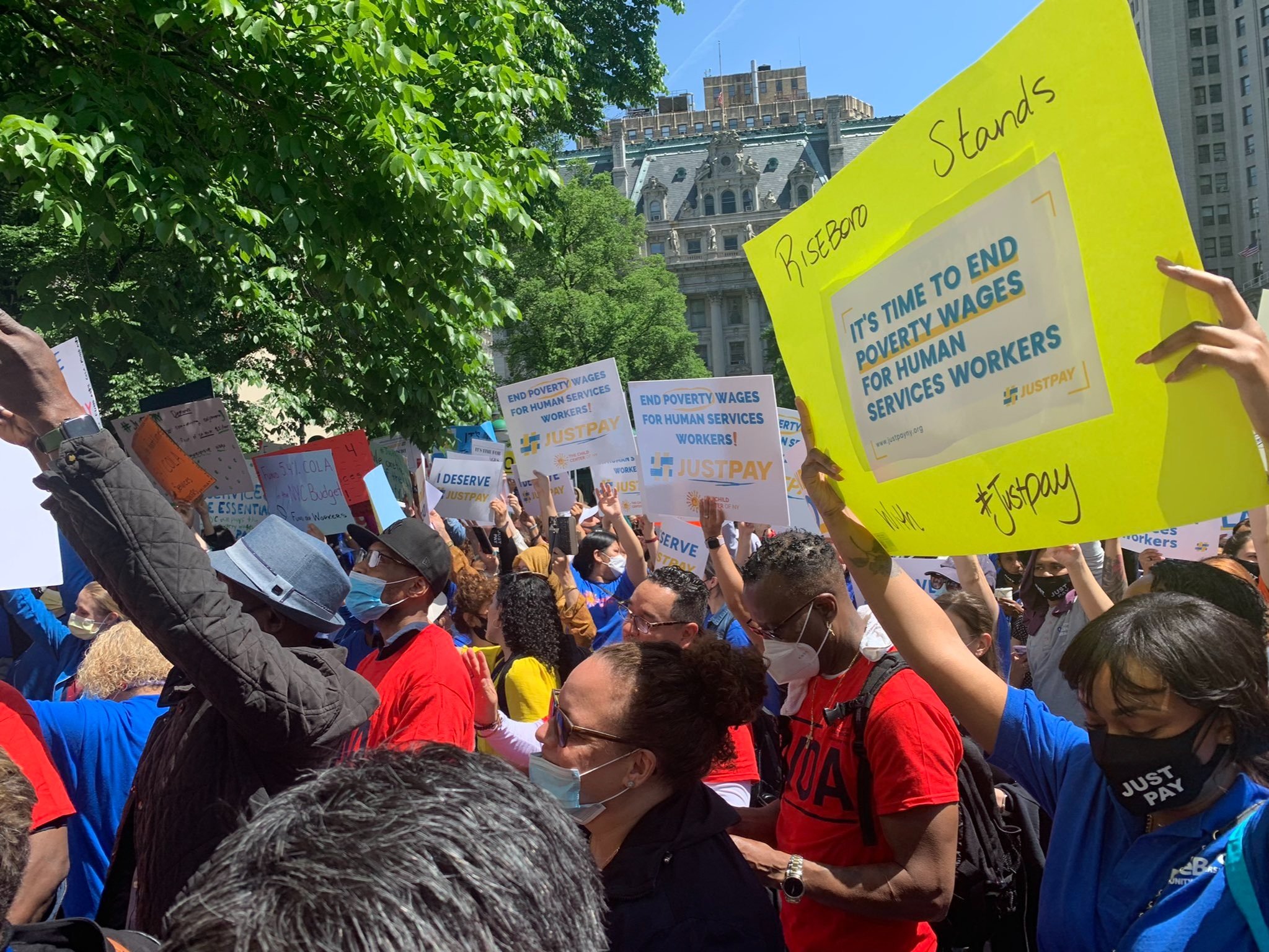
First, LiveOn NY joined the Human Services Council led #JustPay rally at City Hall Park, calling on Mayor Adams to fund a 5.4% cost-of-living-adjustment for all City contracted human services workers.
The rally brought hundreds of supporters to City Hall with the goal of uplifting this essential workforce, and demanding our fair share of the budget. Our thanks to Council Members Althea Stevens, Nantasha Williams, Tiffany Caban, Sandy Nurse, Kevin Riley, Julie Menin, Erik Bottcher, and Lincoln Restler for joining this event.
Check out highlights from the Rally, including pictures of our incredible members that joined the event, below:


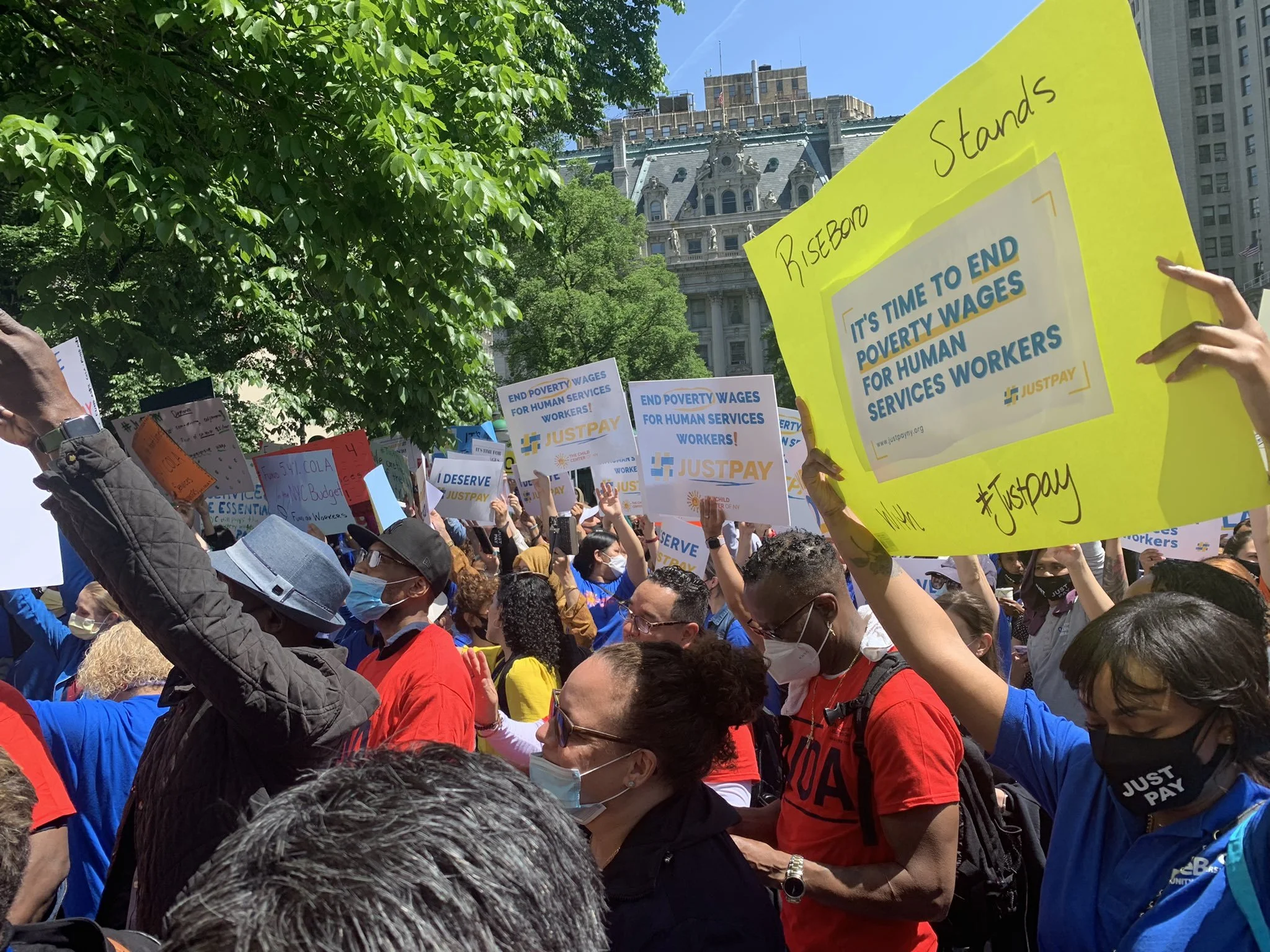


Please feel free to send additional pictures from the event to kandrews@liveon-ny.org to be included above.
Check out coverage from the event, featuring our member, Queens Community House: Queens Community House joins City Hall rally demanding ‘Just Pay’ for nonprofit workers
In addition, LiveOn NY submitted testimony to the New York City Council Finance Committee in response to the Executive Budget, calling for both Just Pay for human services workers, as well as investments that support #EquityforAging, such as investments in home-delivered meals, housing, and community care.
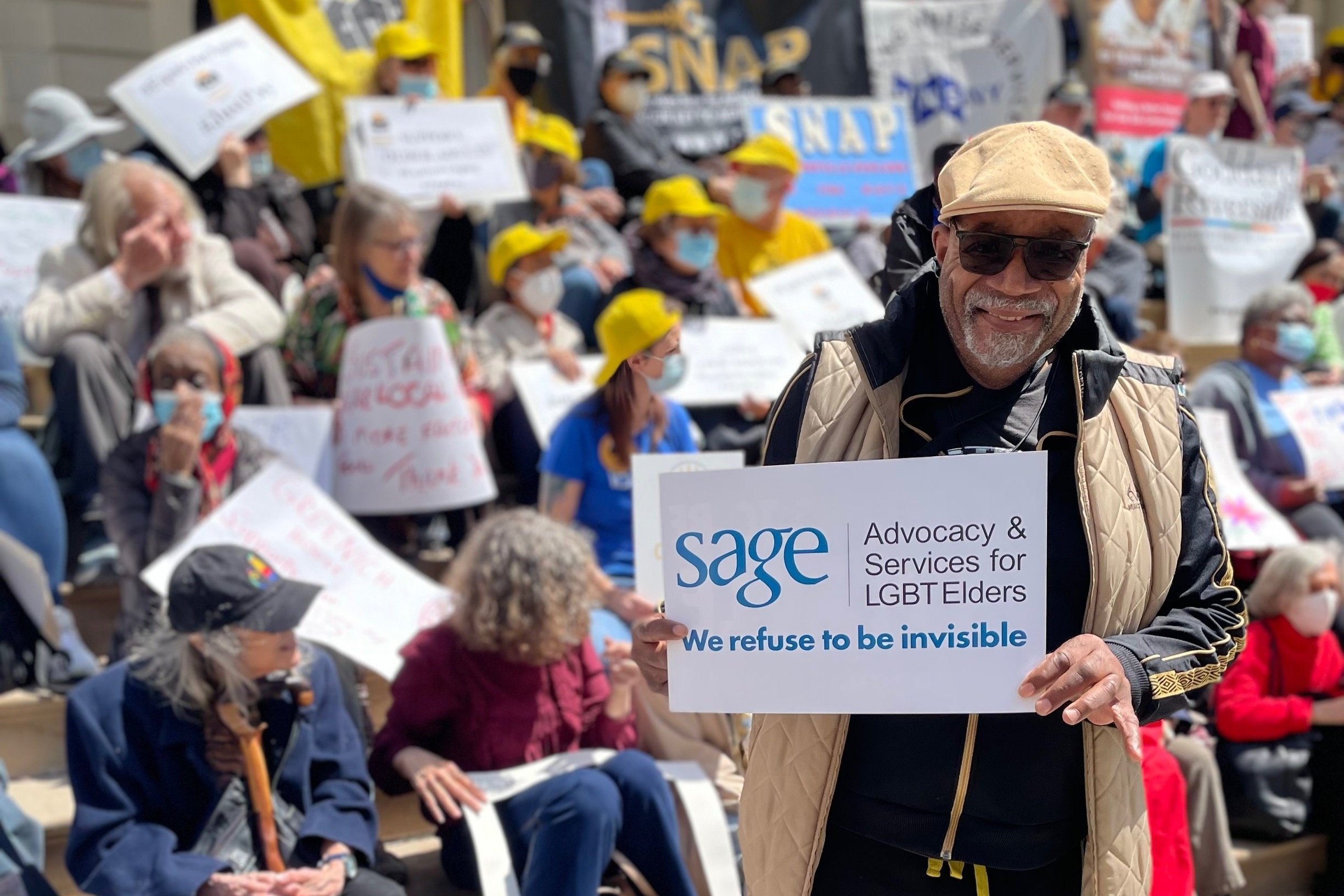
During the hearing, we were proud to hear testimony from members such as SAGE and Encore Community Services provided testimony on the needs of older New Yorkers.
Continue to join our fight for #EquityforAging and #JustPay
You can continue to advocate for older adults in the New York City Budget by filling out the linked form below. In just a few minutes, you can you send a letter to Mayor Adams and your in-district Council Member calling for key investments aimed at better supporting older New Yorkers living in the five boroughs.

In addition, please continue to email Speaker Adrienne Adams, Finance Chair Justin Brannan, and Mayor Eric Adams to include the Cost of Living Adjustment (COLA) in the City budget!
You can find email templates, created by the Human Services Council, for each office, below:
Questions?
Please contact Katelyn Andrews at kandrews@liveon-ny.org or
Brianna Paden-Williams at bpaden-williams@liveon-ny.org

Highlights from LiveOn NY's 27th Annual Aging Advocacy Day
On Thursday, May 5th, LiveOn NY hosted our 27th Annual Aging Advocacy Day and week of Advocacy Actions. During the event, roughly two hundred older adults and aging service professionals took to the steps of City Hall to demand their fair share of the City budget.
On Thursday, May 5th, LiveOn NY hosted our 27th Annual Aging Advocacy Day and week of Advocacy Actions. During the event, roughly two hundred older adults and aging service professionals took to the steps of City Hall to demand their fair share of the City budget.

Thank you to the following Council Members who joined us and gave remarks during this event:
Council Member Crystal Hudson, Chair of the Committee on Aging,
Council Member Gale Brewer, Chair of the Committee on Oversight & Investigations,
Council Member Linda Lee, Chair of the Committee on Mental Health,
Council Member Carlina Rivera, Chair of the Committee on Criminal Justice,
Council Member Darlene Mealy, Chair of the Subcommittee on Senior Centers and Food Insecurity,
Council Member Amanda Farias, Chair of the Committee on Economic Development,
Council Member Eric Dinowitz, Chair of the Committee on Higher Education,
Council Member Erik Bottcher, Co-Chair of the Manhattan City Council Delegation
Thank you to each and every older adult, professional, and advocate who joined us, both at City Hall and on Social Media, in making some noise to urge the City to support #EquityforAging and #JustPay.
And a special shoutout to our members who spoke, Larinda Hooks, Elmcor Youth & Adult activities, Inc., Todd Fliedner, Bay Ridge Center, Shehila Stephens, Encore Community Services, and Alston Green, an older adult participant of SAGE.
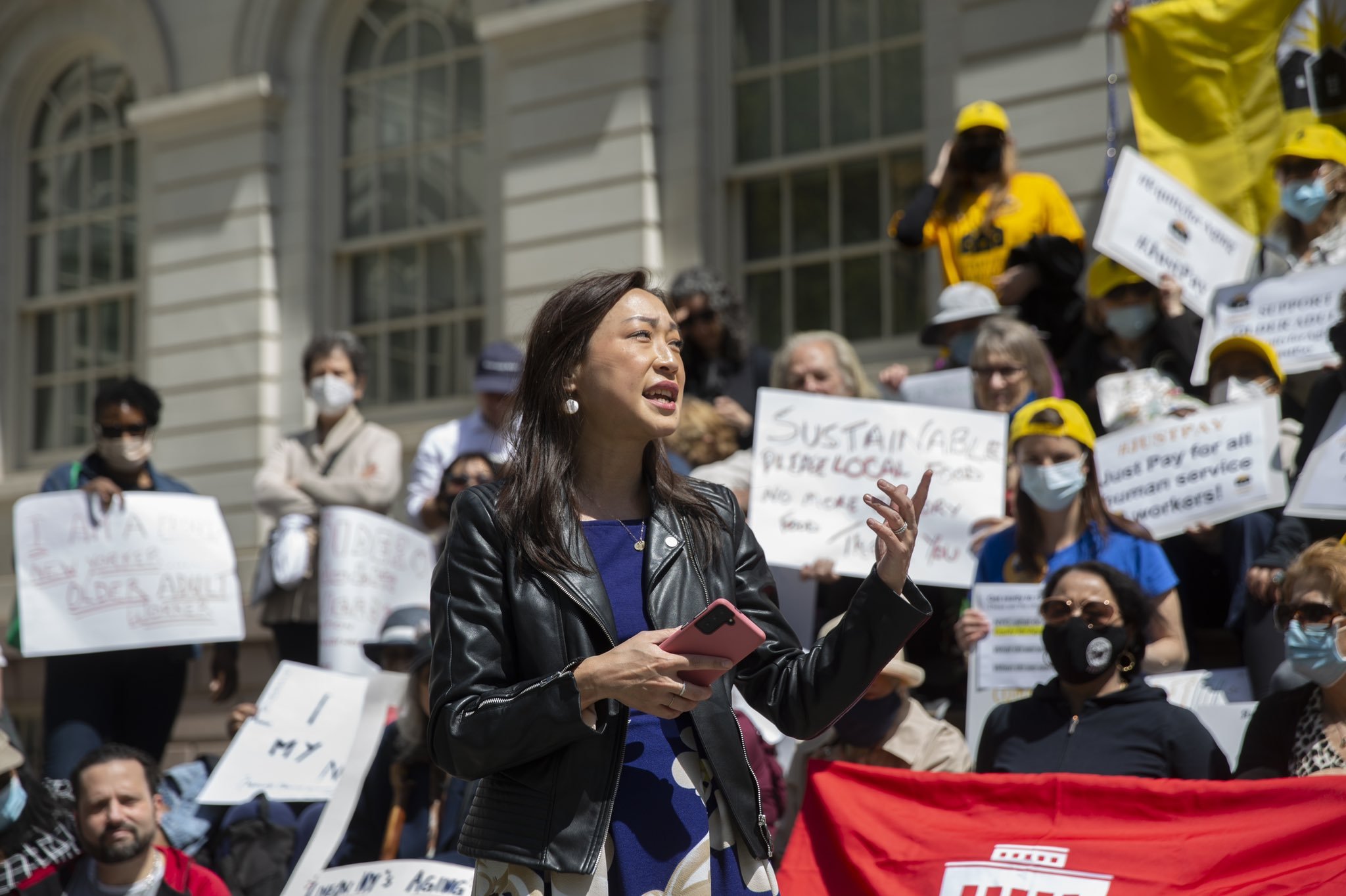
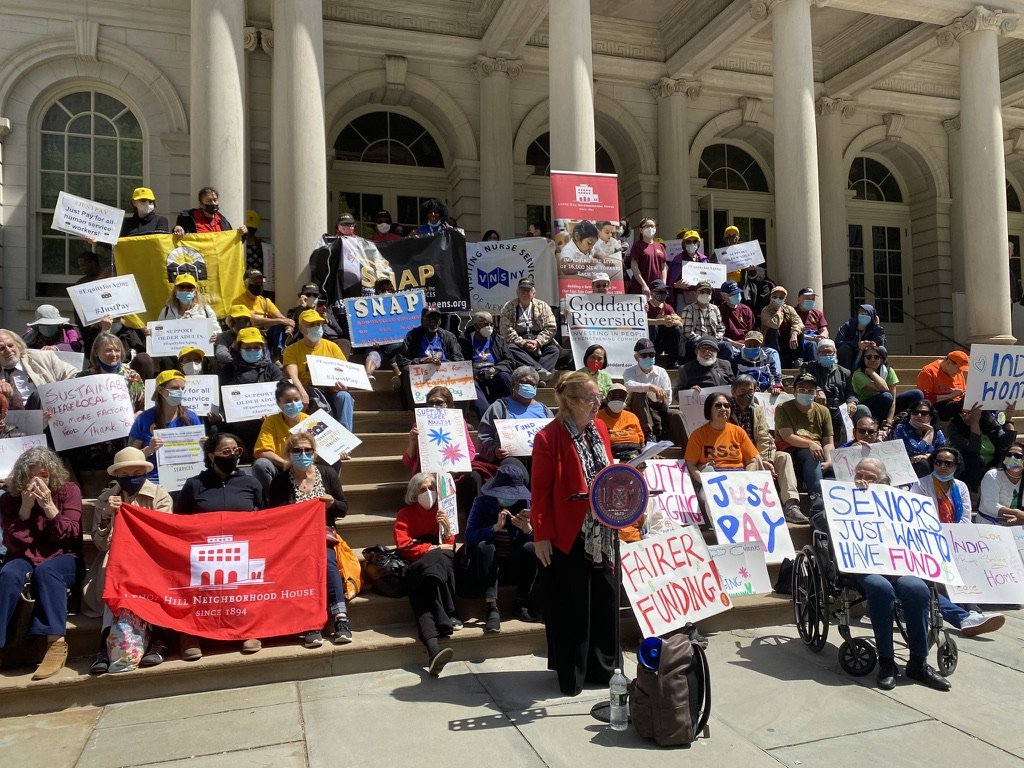
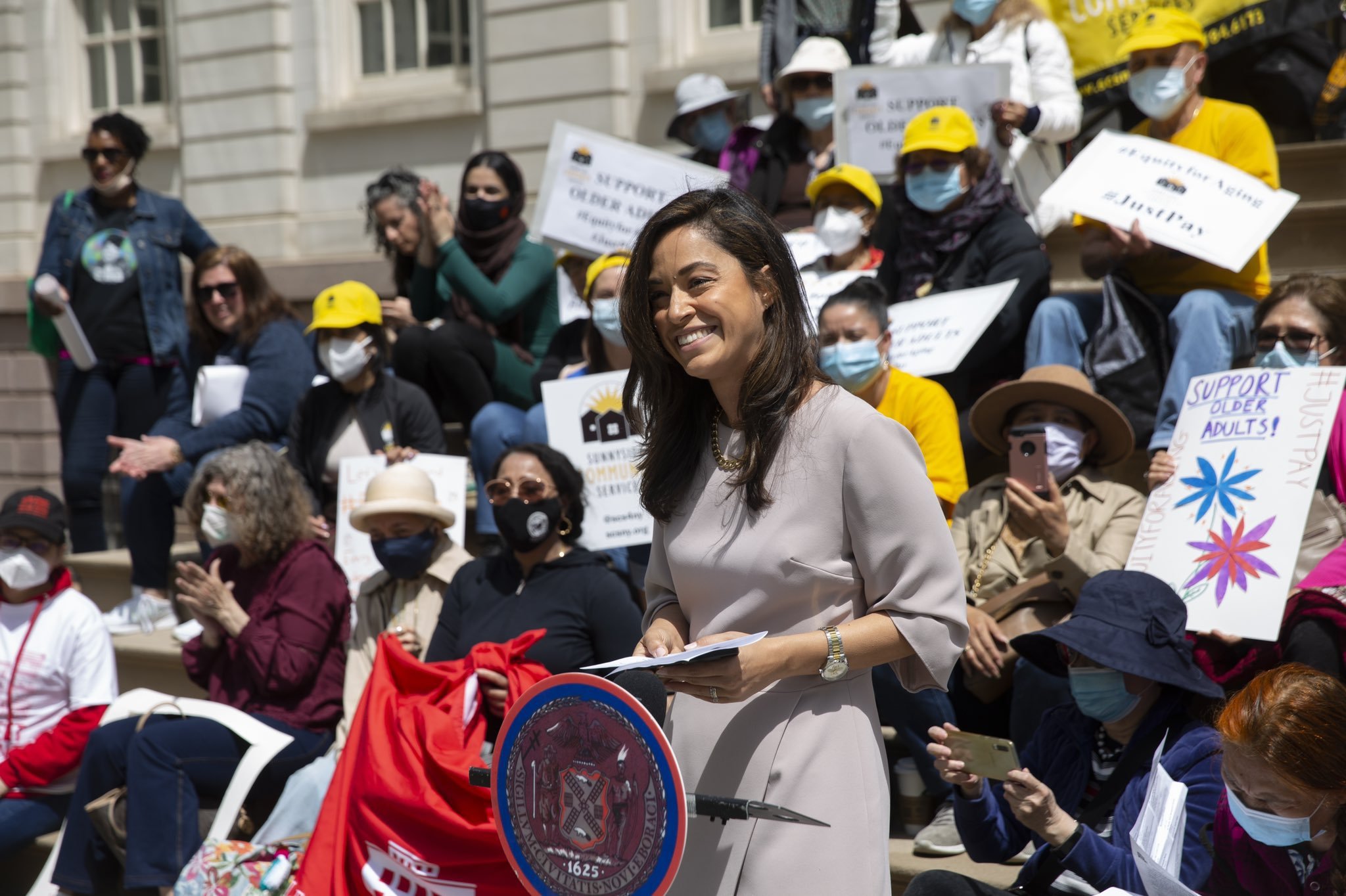
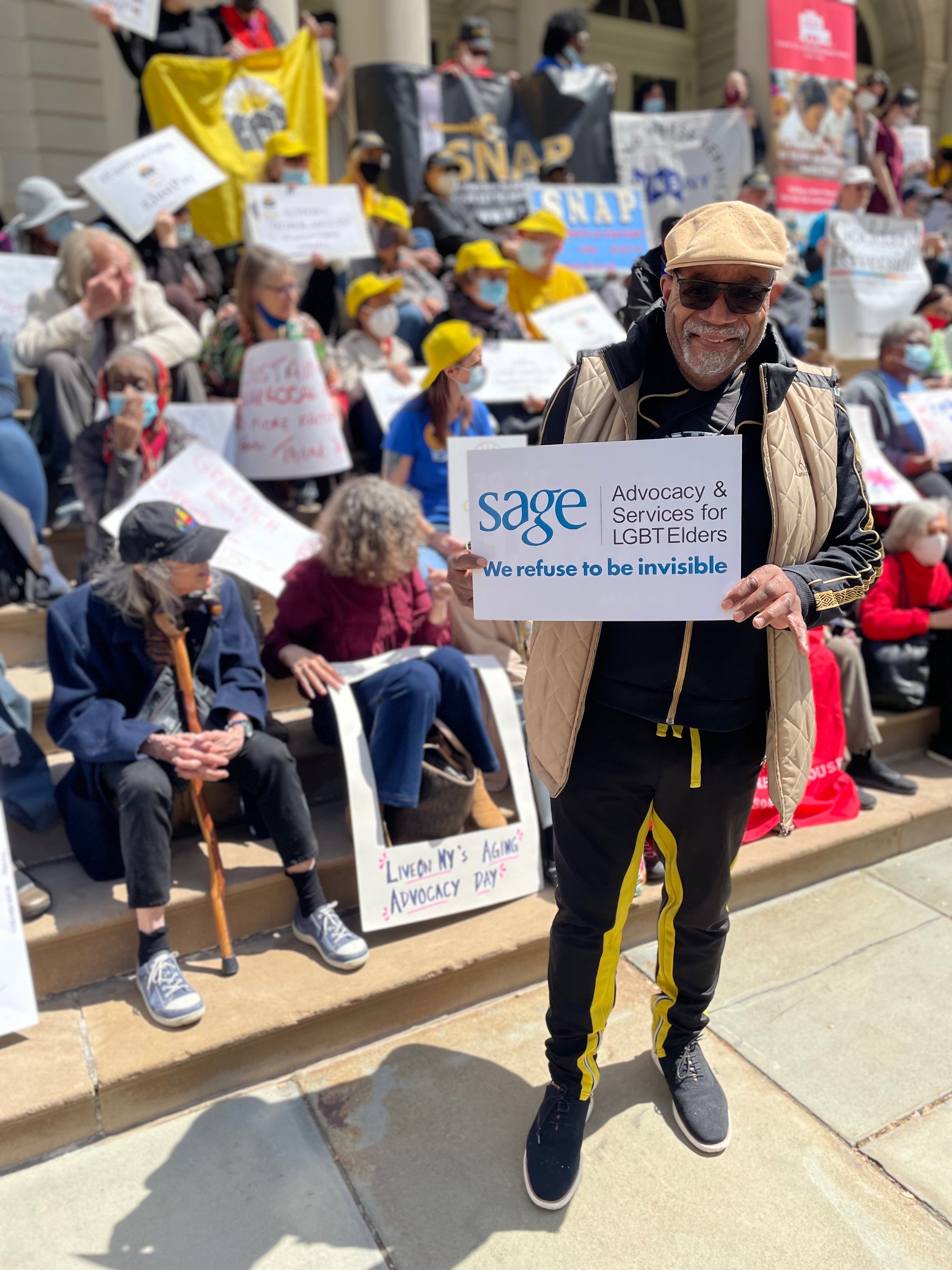
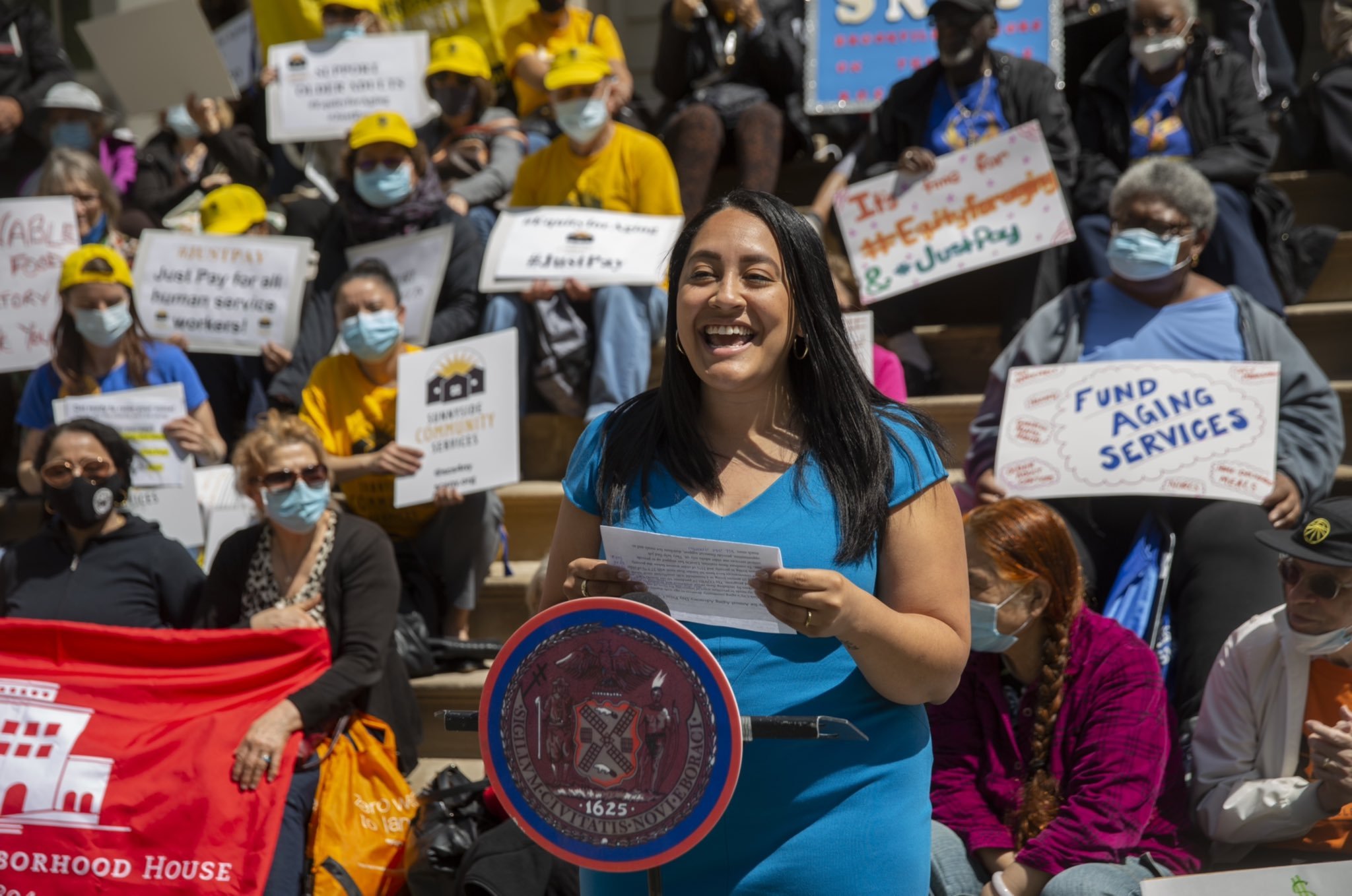
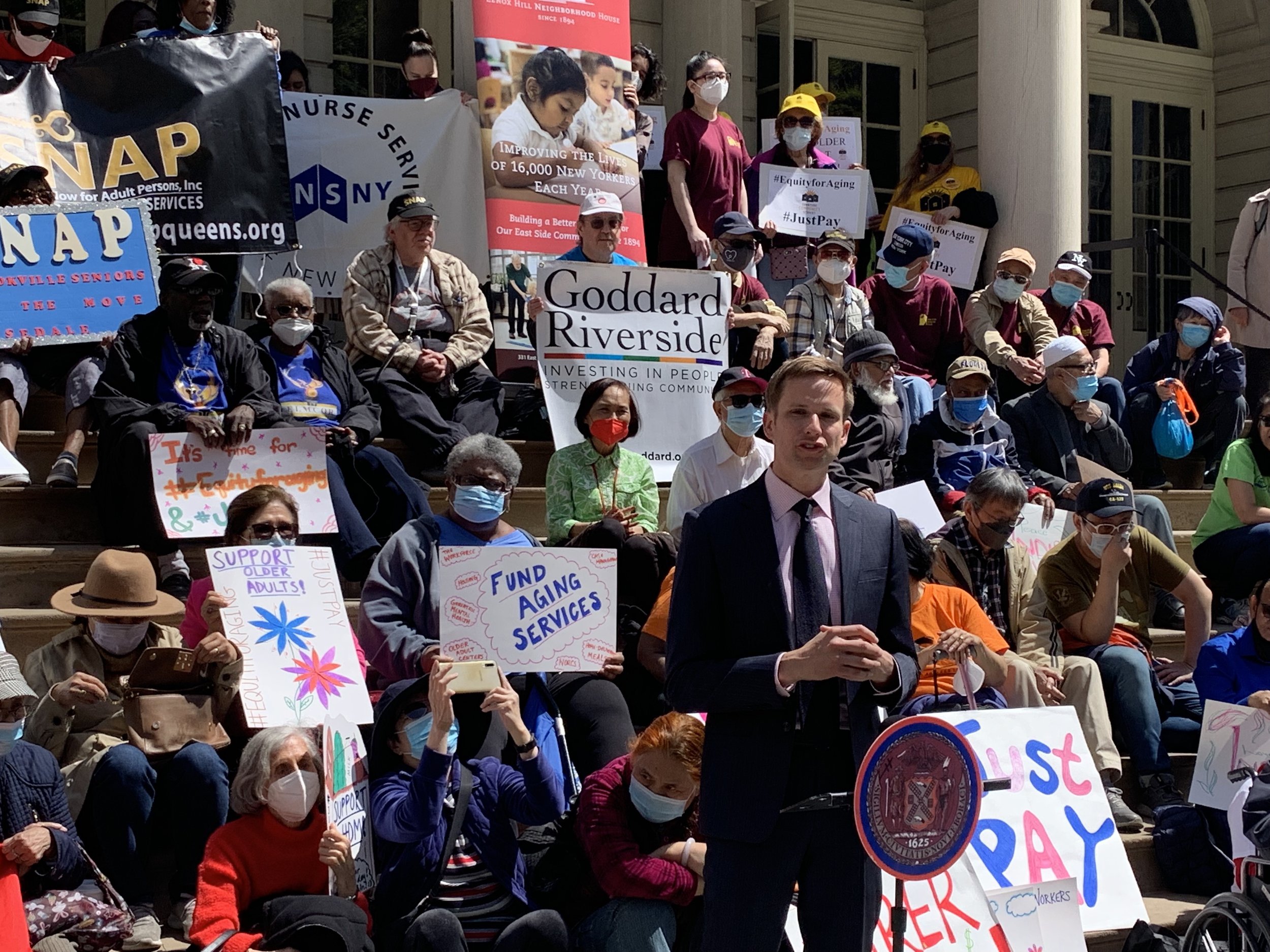
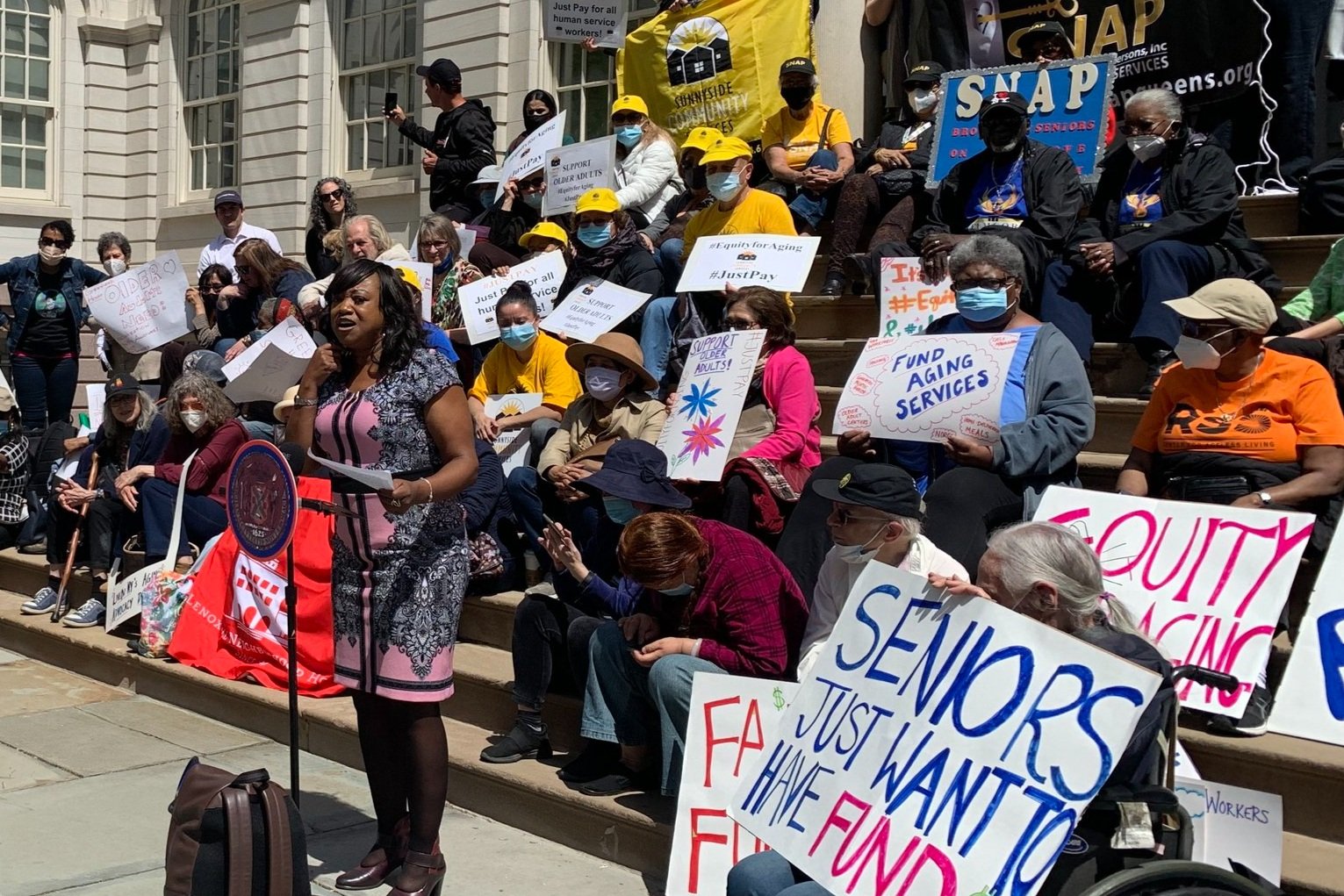
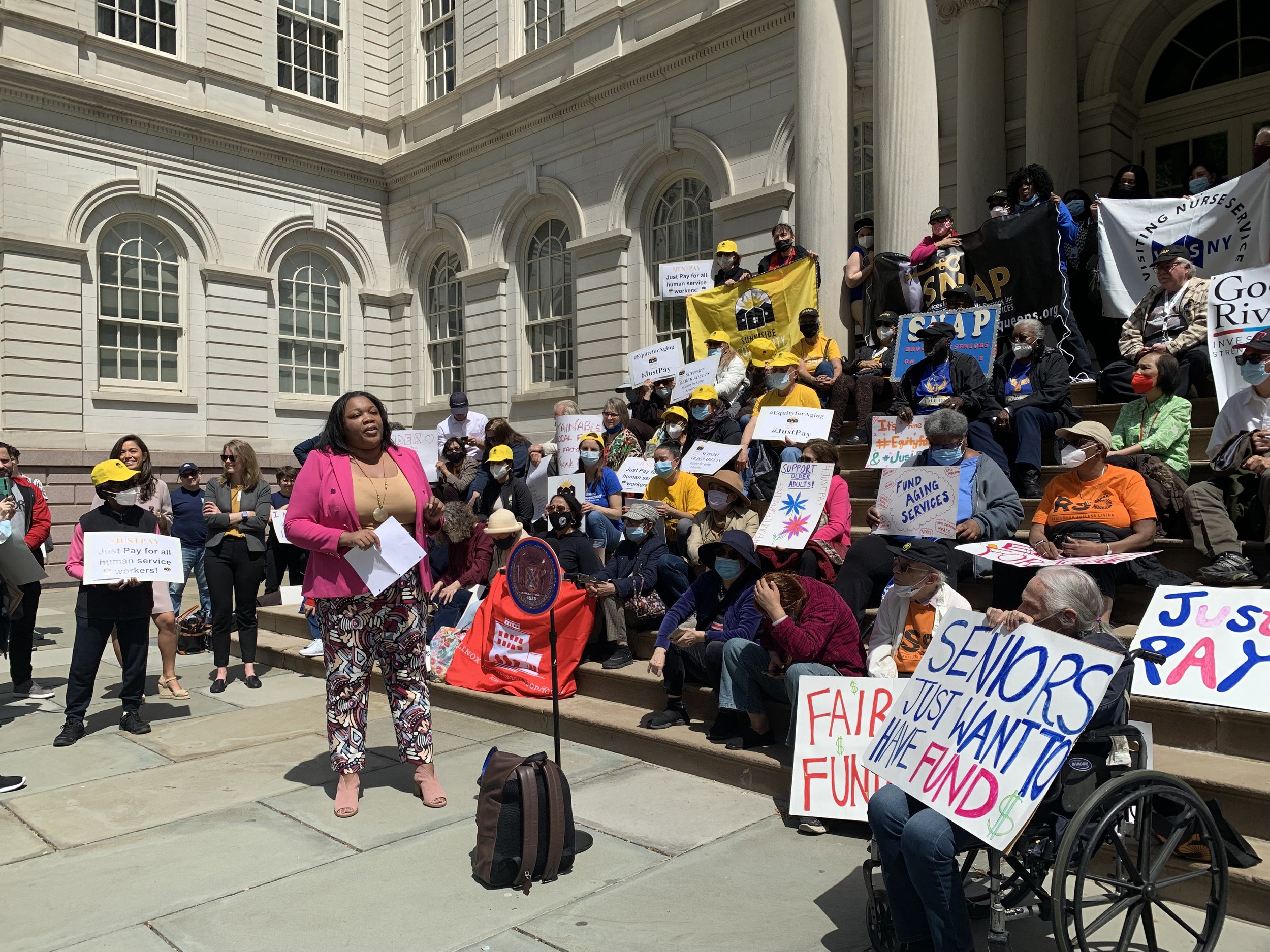
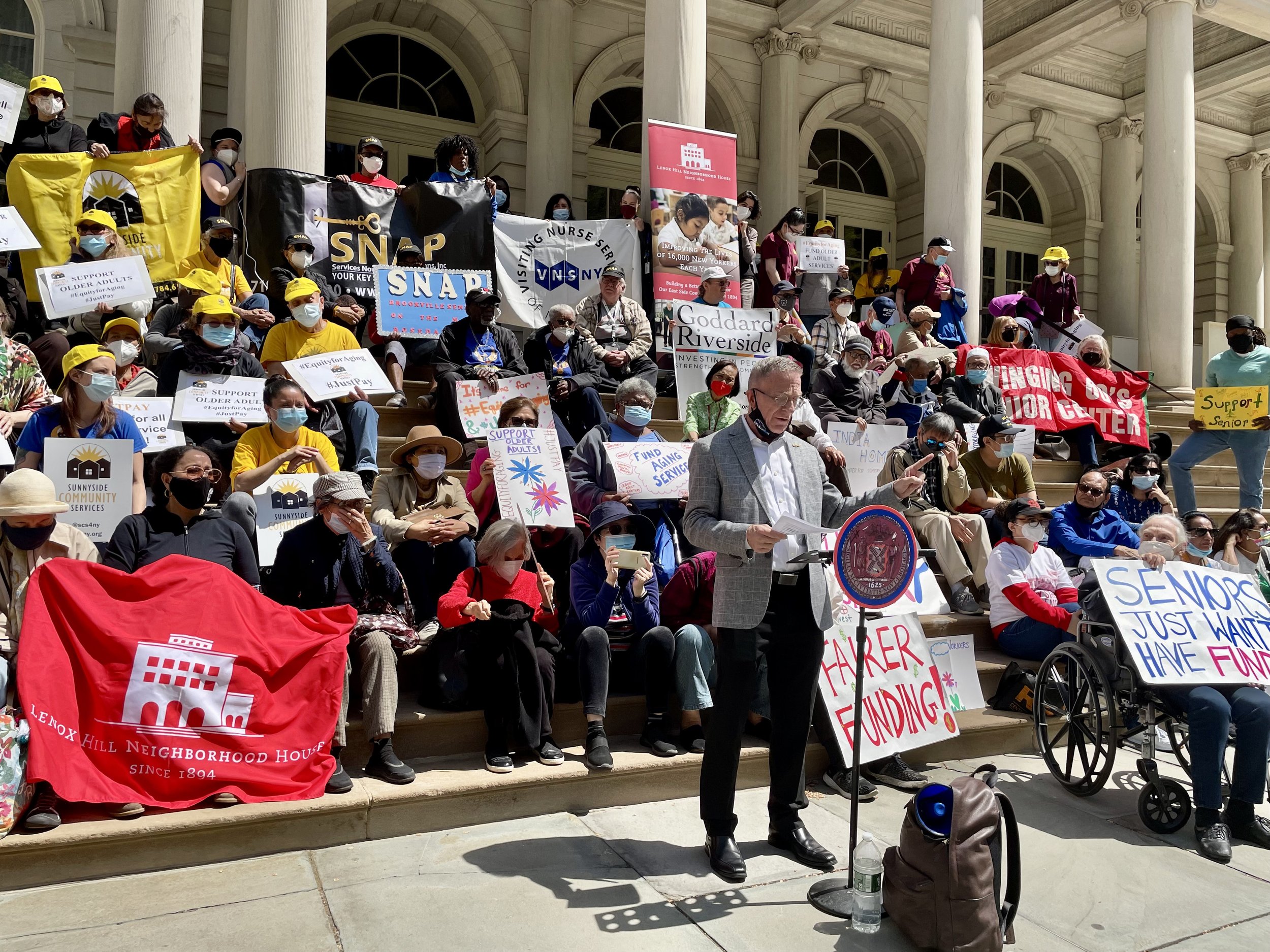
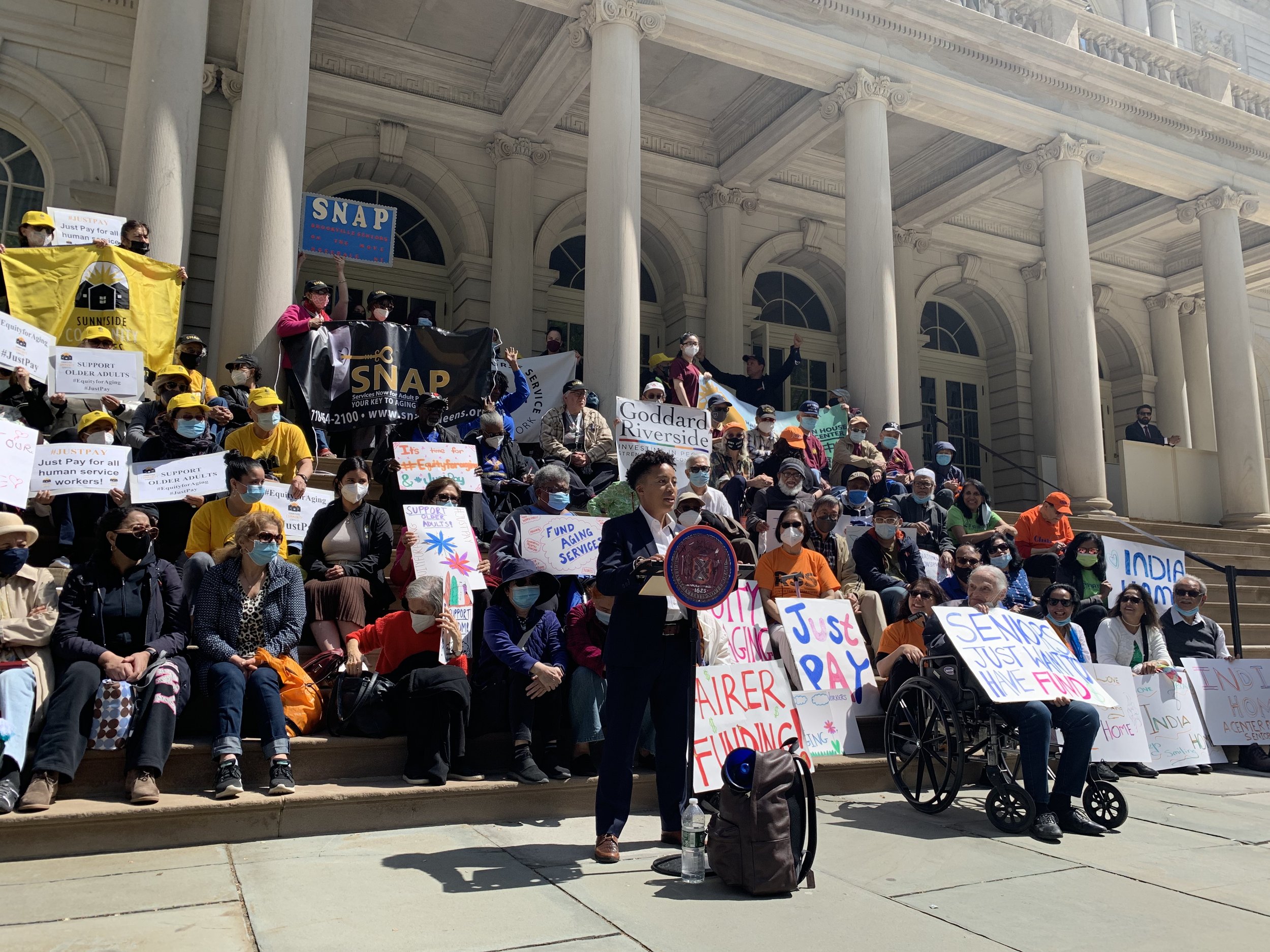
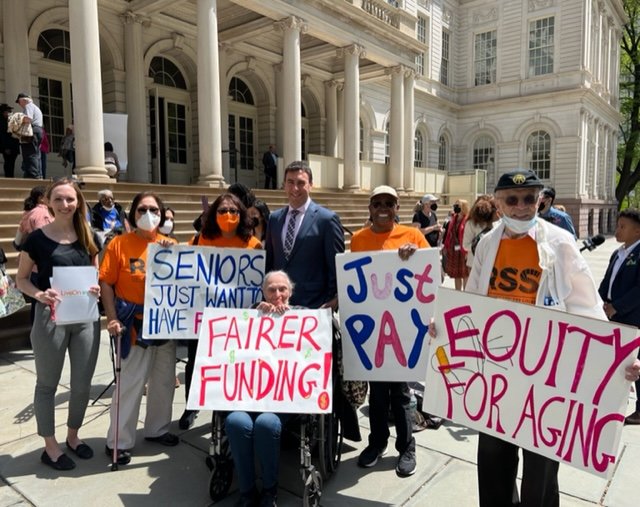
In addition to our Advocacy Day Rally, LiveOn NY spearheaded other advocacy opportunities during our Advocacy Week, giving older New Yorkers and our members more ways to fight for the funding that aging services deserve.
These opportunities included an #EquityforAging Tweetstorm, Calls to City Council Members, and a Letter Writing Campaign.
Our advocacy doesn't stop here
You can continue to advocate for older adults in the New York City Budget by filling out the linked form below. In just a few minutes, you can you send a letter to Mayor Adams and your in-district Council Member calling for key investments aimed at better supporting older New Yorkers living in the five boroughs.
LiveOn NY encourages professionals to share this opportunity with your clients, encouraging all stakeholders to participate! Through increased participation, we can make our voices heard on the need for Equity for Aging and Just Pay in this year's budget.

Fiscal Year 2023 State Budget Recap
Last weekend, the delayed Fiscal Year 2023 State budget deal, totaling approximately $220 billion in spending, was passed. The budget included investments such as $500 million for Cost of Living Adjustments (COLAs) for human services workers, and a $25 billion affordable housing plan.
Last weekend, the delayed Fiscal Year 2023 State budget deal, totaling approximately $220 billion in spending, was passed. Read the Governor's press release on the budget, here.
Below, see investments related to LiveOn NY advocacy priorities and of note to our sector:
$500 Million for Cost of Living Adjustments (COLAs), at 5.4%, for state contracted human services workers, the first significant COLA in years. This was the result of the Human Services Council led Just Pay campaign, which LiveOn NY is proud to support. We will continue to work to follow implementation of this investment, which will take time and will determine exactly which workers are covered under this investment. In addition to this State investment, it is critical that the City also provide a COLA for human services workers in its budget.
$25 Billion 5 year housing plan, including $300 million for affordable senior housing. The plan seeks to create and preserve over 100,000 affordable homes, including 10,000 homes with supportive services for targeted populations.
$110 Million for the Empire State Supportive Housing Initiative (ESSHI).
$3 hourly raise for home care workers, phased in over two years, a meager response to the Fair Pay for Home Care campaign, which called for home care wages to be set at a minimum of 150% of the minimum wage.
$50 Million for the Nonprofit Infrastructure Capital Investment Program.
$800 Million for Emergency Rental Assistance Program (ERAP).
$250 Million for utility arrears.
$2.25 Million increase for the Long Term Care Ombudsman Program (LTCOP), significantly lower than the $20 million sought.
$500,000 to support the creation of a Master Plan on Aging.
Medicare Savings Program income eligibility limits will increase from 135% to 186% of the federal poverty level in January 2023. Learn more, here.
Eligibility Expanded for Medicaid for undocumented older adults age 65+. Learn more, here.
Thank you to everyone who joined our advocacy this year, during which time more than 400 messages were sent to elected officials in support of new funding for aging services. In future years, we remain committed to advocating for items not included in this budget, such as new investments in home-delivered meals, case management, and services in senior housing.
LiveOn NY continues to analyze the budget for additional details of interest to our sector, and will share as new details emerge.
Questions? Please contact Katelyn Andrews, Director of Public Policy and External Affairs, at kandrews@liveon-ny.org

Testimony to the New York City Council on Older Adult Centers
With OACs operating at full capacity, the City has the opportunity to take steps to create long term solutions and make meaningful investments to ensure all New Yorkers can access equitable community-based services in their community.
New York City Council
Committee on Aging: Chair, Council Member Hudson
Subcommittee on Senior Centers and Food Insecurity: Chair, Council Member Mealy
Subcommittee on COVID Recovery and Resilience: Chair, Council Member Moya
April 6, 2022
Oversight - Protecting Older Adults at Older Adult Centers During the Continued COVID-19 Pandemic & Reopening Older Adults Centers
Thank you for the opportunity to testify and our congratulations to Commissioner Cortés-Vázquez on her reappointment to the role of DFTA Commissioner.
LiveOn NY’s members include more than 110 community-based nonprofits that provide core services which allow all New Yorkers to thrive in our communities as we age, such as older adult centers, home-delivered meals, affordable senior housing, NORCs, and home care. LiveOn NY is also home to the Reframing Aging NYC Initiative, part of the national Reframing Aging Initiative aimed to counteract ageism and improve the way policymakers, stakeholders, and the public think about aging and older people. With our members, we work to make New York a better place to age.
Background
Two years ago, Older Adults Centers (OACs) closed their doors for in-person programming, shifting to virtual programs to mitigate the risk of contracting the virus. During this time, OACs found new ways to provide critical services from setting up zoom classes to enrolling clients in emergency food systems, all in the face of unprecedented demand and a public health crisis. For a growing diverse aging population, Older Adults Centers were a lifeline during the pandemic, particularly in response to the increased risk of food insecurity and rise in social isolation that plagued many older adults.
For months, OACs operated at a 25% capacity restriction that created administrative challenges for providers to execute. Recently, the Department for the Aging (DFTA) announced that all Older Adults Centers can lift capacity limits and resume programming at 100% capacity. LiveOn NY is appreciative of the new guidance to resume full capacity for OACs and allow all older New Yorkers to return to the Center they know and love in their community. This is a major step towards getting older adults back out into the community and their local centers, which we know are hubs for socialization, diverse programming, and other critical services.
Nonetheless, we know there is more work to be done to fully support older adults back into a new normal. With OACs operating at full capacity, the City has the opportunity to create long term solutions and make meaningful investments to ensure all New Yorkers can access equitable community-based services in their community.
Recognizing this opportunity, LiveOn NY applauds City Council for their leadership in calling for additional investments in Older Adult Centers and the aging sector in their recent response to the Mayor Adam’s FY23 Preliminary Budget by including an additional $8.7 million to expand DFTA's Geriatric Mental Health Program (DGMH), $60 million to provide a cost-of-living adjustment for human services workers, $7.5 million to improve IT education for older adults, $30 million for the Recovery Meals transition, and $12.7 million for the home-delivered meals program, among other key investments.
Recommendations
To programmatically support Older Adult Centers into the future, LiveOn NY recommends:
DFTA and the Department of Health and Mental Hygiene (DOHMH) should continue to work in partnership with Older Adult Center providers to respond to future COVID related challenges, as well as share public health response best practices with centers as needed.
As we move forward and the relative risks of COVID variants evolve, it’s critical that DOHMH and DFTA continue to provide science driven best practices and information for Older Adult Centers in response to trends and risk of transmission. Through this partnership, Older Adult Centers can truly support older adults as they safely re-engage with the community.
In addition, the City should continue to work in coordination with community-based organizations including Older Adult Centers, which are often sources of trust to marginalized populations, to further promote access to the vaccine and vaccine boosters.
LiveOn NY and our members have seen the hurdles older adults have experienced to simply get a shot, and distribution has also revealed the racial inequities that already plague communities of color. As older adults return to OACs, it is critical the City continues working with community-based organizations such as Older Adult Centers to ensure older adults are able to receive the life-saving vaccine.
Just as clear guidance was appreciatively shared with providers highlighting the increase in Older Adult Center Capacity restrictions to 100% capacity, DFTA should clearly share this information, and any relevant best practices, with other contracts such as NORCs, Transportation, Case Management, and others.
It is our understanding that the OAC capacity restriction changes do indeed extend to these programs, however, it would be beneficial to have this point clearly documented.
In addition, the City should continue to support the new models of service, such as virtual programming (a priority of DFTA’s that is further outlined below) and grab-and-go meals, that have proven to be successful during this time into the future.
By continuing to work with providers to cement best practices learned during the pandemic into the long-term models of service applied by OACs into the future, New York again has the opportunity to be a model of innovation replicable by centers across the country. These new models have expanded the work of OACs to older New Yokers who may not have been aware of or able to access the network of OAC services available in the past. For example, grab-and-go meals have proven successful in ensuring older adults who may not be comfortable congregating due to COVID risks, or for personal reasons are less willing to meet their nutritional needs by eating at an Older Adult Center, have the option to take their meal home, a decision that ensures one’s nutritional needs can be met in the environment of one's choosing.
In addition to the aforementioned programmatic recommendations, LiveOn NY also offers the following budgetary recommendations, much of which were also emphasized in the aforementioned City Council Preliminary Budget Response:
First, recognizing the operation of Older Adults Centers would not be possible without the tireless work of human service professionals, we join our partners in calling for the City to Just Pay for all human services workers a liveable and equitable wage.
Despite their essential work throughout COVID-19, the wages of human services workers, the majority of whom are women and Black and brown individuals, are slated to remain stagnant at near poverty levels, as a result of government underfunding. This, in a City where costs are notoriously high. To address this crisis, the City must implement changes that address the inequitable pay of human services workers, including:
Establish, fund, and enforce an automatic annual cost-of-living adjustment (COLA) on all human services contracts.
Set a living wage floor of no less than $21 an hour for all human service workers.
Create, fund, and incorporate a comprehensive wage and benefit schedule for government contracted human services workers comparable to the salaries made by City and State employees in the same field.
Allocate an additional $7 million investment to make virtual programming and technology more accessible
While Older Adult Centers are operating at full capacity, for older adults, and particularly those who are homebound, virtual programming will continue to be an important tool to remain connected in one’s community into the future. This ability to remain connected virtually will undoubtedly save lives, given the acute health risks of social isolation among older adults. It is therefore critical that Centers have a strong technology infrastructure to further enable OACs and other DFTA programs to connect with older adults through virtual programming, during the pandemic and beyond. For example, this means making it easy for older adults to find programming that is right for them, by creating an accessible online database featuring the virtual programming offered by OACs.
LiveOn NY is appreciative of DFTA’s continued championing of virtual programming and seeks to support this technology focus by requesting an additional $7 million investment to expand DFTA virtual programming accessibility, through an online database, devices and connectivity. This technology investment would also create a new program to promote tech literacy among older adults by funding community-based organizations to offer this support.
Restore the $10.2 million cut to DFTA including a $1.3 million PEG to the Geriatric Mental Health program.
The budget cut to DFTA under the PEG puts a further strain on the future of aging services. The City should restore the $10.2 million PEG to DFTA's budget, including the $1.3 million PEG to the Geriatric Mental Health (DGMH) program that supports Older Adult Centers to provide critical mental health services to older adults. The cut to DGMH is particularly concerning, as LiveOn NY’s member organizations have raised mental health issues as one of their chief concerns coming out of the pandemic. As we look ahead, it's critical the City prioritizes the need for older adults to access mental health services at Older Adult Centers.
$12.7 million in additional funding to meet the home-delivered meal demand that will result from the termination of the GetFood Recovery Meals Program in June.
The traditional home-delivered meals system is a lifeline for homebound older New Yorkers, providing nutritious assistance and preventing social isolation. This program is critical to serving older adults who are unable to get to an Older Adult Center for their daily nutrition. At this time, the City must make long-term investments to ensure a seamless transition of clients from the Recovery Meals Program, envisioned as a temporary program and set to end at the close of the Fiscal Year, to traditional home-delivered meals, which already serves approximately 20,000 older New Yorkers. As the Recovery Meal program is set to end, many clients will continue to need nutritional support – support for which there is currently no funding allocated to provide.
This investment would include $9.7 million to support continued growth in demand for the HDM program, equating to funding to serve roughly 3,100 new clients at the $11.78 reimbursement rate, as a conservative estimate of the number of clients that might need meals beyond the Recovery Meal clients transition. Additionally, this would provide $3 million to support weekend and holiday home-delivered meals, which are not provided through current contracts, and did not receive the same investment to address reimbursement rate as weekday meals received.
DFTA must assess and invest in addressing the capital needs for van purchases and other infrastructure needs by HDM providers.
LiveOn NY recently informally surveyed providers and found an estimated 65 replacement or new vans are needed to support the home-delivered meal program. This in addition to consistently hearing of capacity concerns due to needs for larger kitchen spaces (some of which are used for both OAC and home-delivered meal services), new refrigerators, and other infrastructure investments. By working with providers to more formally survey and understand the needs, DFTA would be well positioned to make an investment that would put the wheels in motion towards expanded capacity for this mission driven system. Further, such an investment would recognize that the growing demand for home-delivered meals is unlikely to be an emergency situation, as demand has historically risen year-after-year, a fact mirrored by the rapidly expanding older adult demographic citywide.
Fund an additional $2.6 Million for Support our Seniors and continued full funding for all discretionary initiatives.
Many Older Adult Centers rely on discretionary funding including the Support our Seniors Initiative to ensure their communities can be served. Recognizing the importance of these discretionary initiatives, it’s critical the City fully funds all aging service discretionary initiatives.
LiveOn NY is also requesting an additional $2.6 million for the Support Our Senior Initiative that would provide an additional $50,000 per district on average to better support older New Yorkers, in particular for services or programs including transportation, social isolation, technology and more.
Thank you for the opportunity to testify.