

News
&
Updates

LiveOn NY Response to New York State Budget
In response to the release of the New York State budget, which includes only $700K additional funds to address a $40M deficit facing waitlists for aging services, LiveOn NY issued the following statement.
Date: April 19, 2024
LIVEON NY, COALITION OF 100+ AGING SERVICES ORGANIZATIONS, CALLS NEW YORK STATE BUDGET “SHAMEFUL” IN STATEMENT
NEW YORK, NY — In response to the release of the New York State budget, which includes only $700K additional funds to address a $40M deficit facing waitlists for aging services, LiveOn NY issued the following statement:
“Despite the cries of older adults, aging services providers, and our allies in the State Legislature, Governor Hochul has neglected older New Yorkers in the latest budget.
“With over $230 billion to spend, the Governor found a mere $700K additional funds to address years-long waitlists that have kept older adults from receiving hot meals, transportation to doctors, and other essential services. In reality, we need an additional $40M to address these waitlists—this money barely scratches the surface of what needs to be done.
“This budget is shameful and disrespectful to the over 4 million older adults who call New York home. Not to mention, a budget like this is going to seriously jeopardize the future of this state. By underinvesting in our older adult population, we’re preventing people from aging in place.
Governor Hochul has effectively decided that as we age, we don’t actually deserve to remain in New York or to access the services the state has promised. This budget is a step backward for our communities and we will do everything in our power to push back.”
###
LiveOn NY is a coalition of 120 community-based nonprofits that provide core services such as older adult centers, home-delivered meals, affordable senior housing, elder abuse prevention, etc.

NY State Assembly & State Senate Include Funding in the One-House for Critical Aging Services
NY State Assembly & State Senate Include Funding in the One-House for Critical Aging Services
The State Legislature outlined their unwavering commitment to aging services in the One House budget they released last week. Their proposal includes $42 million to end the statewide waitlist for home and community based services. They have also proposed millions to expand NORC programs, increase oversight on long term care facilities, restore funding for nursing services, and more. The full list of funding and policy items is below:
Senate:
$15 million for EISEP and CSE
$5 million for Aging Legislative Grants
$11.3 million for Long Term Care Ombudsman Program, to bring the funding to $15 million
$1 million for NORCs/N NORC Programs, providing a total of $9.1 million
$1 million to support the modification of Article VII HMH Part W, supporting the Interagency Council of Elder Justice. Article VII Proposals (S.8307-B)
The Senate modifies the Executive proposal regarding LTC facilities by removing the residency requirement and providing additional vouchers for the Special Needs Assisted Living Residence (SNALR) voucher program
The Senate modifies the Executive proposal to create an interagency elder justice coordinating council by replacing it with a task force that expands stakeholder participation and requires legislative representation
The Senate advances language to raise the Personal Needs Allowance for certain individuals who reside in a nursing home, residential health care, or intermediate care facility (S.7786)
Assembly:
$42 million to alleviate SOFA waitlists for services
$1 million to restore funding for nursing services
$2.5 million for the expansion of NORCs/N NORC Programs in various areas of the State
$1.3 million to restore funding for the Long Term Care Ombudsman Program
$4.8 million to restore various legislative adds
This is a huge investment, but our fight is not over. We must continue to call for this funding to be maintained in the final budget which should be passed by the end of this month. Call your state legislators to thank them for fighting for this funding and to let them know how critical it is to expand aging services in New York State!

LiveOn NY’s Testimony at FY25 Preliminary Budget Aging Hearing
LiveOn NY testifies at New York City Council’s Committee on Aging FY25 Preliminary Budget Hearing
New York City Council
Committee on Aging
Chair Hudson
March 8th, 2024
Preliminary Aging Budget FY25
My name is Kevin Kiprovski, and I am the Director of Public Policy at LiveOn NY. Thank you for the opportunity to testify.
LiveOn NY’s members include more than 110 community-based nonprofits that provide core services under the NYC Aging portfolio and many other home and community based services in our city.
Background
Council discretionary funding is foundational to the work our network does, as a disproportionate amount of funding comes from each of you and your colleagues' offices when compared to the administration’s investment. We are so grateful for your support and without it our current system would not be possible, so a heartfelt thank you from us and our members.
Older Adult Services have huge capital needs due to deteriorating spaces, appliances, and vehicles that have gone without necessary upgrades for the past decade. Case management organizations are serving individuals with more intensive mental health issues with less funding from the city. At the same time the administration is cutting $18 million dollars from OACs with planned cuts of over $50 million dollars in the next 5 fiscal years to a system that they have refused to comprehensively invest in citing administrative hurdles and a lack of need that does not match the reality of older adults across our city.
Organizations have broken refrigerators, floors, bathrooms, kitchens, vans, HVAC systems, roofs, elevators, and many other capital items. The administration is penalizing organizations for these issues, but when organizations request funding to repair them they are either juggled through agencies, asked to use their non-existent accruals, or denied for a litany of reasons.
Older adult centers in NYCHA spaces have faced the brunt of this, as some have physically collapsed or have such comprehensive mold issues that they cannot open and are not being used. This is part of the “underutilization” argument the administration has been using to justify cuts to the system. The lack of a functional partnership between NYC Aging and NYCHA and confusion arising from RAD conversions has made it difficult for programs operating in these spaces to receive any capital funding.
Case management contracts have seen a reduction in resources across the board leading to a loss of administrative staff and increases in the caseloads of case managers from 65 to over 80 in some instances. Clients are also presenting with higher rates of undiagnosed mental health issues and dementia and are being released from rehab and hospitals after extended stays back into their homes which have deteriorated rapidly due to their absence and in some cases are uninhabitable.
Home Delivered Meals providers have been operating with a $2.53 average deficit per meal served that will be continued in the new RFP.
Recommendations
Maintain the existing council discretionary funding to keep our system whole.
($50 Million) to create a capital funding pot to get centers and resources in a state of good repair. There must be a baselined funding stream that keeps the physical spaces and resources of our system in good repair. Organizations cannot contract with the city on these services if the city cannot commit to paying for the resources needed to do this work.
Identify and reform existing obstructions to providing capital funding across the board, but particularly with NYCHA and RAD converted properties. Organizations have been able to secure capital funding through alternative city, state and federal sources for projects that were not approved for capital funding by the administration. Administrative hurdles should not be cited as the reason older adult centers are falling apart and the city has the ability to change its own rules to get the funding where it needs to be.
$20 million to expand social work support across the network to allow for more service to New Yorkers. Organizations on average need 2 more case managers and 1 intake staff to create a program that can keep talent and serve the community well. This will allow higher needs cases to be handled effectively and keep the focus on service instead of admin work.
$12 million to increase the per meal rate for HDM programs to $15.31 per meal. HDM providers report an average deficit of $2.53 dollars per meal served, the contract with the city should at least pay for the services that they require.
Reverse ALL cuts to the aging system. We have identified acute needs across the system that any currently unspent funds could be used to remedy. Pulling money out of this system will only create a death spiral through physical deterioration of centers and resources, or fiscal insolvency for many smaller providers.
Thank you for the opportunity to testify.
_____________________________________________________________________________
For questions, please email Kevin Kiprovski, Director of Public Policy at LiveOn NY, kkiprovski@liveon-ny.org.
LiveOn NY’s members provide the core, community-based services that allow older adults to thrive in their communities. With a base of more than 100 community-based organizations serving at least 300,000 older New Yorkers annually. Our members provide services ranging from senior centers, congregate and home-delivered meals, affordable senior housing with services, elder abuse prevention services, caregiver supports, case management, transportation, and NORCs. LiveOn NY advocates for increased funding for these vital services to improve both the solvency of the system and the overall capacity of community-based service providers.
LiveOn NY also administers a citywide outreach program and staffs a hotline that educates, screens and helps with benefit enrollment including SNAP, SCRIE and others, and also administers the Rights and Information for Senior Empowerment (RISE) program to bring critical information directly to seniors on important topics to help them age well in their communities.

LiveOn NY's Testimony on the Needs of Older Adult Immigrants in NYC
LiveOn NY testifies to the needs of older immigrant New Yorkers and the critical services that our members provide to meet said needs.
New York City Council
Committee on Aging
Chair Hudson
Committee on Immigration
Chair Avilés
The Needs of Older Adult Immigrants in NYC
My name is Kevin Kiprovski, and I am the Director of Public Policy at LiveOn NY. Thank you for the opportunity to testify.
LiveOn NY’s members include more than 110 community-based nonprofits that provide core services which allow all New Yorkers to thrive in our communities as we age, such as older adult centers, home-delivered meals, affordable senior housing, NORCs, and home care. LiveOn NY is also home to the Reframing Aging NYC Initiative, part of the national Reframing Aging Initiative aimed to counteract ageism and improve the way policymakers, stakeholders, and the public think about aging and older people. With our members, we work to make New York a better place to age.
Background:
Our city has many different populations of aging immigrants across the five boroughs that have different needs than the non-immigrant aging population. Our members and partners in this work have highlighted the following top issues unique to aging immigrant populations across the city:
Mental health needs differ across many populations, but recent older immigrants who have been here for 10 years or less tend to experience more anxiety, depression, and higher rates of suicidal ideation. Anti-asian hate during the pandemic exacerbated these feelings for many older adults throughout the city and made many feel unsafe in their own communities.
Language services provided by the city only cover the 10 languages required by existing statute, leaving out many languages used every day by older immigrants and cutting them off from vital services. Our members have identified Hindi, Punjabi, Urdu, Punjabi, and Gujrathi as just 5 languages that need more resources to support from the city, but there are many more.
Resources provided by the city in the 10 specified languages do not always meet the needs of speakers. Oftentimes the translators who create materials use an academic language framework and do not reflect the lived experience of those who need the resources. The materials created through this process can be unintelligible to the intended audience, and literacy levels are not considered when making exclusively printed materials.
Many older immigrants who have been in the US for less than 10 years find themselves renting rooms in cramped apartments or basements and do not have the resources to find healthier housing. This contributes to the poor mental health outcomes and lower quality of life.
Remittance scams have become much more prevalent in older immigrant communities with individuals being targeted for the money they send back to their country of origin. These scams are not covered in existing anti-scam programs or materials and this leaves older immigrants uniquely vulnerable to them.
Recommendations:
In language and culturally sensitive mental health services should be offered that recognize the unique experiences of older immigrants. People’s immigration experience could be a contributing factor to poor mental health outcomes, from trauma experienced in their country of origin to financial and legal difficulties faced in the US, there are many factors that are unique to the older immigrant population. Additionally linguistic barriers can prevent even the most experienced mental health professional from properly treating someone, so extra care must be paid to build up a multilingual workforce among our providers.
Embrace new housing models, such as India Home’s Co-living project to meet both the social health and housing needs of older adults. We must explore new and creative ways to solve our housing crisis and to meet the social health needs of older immigrants in our communities.
Work with local nonprofits that provide services to these communities to provide effective translations, interpretations, and materials. Colloquially translated materials and materials that meet the literacy needs of populations can be made in partnership with local organizations if given the resources. Groups should be funded and included in the production of these materials to ensure their effectiveness.
Add remittance scams to the existing lists of materials and programs aimed at protecting older adults from bad actors and research other scams that may impact immigrant communities.
LiveOn NY supports the pre-considered legislation that would provide more information about benefits available to NYC’s older immigrant population.
Thank you for the opportunity to testify.
_________________________________________________________________________________________________________
Testimony provided by Kevin Kiprovski, Director of Public Policy, at LiveOn NY For questions, please email kkiprovski@liveon-ny.org.
LiveOn NY’s members provide the core, community-based services that allow older adults to thrive in their communities. With a base of more than 100 community-based organizations serving at least 300,000 older New Yorkers annually. Our members provide services ranging from senior centers, congregate and home-delivered meals, affordable senior housing with services, elder abuse prevention services, caregiver supports, case management, transportation, and NORCs. LiveOn NY advocates for increased funding for these vital services to improve both the solvency of the system and the overall capacity of community-based service providers.
LiveOn NY also administers a citywide outreach program and staffs a hotline that educates, screens and helps with benefit enrollment including SNAP, SCRIE and others, and also administers the Rights and Information for Senior Empowerment (RISE) program to bring critical information directly to seniors on important topics to help them age well in their communities.
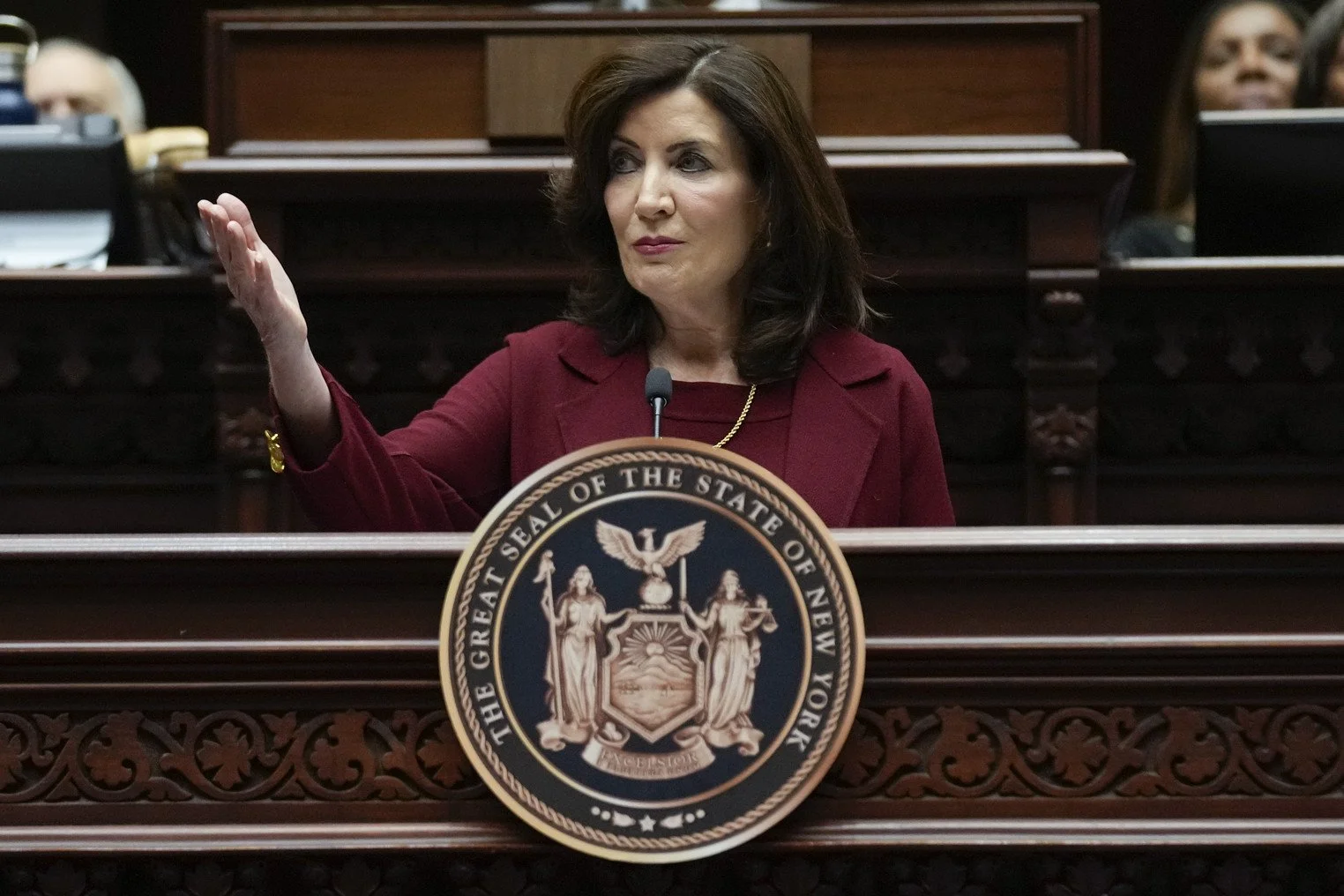
Politico NY Covers Sign-On Letter Decrying Gov. Hochul's Budget "Ageist"
Politico NY Covers Sign-On Letter Decrying Gov. Hochul's Budget "Ageist"
AN ‘AGEIST’ BUDGET: Over 140 advocacy organizations around the state are putting pressure on Hochul to allocate more money toward aging New Yorkers, calling her budget “an ageist document.”
The organizations, which include the Hospice and Palliative Care Association of New York State and Catholic Charities, sent a letter to Hochul this afternoon alleging her budget shows “a clear lack of consideration for the millions of older adults in New York.”
“The current budget allocation for the New York State Office for the Aging is less than 0.8 percent of the total budget, significantly below what is required to meet the growing needs in our communities,” says the letter, which was exclusively shared with Playbook.
Hochul’s team did not respond to Playbook’s requests for comment.
In her budget briefing book, the words “children,” “child care” and “child” are mentioned more than 90 times collectively, but the word “senior,” in reference to older adults, is mentioned just once, Allison Nickerson, executive director of LiveOn NY, told Playbook.
“Older adults” and “adult caregivers” also barely received a mention, Nickerson said.
The groups say Hochul’s proposed budget would cut $9.3 million from homecare services and $2.5 million from the office for the aging’s Long Term Care Ombudsman Program.
The cuts come at an especially fraught time for aging New Yorkers. During the Covid pandemic, many low-income elderly New Yorkers saw various support systems — like routine meals from family members or programming at community centers — completely disappear. But the gap was filled with federal pandemic aid.
Now those federal dollars have dried up, and the groups say Hochul’s budget would cut services at a time when more investment is needed.
Currently, at least 18,000 aging New Yorkers are waiting to receive crucial services like Meals on Wheels, transportation or case management services, and an immediate investment of $51 million is needed to make those support services accessible, the organizations wrote.
In New York, about 1 in 5 residents are above the age of 65. That population is expected to grow significantly over the next decade.
“The state really cannot move forward unless it is addressing the issues of older adults,” Nickerson said. — Jason Beeferman