

News
&
Updates

Highlights from LiveOn NY's 28th Annual Aging Advocacy Day
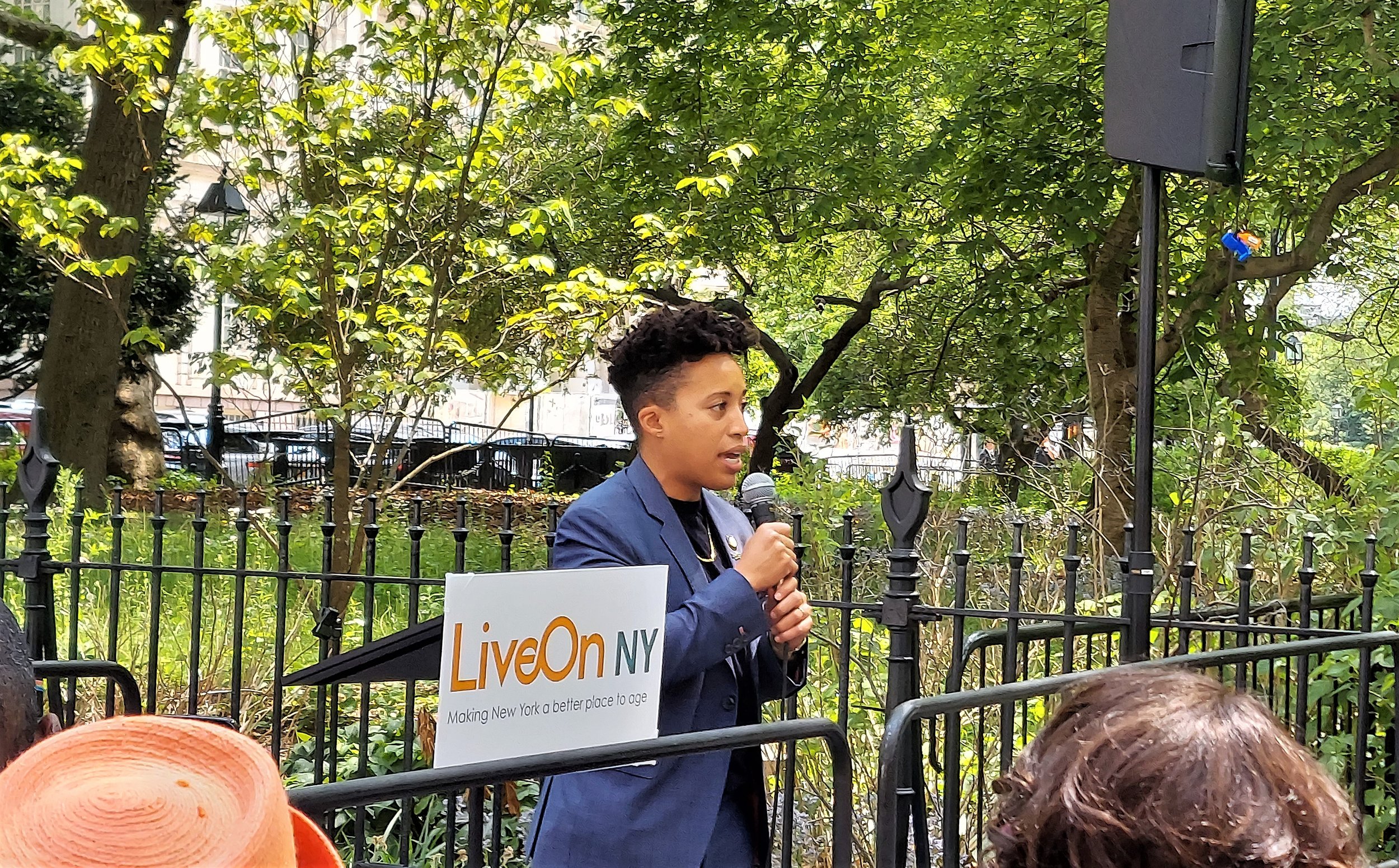
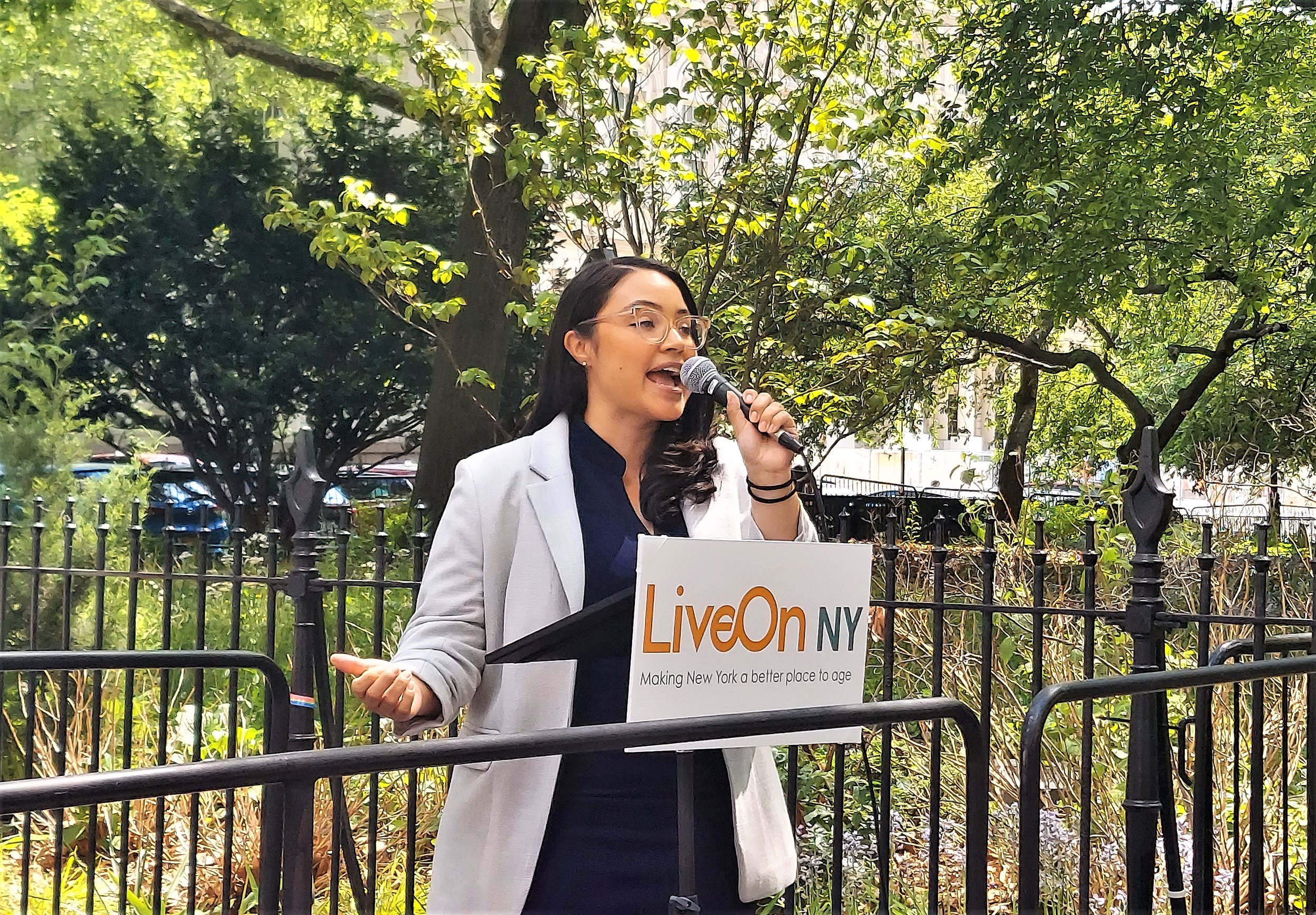
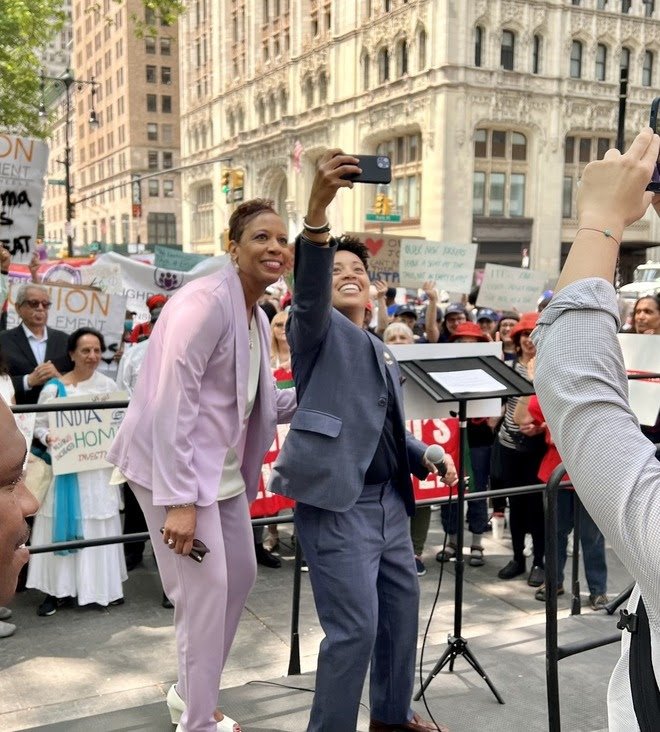
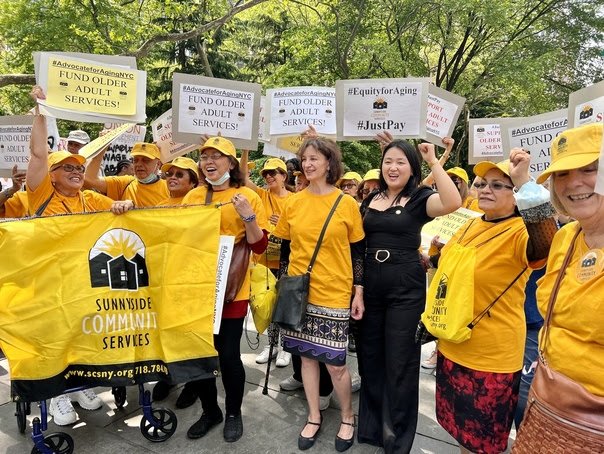
On Thursday, May 11th, LiveOn NY hosted our 28th Annual Aging Advocacy Day. During the event, roughly four hundred older adults and aging service professionals took to City Hall Park to demand their fair share of the City budget.
On Thursday, May 11th, LiveOn NY hosted our 28th Annual Aging Advocacy Day at which we were joined by over 400 older adults and aging service professionals who took to City Hall Park to demand their fair share of the City budget. Thank you to the following Council Members who joined us and gave remarks during this event:

Speaker Adrienne E. Adams,
Council Member Crystal Hudson, Chair of the Committee on Aging,
Council Member Christopher Marte,
Council Member Kristin Richardson Jordan,
Council Member Lynn Schulman, Chair of the Committee on Health,
Council Member Jennifer Gutierrez, Chair of the Committee on Technology,
Council Member Althea Stevens, Chair of the Committee on Youth Services,
Council Member Chi Osse, Chair of the Committee on Cultural Affairs, Libraries, & International Intergroup Relations,
Council Member Nantasha Williams, Chair of the Committee on Civil & Human Rights,
Council Member Julie Won, Chair of the Committee on Contracts,
Council Member Lincoln Restler
Thank you to each and every older adult, professional, and advocate who joined us at City Hall Park in the fight to #AdvocateforAging and #JustPay human services workers.
And a special shoutout to our members and the older adults who spoke:
Bobbie Sackman, Jews for Racial & Economic Justice,
Frances Garavuso, St. Nicks Alliance,
Larinda Hooks, Director of Older Adult Services/Economic Development, Elmcor Youth & Adult Activities, Inc.,
Sylvia Calaf, Neighborhood SHOPP,
Ruby Rosario, Director of Guess Older Adult Center, Neighborhood SHOPP,
Susanna Li Hom, Homecrest Community Services
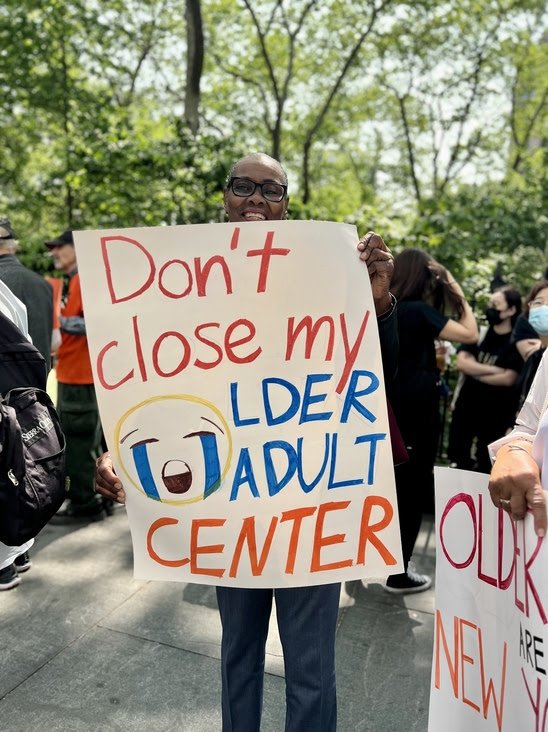
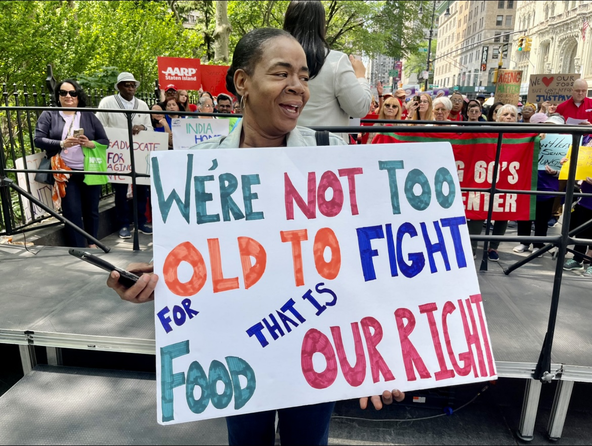
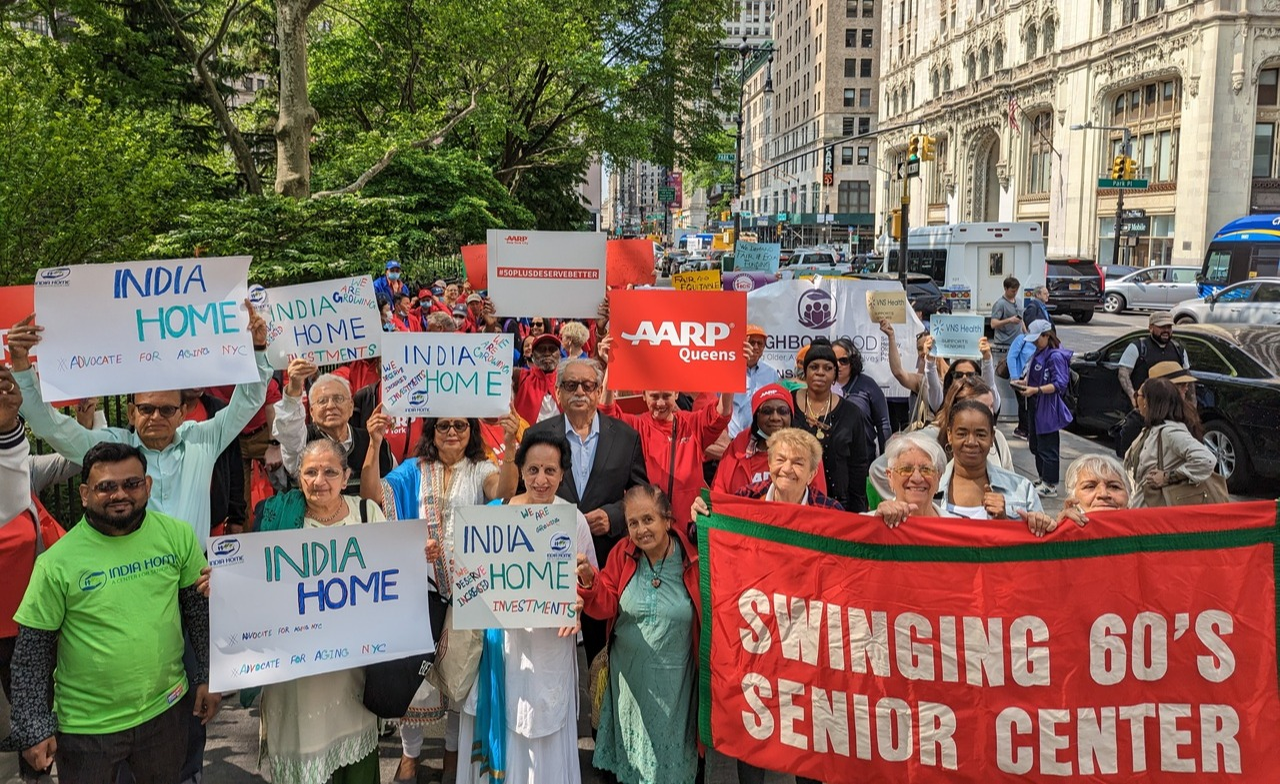
In addition to our Advocacy Day Rally, LiveOn NY spearheaded other advocacy opportunities, giving older New Yorkers and our members more ways to fight for the funding that aging services deserve.
These opportunities included an #AdvocateforAgingNYC Tweetstorm, Calls to City Council Members, and a Letter Writing Campaign.
Our advocacy doesn't stop here
You can continue to advocate for older adults in the New York City Budget by printing out and filling out the linked form below. In just a five minutes, you can you send a letter to Mayor Adams calling for key investments aimed at better supporting older New Yorkers living in the five boroughs.
LiveOn NY encourages professionals to share this opportunity with your clients, encouraging all stakeholders to participate! Through increased participation, we can make our voices heard in the fight to Advocate for Aging and Just Pay in this year's budget.

LiveOn NY Responds to Mayor Adams’ Proposed Cuts to Older Adult Food Programs
Mayor Adams’ proposes $12 million in cuts to congregate and home delivered meals programs
LiveOn NY Responds to Mayor Adams’ Proposed Cuts to Older Adult Food Programs
Mayor Adams’ proposes $12 million in cuts to congregate and home delivered meals programs
Mayor Adams has proposed over $12 million dollars in budget cuts to the aging sector’s congregate and home delivered meals programs in a year when costs are greater than ever. Inflation has seen costs rise by over 25% for providers and has created new needs of over $60 million dollars. These cuts are only a fraction of a percent of the overall budget, but represent tens of thousands of meals and financial solvency for older adult centers throughout the city. There are currently 1.7 million older New Yorkers, the city’s fastest growing demographic.
Mayor Adams’ Key Cuts:
$7 million cut in funding for Older Adult Centers
$5 million in funding for the home-delivered meals program
Elimination of the $1 additional one time reimbursement rate for home-delivered meals for FY24
“The cuts to NYC Aging proposed by Mayor Adams in his Executive Budget illustrate a significant departure to his pledged commitment that all essential services should be fully funded in Fiscal Year 2024. These proposed cuts directly impact the stability and wellness of the 1.7 million older adults and ignore the reality that older adults are the fastest growing demographic in New York City. It also refuses to reckon with the fact that these cuts will disproportionately hurt older adults of color, LGBTQ older adults, and other groups who have been historically excluded from city services and continue a legacy of discrimination in who our government chooses to prioritize for funding.
To simply maintain existing services, the city would need to add an additional $60 million dollars into an already strained, underfunded system. Instead, in a time of increased need and skyrocketing food insecurity and costs, the Mayor's decision to cut over $12 million to the older adult food budget alone will leave the most vulnerable older adults in our city hungry, and the nonprofits that serve them without funding. This is unacceptable.
The cuts will also potentially cause closures or consolidations of Older Adult Centers in our city which provide vital services that allow older adults to thrive. We cannot dismantle a system that provides so many New Yorkers a place to build community, sign up for benefits that keep them healthy and in their home, and participate in meaningful programs that truly impact their lives.
These cuts are also pennies in the city budget, and to tout this $12 million dollars as savings in a $106 billion dollar budget is a cruel message that New Yorkers who created the vibrant and incredible city we all love and continue to keep it that way are worth less than a ten thousandth of a percent of the city’s overall budget. The existing funding for all aging services in our city is already less than half of one percent of the overall budget and these cuts are truly an attempt to destroy the social safety net for older adults in our city.
As we all grow older, ensuring that we can all age in a community with access to services regardless of one’s zip code or background should be a priority for the City. We must invest in these services now so that we are able to create a city where older adults can thrive and remain a part of their community.

Testimony on New York City Preliminary Budget on Aging
Rather than cuts, it’s time to invest in older New Yorkers and for the City to pay the human services workforce a just and equitable wage. It’s time for the City to enact a more equitable budget that holistically supports these professionals that work tirelessly to ensure that no older New Yorker falls through the cracks.
New York City Council
Committee on Aging
Chair, Council Member Hudson
March 14, 2023
Oversight - Preliminary Budget Hearing - Aging
My name is Brianna Paden-Williams and I am the Communications and Policy Associate at LiveOn NY. Thank you for the opportunity to testify.
LiveOn NY’s members include more than 110 community-based nonprofits that provide core services which allow all New Yorkers to thrive in our communities as we age, including older adult centers, home-delivered meals, affordable senior housing, elder abuse prevention, caregiver support, NORCs, and case management. With our members, we work to make New York a better place to age.
Background
Aging services are essential services with over 1.8 million older adults 60 and over living in New York City. Yet older adults have not been prioritized by the City, despite an essential human services workforce administering critical services that provide the necessary support for older adults to age in community. Over the past year, community-based organizations have been faced with significant inflationary costs for raw food, gas and items, coupled with a growing waitlist for aging services that does not have the equitable funding from the City to meet the growing demand for community services to support older adults.
The lack of prioritization is evident in the FY24 Preliminary Budget with Mayor Adams including a $25 million cut to the NYC Aging (also known as Department for the Aging), despite the increased demand for aging services. As we all grow older, ensuring that we can all age in community with access to services regardless of one’s zip code or background should be a priority for the City.
Rather than cuts, it’s time to invest in older New Yorkers and for the City to pay the human services workforce a just and equitable wage. It’s time for the City to enact a more equitable budget that holistically supports these professionals that work tirelessly to ensure that no older New Yorker falls through the cracks.
Given this, the following investments are critical to building a truly equitable City for all ages.
Critical Investments in NYC Aging (also known as the Department for the Aging or DFTA) Services
Support the Workforce
The City must just pay all essential human service workers a liveable and equitable wage.
Poverty level government contracts have left human services workers severely underpaid for years. This workforce that is composed mainly of women and people of people have kept New York City afloat throughout the COVID-19 pandemic. Yet the wages of these workers have remained stagnant despite the rising cost of living in New York City. While last year’s budget included a $60 million baseline funding for human services workers, this does not fully address the pay and gender inequity that is crippling our City.
As a result organizations are faced with increased staff turnover as underpaid staff leave nonprofits for better paying jobs in other sectors, depriving New Yorkers of services from the most experienced, well-trained staff and jeopardizing high-quality services. It is essential for the human services providers to have sustainable funding to meet the needs of our communities while also having sufficient wages for ourselves and families. To address this crisis, the City must implement changes that address the inequitable pay of human services workers. LiveOn NY recommends the City establish, fund, and enforce a 6.5% automatic annual cost-of-living adjustment (COLA) on all human services contracts.
Combat Hunger
LiveOn NY requests $64.8 million in additional funding to combat hunger among older adults including:
This investment would include an additional $14 million to address the inflation cost for raw foods, gas and other items for home-delivered meals as well as $46 million for inflation cost for congregate meals in Older Adult Centers. LiveOn NY found in a recent study that our member organizations have experienced an average 27% increase in the cost per meal compared to last year due to significant inflationary cost. For some organizations, they have run out of money in their contracts to continue to sustain the capacity of the community-services including home-delivered meals and congregate meals. The inflationary cost to provide meals to older adults has put a financial strain on many providers over the past year forcing many providers to reckon with uncertainty of being able to sustain in the future.
Furthermore, this investment would provide $4 million to support weekend and holiday home-delivered meals which are not provided through current contracts, and did not receive the same investment to address reimbursement rate as weekday meals received.
Promote Community Care
Allocate an additional $29.4 million to address the unmet needs of older adults through Aging NYC funded services including:
An additional $7.5 million investment to expand digital literacy programming including devices to facilitate virtual programming for older adults as well as expand technology programming accessibility and to support technology expansion
$1.4 million to support continued growth in demand of the case management program to ensure all clients can be screened and receive this critical service should they be eligible. Exacerbated by the long-term health impacts of isolation and other stressors experienced during COVID, many older adults will require some level of case management to remain independent in their communities. In a recent survey, LiveOn NY estimated that more than 1,300 clients are currently on waiting lists for case management. This comes on top of consistent demand increases for case management that have historically led to waiting lists, requiring additional funding each year, and indicating a need for early and significant investments to avoid the continued cycle of recurring waiting lists.
$15.4 million to support continued growth in demand of the home care program, including expanding the hours of home care service available to older adults requiring additional support.
$5 million to support communications and marketing outreach for NYC Aging funded programming for community-based organization outreach to older adults
Address the Housing Crisis
Allocate funding to develop 1,000 units of affordable senior housing with services per year.
LiveOn NY joins the United for Housing Coalition in calling for a $4 billion annual investment to fund a comprehensive affordable housing plan that must include a minimum target of 1,000 new units of affordable senior housing with services per year, as part of a total target to construct no fewer than 8,000 new units of housing dedicated to serving extremely low income and homeless households annually. As waitlists and limited housing stock pose an acute challenge for older New Yorkers, a considerable investment and consistent unit targets per year will be critical to paving a pathway out of this crisis.
This investment would build upon the clear success of the City’s Senior Affordable Rental Assistance (SARA) program, which has created community assets in every borough, including examples such as WSFSSH’s Tres Puentes in the Bronx and HANAC’s Corona Senior Residences in Queens. These two building are examples of what is possible through housing, with Tres Puentes not only offering 175 new units of affordable senior housing, but providing space for a new Older Adult Center, health center and pharmacy on site, and the Corona Residences offering 67 affordable senior units built to the environmentally friendly Passive Housing standards and a new Pre-K on the ground floor.
LiveOn NY also recommends the City increase the per unit reimbursement rate for SARA services from $5,000 per unit, to $7,500 per unit, allowing for increased staff to more adequately address social isolation and significant case assistance needs.
This increased reimbursement rate would make services better available to support an aging and formerly homeless tenant population, in turn enabling more older New Yorkers to age in place and avoid institutionalization.
Support Local Needs
Fund an additional $2.6 Million for Support our Seniors and continued full funding for all discretionary initiatives.
Many programs, particularly smaller, hyper-local nonprofits that serve hard-to-reach senior populations rely on discretionary funding to ensure their communities can be served. Therefore, it is critical that all aging services discretionary are fully funded in the Fiscal Year 2023 budget.
In addition, LiveOn NY is requesting an additional $2.6 million for the Support Our Senior Initiative that would provide an additional $50,00 per district on average to better support older New Yorkers, in particular for services or programs including transportation, social isolation, technology and more.
Conclusion
To truly make New York a better place to age, where we can all thrive in community, we must build a caring economy that supports all older New Yorkers regardless of their background. From a livable and competitive wage for all human services workers to equitable policies and programs that support all New Yorkers, New York can become a more equitable place to age.
Thank you for the opportunity to testify.

Testimony on Access-A-Ride
Through our network, we’ve seen the importance of transportation as a top concern for older New Yorkers and one’s ability to access reliable and safe transit. And yet, we know that for many older adults who live in transit deserts getting to doctors’ appointments, going grocery shopping or taking advantage of the City’s resources including Older Adult Centers is a constant challenge.
New York City Council
Committee on Transportation and Infrastructure
Chair, Selvena Brooks-Powers
Committee on Aging
Chair, Crystal Hudson
Committee on Mental Health, Disabilities and Addiction
Chair, Linda Lee
February 24, 2023
Oversight - Access-A-Ride
My name is Brianna Paden-Williams and I am the Communications and Policy Associate at LiveOn NY. Thank you for the opportunity to testify.
LiveOn NY’s members include more than 110 community-based nonprofits that provide core services which allow all New Yorkers to thrive in our communities as we age, such as older adult centers, home-delivered meals, affordable senior housing, NORCs, and home care. LiveOn NY is also home to the Reframing Aging NYC Initiative, part of the national Reframing Aging Initiative aimed to counteract ageism and improve the way policymakers, stakeholders, and the public think about aging and older people. With our members, we work to make New York a better place to age.
Background
Age friendly transportation is a key element of allowing older adults to age in community and thrive in our city. With a 65% customer satisfaction rating in the most recent MTA customer satisfaction survey, Access-A-Ride is not meeting the needs of its users. We have also heard complaints from our providers whose clients rely on Access-A-Ride to get to and from their centers. Through our network, we’ve seen the importance of transportation as a top concern for older New Yorkers and one’s ability to access reliable and safe transit. And yet, we know that for many older adults who live in transit deserts getting to doctors’ appointments, going grocery shopping or taking advantage of the City’s resources including Older Adult Centers is a constant challenge.
Furthermore, our members have reported fundamental issues with Access-A-Ride program reliability, timeliness, and ease of use. We have heard reports that older adults have arrived hours late to programming at older adult centers, fully missing the programs that they intended on attending. We have also heard that cars did not arrive when called and required multiple calls from the older adult and center staff to book another car, which stranded the older adult at the center with no way to return home until hours later. Issues like these undermine the purpose of a program meant to reliably transport people who cannot access traditional public transportation.
Creating a robust and completely accessible public transportation system is just one part of turning NYC into an age friendly city. Looking ahead we should incorporate universal design principles in all elements of our built environment to remove travel barriers to those with limited mobility
Recommendations
Firstly, we invite the City to utilize our aging policy agenda, Aging is Everyone’s Business, released by LiveOn NY in partnership with Hunter College Brookdale Center for Healthy Aging, which is a bold policy agenda that provides actionable policy solutions, including transportation, to make New York a better, more equitable place to age.
Second, in order to address these challenges and created long-term solutions to improve access to transportation for older adults, LiveOn NY recommends the following:
The City should partner with the state to make our public transit system truly accessible for all New Yorkers through the installation of elevators and ramps at all subway stations throughout the city. We applaud the recent announcement by the MTA to install new elevators and ADA enhancements at MTA stations. Currently, only one in four New York City subway stations have elevators, ramps, or other accessible entrances, rendering most inaccessible for people who use assistive devices. The expansion of new elevators and enhancements is a step forward to ensure transportation is accessible for all New Yorkers including older adults and people living with a disability. We encourage the City to continue to work with the State to remove one of the largest barriers of use for many older adults and New Yorkers with limited mobility.
Increase investments in the reliability and speed of bus services. The city’s bus service is already accessible and reaches every corner of the city, however reliability issues and slow bus service times can discourage use. The city must invest in reducing bus headways and creating reliable routes free of traffic.
Expand and increase investment for the Metropolitan Transit Authority’s Paratransit E-Hail program, which uses the city’s fleet of taxis to allow older adults and others with mobility impairments to get around. Given the divergent experiences between traditional Access-A-Ride and the E-hail program, expanding on-demand E-hail, and establishing its permanency, should be a priority for the City and the agency.
to fully utilize the taxi service system that exists throughout our city. Many paratransit users who have had access to this program have expressed their preference for this program over access-a-ride.
Improve real time reporting of elevator and escalator outages and prioritizing timely repair. Reliably planning travel is a key component of effective public transportation. Without clear notifications of outages and adequate confidence that elevators and escalators will be repaired in a timely manner, public transit can become a non-option for people who would otherwise choose to use it.
Expanding on Chair Hudson’s Int. 676 to bring universal design principles to streetscape design to make streets safer for those of all mobility levels. LiveOn NY encourages the City to adopt universal design principles in all repairs and reconstructions of streets and other public spaces. Universal design makes the city a better place for everyone. For example, curb cuts not only help people who move around using a walker, but also parents pushing strollers and tourists pulling wheeled suitcases.
Thank you for the opportunity to testify.

Testimony on Justice in Aging – Reentry Issues for Older New Yorkers
It’s time for the City to address elder parole as an aging issue with an older adult population re-entering into community, looking to move forward in their lives. At LiveOn NY, we believe no one is disposable, nor should anyone be defined by the worst thing they’ve done. Further, we believe in redemption and transformation. We believe in families, communities, and collective care.
New York City Council
Committee on Aging
Chair, Council Member Hudson
Committee on Criminal Justice
Chair, Council Member Rivera
February 17, 2023
Oversight - Justice in Aging – Reentry Issues for Older New Yorkers
My name is Brianna Paden-Williams and I am the Communications and Policy Associate at LiveOn NY. Thank you for the opportunity to testify.
LiveOn NY’s members include more than 110 community-based nonprofits that provide core services which allow all New Yorkers to thrive in our communities as we age, such as older adult centers, home-delivered meals, affordable senior housing, NORCs, and home care. LiveOn NY is also home to the Reframing Aging NYC Initiative, part of the national Reframing Aging Initiative aimed to counteract ageism and improve the way policymakers, stakeholders, and the public think about aging and older people. With our members, we work to make New York a better place to age.
Background
The number of people in New York State prisons has been declining, however, the proportion of older people in prison continues to rise with one in every four incarcerated people in prison 50 and older.
Unfortunately, when formerly incarcerated older adults are released from prison and re-enter into the community, they are often faced with unique challenges with many released in their later years. It’s evident that people in prison age at an accelerated rate because of harmful and unhealthy prison conditions, including stress, separation from loved ones, poor nutrition, substandard and inaccessible health care, staff brutality, disabling environments, and more.
New York has a moral and fiscal crisis of aging and dying in prisons due to decades of extremely
harsh sentencing and a racially biased parole system that does not adequately create space for redemption, personal transformation, healing, and safety. The grave injustice of mass incarceration extends beyond the harm inflicted on individual people in prison. Tens of thousands of families across our state are missing one or more loved ones: children, parents, grandparents and great-grandparents. Furthermore, New York spends an average of $60,000 annually to incarcerate just one person, and between $100,000 and $240,000 annually per older adult in prison. This is money that should instead be invested in resources that deliver real community health and safety.
Approximately 1,000 people have already died in New York prisons in the last decade and another 1,000 are likely to die behind bars in the coming years with no hope of release, no matter how much they have done to improve themselves and regardless of whether they pose a risk to public safety.
It’s time for the City to address elder parole as an aging issue with an older adult population re-entering into community, looking to move forward in their lives. At LiveOn NY, we believe no one is disposable, nor should anyone be defined by the worst thing they’ve done. Further, we believe in redemption and transformation. We believe in families, communities, and collective care.
To address the issues of elder parole, LiveOn NY is proud to offer the following recommendations:
Recommendations
The City should look to broad and fund collaboration with community-based organizations such as Osborne Association that have the expertise and programming to provide resources and tools to individuals, families and communities impacted by the criminal justice system and provide support for the re-entry into community.
Remove barriers to access affordable housing for formerly incarcerated older adults The housing crisis in New York City is particularly acute for older adults as many rely on fixed incomes, making it difficult to afford the rent while other costs rise. For formerly incarcerated older adults, finding affordable and accessible housing is an added challenge with many landlords discriminating against older adults on parole through routine background.
Work with HPD to make older adult affordable housing a key priority to relieve the over 200,000 waitlist for older adults seeking affordable housing. LiveOn NY’s own research has found that there are more than 200,000 older adults languishing on waiting lists for affordable housing through the HUD 202 program, each waiting for 7-10 years on average for a unit to become available. This challenge is mirrored by the thousands of applications that come flooding in each and every time a new affordable senior housing lottery opens on Housing Connect. To address this, LiveOn NY recommends the City increase capacity of affordable older adult housing that would relieve one of the largest hurdles for older adults returning to community after incarceration.
Create space through support for community building and cure violence programs for formerly incarcerated older adults to contribute to their communities. Upon release, formerly incarcerated older adults often make important contributions to their communities, including by interrupting gun violence, mentoring young people, and ultimately promoting community safety. In addition, LiveOn NY also recommends the City expands competent mental health and social services for formerly incarcerated older adults, especially for individuals who have experienced long-term incarceration.
Furthermore, LiveOn NY strongly supports the passage of Resolution 241-A, which calls for the passage of the Fair and Timely Parole Act (S307/A162) and Elder Parole Act (S2423/A2035)
First, LiveOn NY shares our deep appreciation to Council Member Hudson, Chair of the Committee on Aging, for her leadership in introducing Council Resolution 241-A. In addition, we thank Chair Rivera for her support of in holding this hearing, and we thank the 17 Council co-sponsors who have called for the State to pass the Fair and Timely Parole Act (S307/A162) and Elder Parole Act (S2423/A2035) and joined in making this Resolution a priority.
It is time that New York reform its parole system to provide hope for families across this state by passing Elder Parole (S2423/A2035). If passed, this bill would make eligible for individualized parole consideration people in prison aged 55 or older who have served at least 15 years. It is not a “blanket release” policy. Rather, it gives older individuals who have transformed themselves an opportunity to demonstrate their moral character before the Board of Parole and, subject to the Board’s discretion, to be released to their families and communities to live out their final years with dignity.
Secondly, we encourage the City Council to support the passage of the Fair & Timely Parole Act (S2423/A2035) to ensure that individuals have a fair and meaningful opportunity to demonstrate their rehabilitation and be released. This bill would provide more meaningful parole reviews for incarcerated people who are already parole eligible by altering the standard of parole to center release determinations not on the original crime but on the person’s rehabilitation while incarcerated and their current risk of violating the law. This bill will not take away parole commissioners discretion and still requires that the Board consider the nature of someone’s crime and victim impact statements in their release decisions.
Thank you for the opportunity to testify.